Is Mount Fuji Going to Erupt?
It is an active volcano, it last erupted in 1707, and it currently sits at the lowest alert level Japan has. Those three facts are all true at once, and the gap between them is where most of the worry lives.
The question gets asked in two very different tones. One is idle curiosity about a famous volcano. The other is a traveller with a booking in three weeks who has just seen a headline and wants to know whether to cancel. This page is written for the second one.
A tour cannot predict an eruption or replace official advice. If you want to explore the surrounding landscape, compare a Shizuoka heritage-and-wasabi day with a private nature itinerary below.
Booking Summary: Keep volcanic alerts separate from the booking decision. Choose a tour for its actual route, guide and transport; no itinerary guarantees access, safe conditions or a view of Fuji.
Scroll to the end for the complete comparison and provider booking links. Interactive matching requires JavaScript.
Is Mount Fuji going to erupt?
Not on any predicted timeline. Mount Fuji is an active volcano and the Japan Meteorological Agency currently holds it at Volcanic Alert Level 1, the lowest of the five levels, meaning normal activity with no restrictions on access. The agency reports no unusual seismicity, no ground deformation and no signs of an imminent eruption.
Level 1 is not a promise that nothing will ever happen. It is a statement about now, published continuously, based on instruments that watch the mountain around the clock. If that changes, it changes publicly and in stages, which is the part most worried travellers do not know.
What do Japan's volcanic alert levels mean for Mount Fuji?
Japan uses a five-level volcanic alert scale, and the jump from level to level carries a specific instruction. Level 1 is where Fuji sits: be aware it is an active volcano. Level 5 is evacuate. Nothing skips from one to five overnight without instruments seeing it first.
| Level | What it means | Who it applies to |
|---|---|---|
| 1 | Normal. Be aware this is an active volcano | Everyone. This is Mount Fuji's current level |
| 2 | Do not approach the crater | Climbers near the summit |
| 3 | Do not approach the volcano | All climbers and 5th Station visitors |
| 4 | Prepare to evacuate | Residents at the foot of the mountain |
| 5 | Evacuate | Residents in the danger zone |
You can check the current level yourself on the Japan Meteorological Agency's public volcano map, and the agency publishes its own activity report for the mountain separately. Both are updated as a matter of routine, not only when something is wrong, which makes them a reasonable thing to glance at the week before you travel.
When did Mount Fuji last erupt?
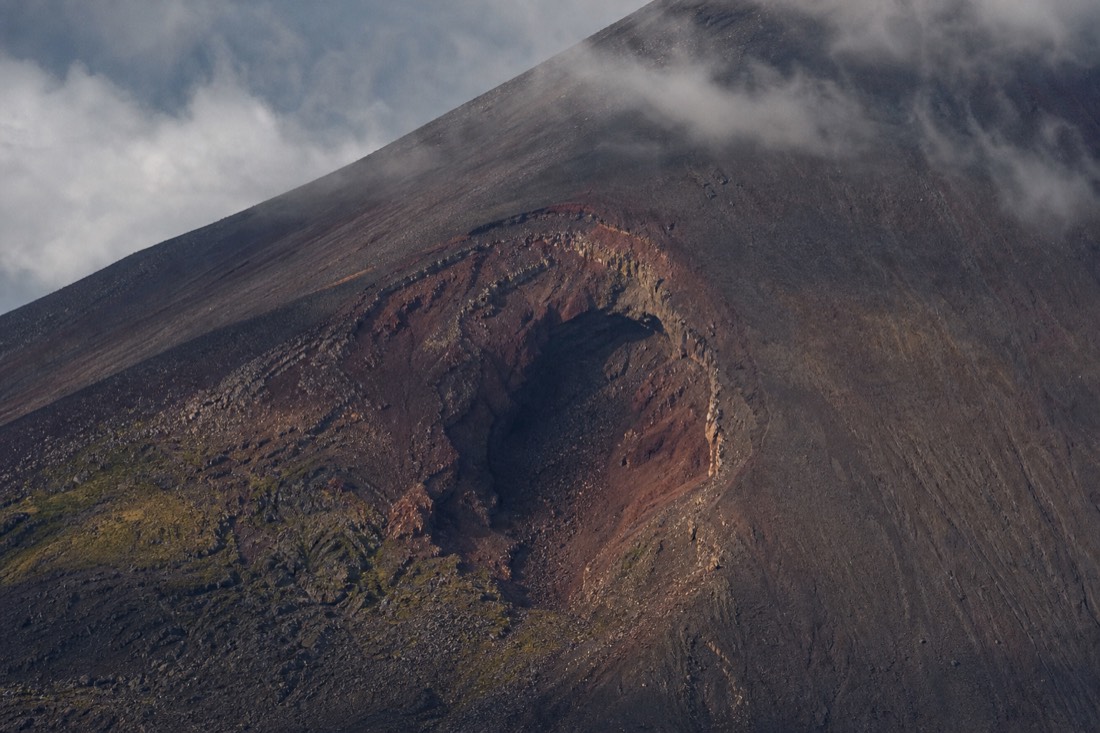
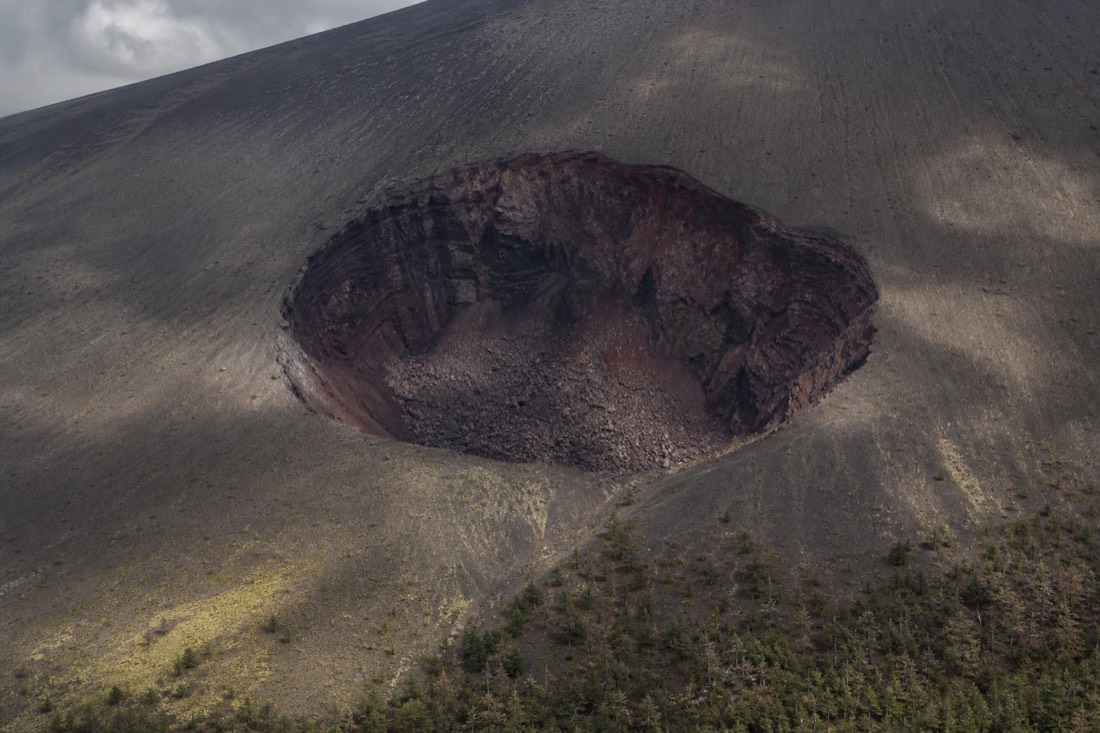
The Hoei eruption, from 16 December 1707 to roughly 24 February 1708. It was an explosive ash eruption rather than a lava event: it dropped ash on Edo, now Tokyo, roughly 100 km away, and it opened the Hoei crater on the southeastern flank, which is still clearly visible from the Shizuoka side today.
That crater is the most tangible piece of evidence on the whole mountain. It is a large, ragged, reddish scar interrupting an otherwise smooth cone, and it is the reason the mountain looks slightly asymmetrical from the south. From the northern lake shore you cannot see it at all, which is part of why the Fuji most visitors photograph looks so perfectly formed. Travellers approaching from Osaka or Kyoto get the scarred face first, because the Shinkansen runs along that side.
Is 300 years of silence unusual for Mount Fuji?
Yes, and this is the honest part of the answer. Fuji has around 17 eruptions in recorded history, and during active phases it went off far more often than once every three centuries. The current quiet stretch is long by the mountain's own standards.
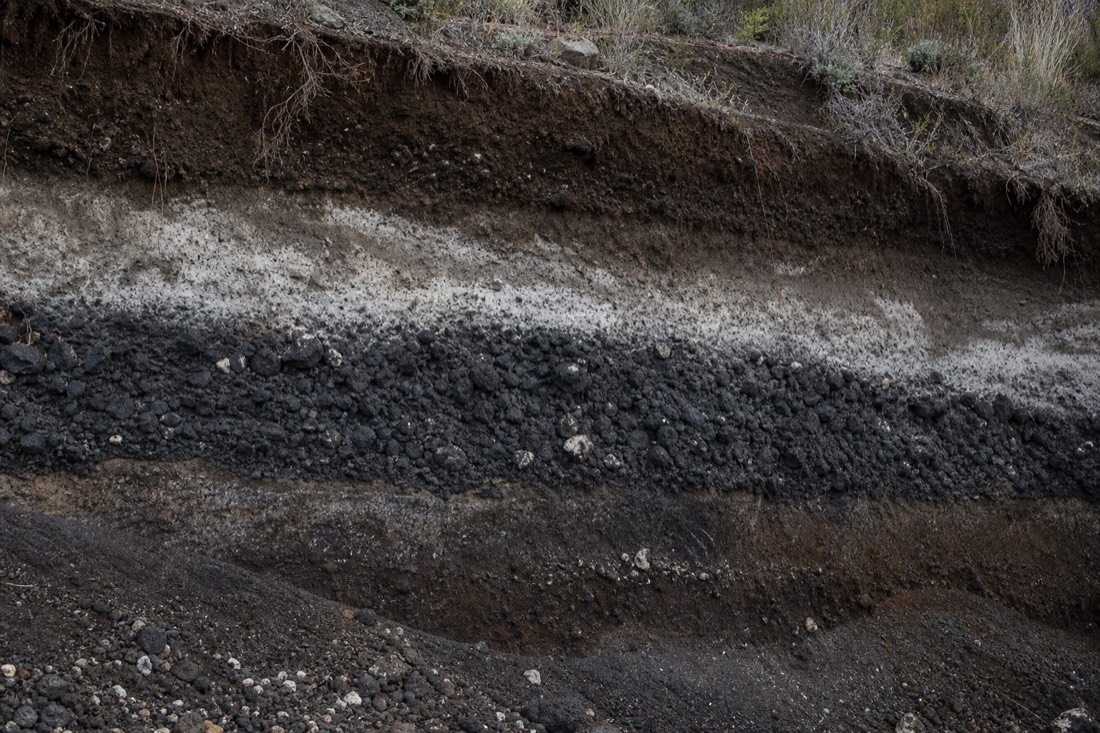
That is a statement about geology, not a countdown. Volcanoes do not accumulate a debt that eventually comes due on schedule, and "overdue" is a word volcanologists tend to avoid for exactly that reason. What the long quiet does justify is the monitoring effort, which is considerable, and the planning work, which is ongoing.
Hokusai Train, Falls & Wasabi: Scheduled Dates
Take the Shinkansen and Hokusai train, visit Shiraito Falls and taste freshly grated wasabi.
Check Dates For Hokusai Train, Falls & WasabiWhat is being monitored, and what would a warning look like?
Seismometers, satellite positioning stations, tiltmeters that detect the ground swelling by millimetres, and cameras. An eruption at a volcano this heavily instrumented would be preceded by detectable changes: swarms of small earthquakes, measurable inflation, changes in gas output. Those signals come first, and the alert level rises before anything visible happens.
The practical implication for a traveller is that you are not relying on luck. You are relying on a national agency publishing a number, and that number moving in advance. If Fuji ever went to Level 3, the trails and the 5th Station would close, tours would be cancelled, and you would know before you left home.
Would a big earthquake set it off?
Possibly, and the reason people ask is a real historical sequence: the 1707 Hoei earthquake preceded the Hoei eruption by about 49 days. Scientists treat this as a documented coincidence in time that may indicate a mechanism, not as a rule that lets anyone forecast one event from the other.
No agency issues volcanic forecasts on the basis of seismic activity elsewhere in Japan. The monitoring that matters is the monitoring of Fuji itself. It is also worth saying plainly that viral predictions of specific disaster dates, which have circulated widely enough in recent years to measurably dent Japanese tourism, have no scientific basis whatsoever and are not connected to anything the monitoring agencies have published.
What about the ash plans for Tokyo?
They are preparedness work, and the fact that they are being done is a good sign rather than a warning. Government and Tokyo metropolitan planning on ashfall countermeasures stepped up in 2026, modelling several centimetres or more of ash across parts of the capital in a worst-case Fuji eruption.
The modelled problems are logistical: trains stopping because ash on the rails and in the signalling gear is abrasive and conductive, roads becoming slick, water treatment and power distribution struggling, and residents being advised to hold supplies. Nobody in that planning work is predicting an eruption. They are doing what a capital city 100 km from an active volcano should have done a long time ago.
Should any of this change your trip?
No. The volcanic risk on any given day is negligible and heavily monitored. The risks that actually put people in trouble on Mount Fuji are altitude sickness, weather and starting too late in the day, and every one of those is addressed by the current climbing rules rather than by luck.
If you want a five-minute sanity check before travelling, look at the current alert level, look at the trail status for the dates you are climbing, and then stop reading. The mountain has been at Level 1 continuously for a long time.
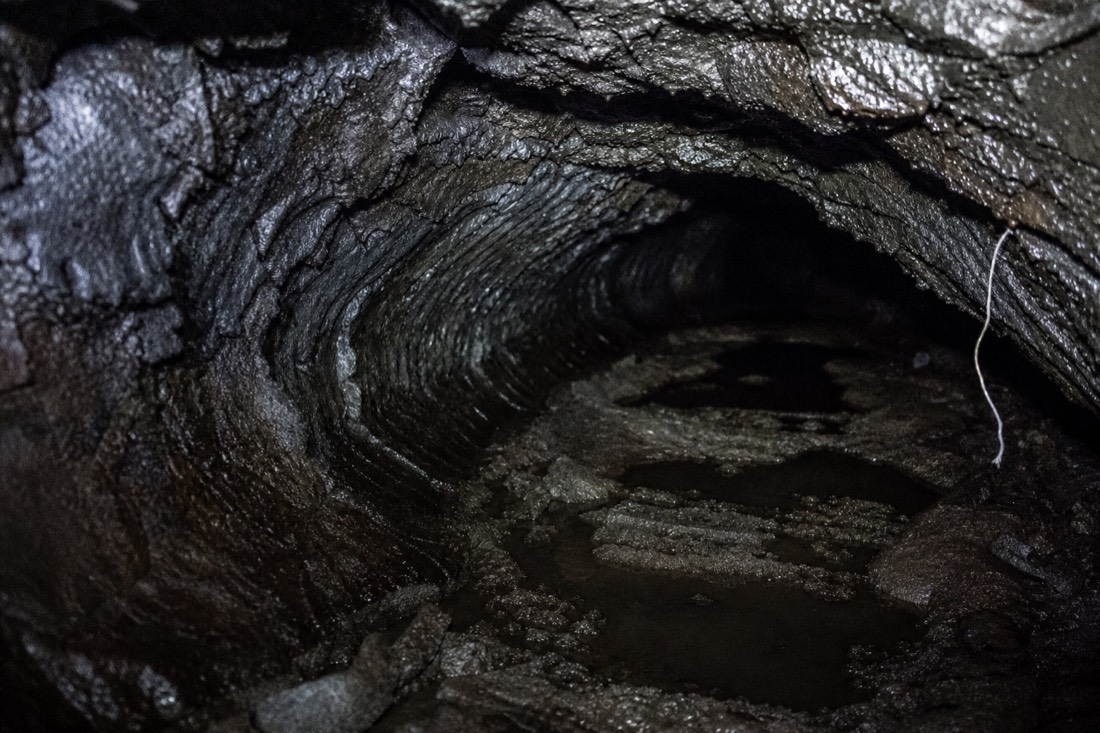
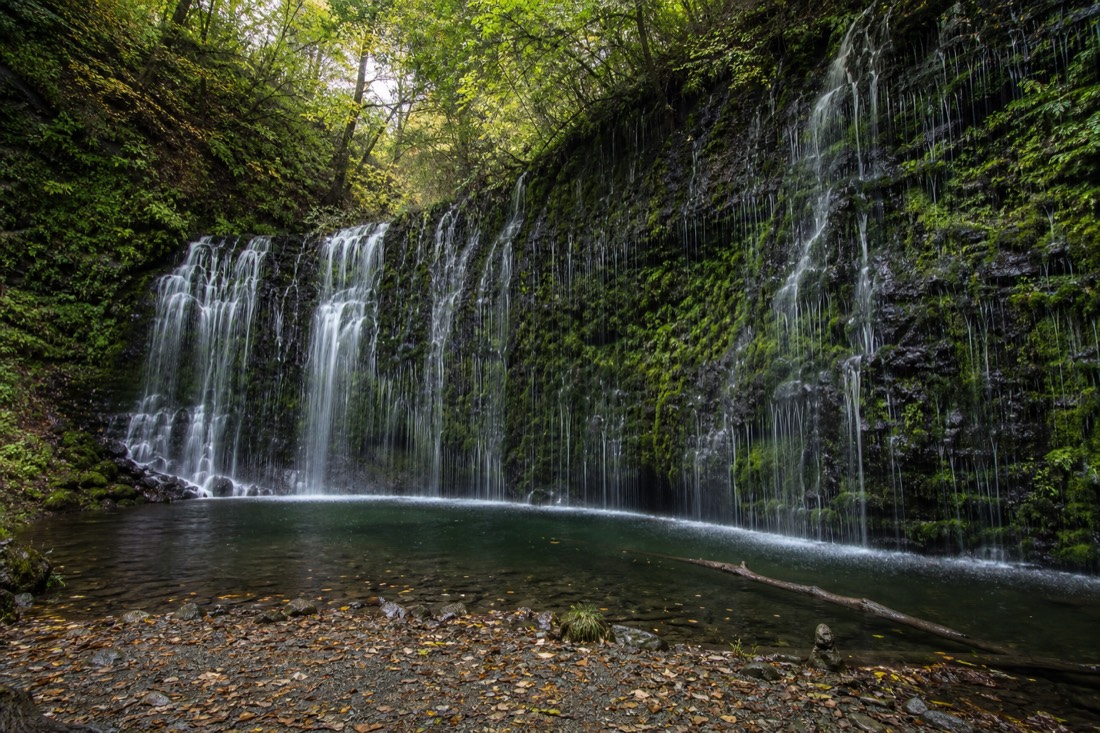
For climbers, the substantive safety decisions are about the season, the hut booking and the pace, not the volcano. Our page on climbing Mount Fuji on a guided tour covers what the two-day format solves, and the two-day climb with a professional guide is the version most first-timers are better served by. If you are curious about the volcanic landscape rather than the summit, the lava caves, the Hoei crater viewpoints and the spring-fed falls on the southern side are a genuinely good day out: the six-hour private nature tour from Shin-Fuji covers that country at walking pace, an advanced canyoning tour near Mount Fuji takes you down into the gorges the old lava flows cut, and the wider set of guided Mt. Fuji tours we list includes both sides of the mountain.