How to Visit Mount Fuji from Tokyo
Planning a Mt. Fuji trip from Tokyo? Learn how to get there, best times to visit, climbing rules, and why Kawaguchiko is the top base.
Last updated: May 12, 2026
Decide whether you want to view Fuji or climb it before choosing transport. The viewpoint coach, private day and two-day summit package are different bookings.
Booking Summary: A full-day coach links Chureito, Oishi Park and Oshino. A private car gives you route choices to discuss. The English-guided Fuji climb includes a hut, with the trail fee and gear rental extra.
Scroll to the end for the complete comparison and provider booking links. Interactive matching requires JavaScript.
Quick Facts: Mt. Fuji from Tokyo
| Distance from Tokyo | ~100 km southwest |
| Travel time (bus) | 2 to 2.5 hours from Shinjuku |
| Travel time (train) | ~2 hours, Fuji Excursion Limited Express from Shinjuku |
| Climbing season | July 1 to September 10 (Yoshida Trail) |
| Mandatory climbing fee | ¥4,000 per person (Prices verified May 2026) |
| Daily climber cap (Yoshida Trail) | 4,000 per day |
| Trail gate hours | Open 3:00 AM to 2:00 PM |
| Summit altitude | 3,776 meters |
| Best viewing season (non-climbing) | October to February |
| Bus from Shinjuku (Kawaguchiko) | ~¥1,750 one way (Prices verified May 2026) |
How Far Is Mount Fuji from Tokyo, and How Do You Get There?
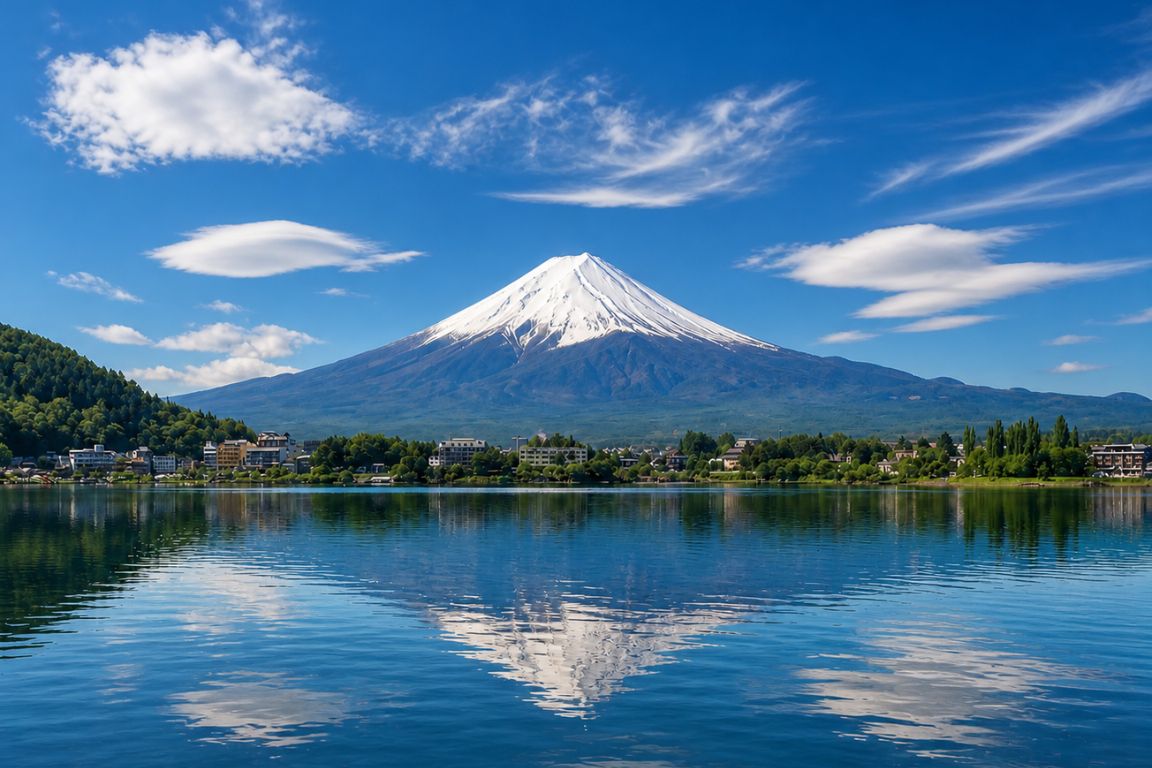 Mt. Fuji sits about 100 km southwest of central Tokyo. By bus from Shinjuku, you’ll arrive at Lake Kawaguchiko in 2 to 2.5 hours depending on traffic. The Fuji Excursion Limited Express train does it in under 2 hours with no transfers. The bus is cheaper. The train is more comfortable and more reliable on weekends when the expressways back up. Both options leave from Shinjuku.
A lot of people overthink the transport decision. Here’s the practical version.
The highway bus from Shinjuku to Kawaguchiko costs around ¥1,750 to ¥2,600 one way depending on the operator. It runs frequently during climbing season, less so outside it, and takes 2 to 2.5 hours. Traffic on the Chuo Expressway on Saturday mornings can stretch that to 3 hours or longer. Book ahead on busy weekends because buses sell out. The main operators are Keio Bus and Fujikyu. You can also catch direct buses from Tokyo Station and Shibuya.
The Fuji Excursion Limited Express (Fuji Kaiyu) runs directly from Shinjuku to Kawaguchiko. One way costs ¥4,130, takes 1 hour and 52 minutes, and has reserved seating, luggage space, and panoramic windows. There are only 3 departures per day on weekdays, 4 on weekends. It sells out, so book early if you’re going on a weekend in peak season. JR Pass holders cover the Shinjuku to Otsuki leg, but the Otsuki to Kawaguchiko section runs on Fujikyu Railway and requires a separate ticket of around ¥1,740.
If you want to climb to the 5th Station directly, there are direct buses from Shinjuku to the Fuji Subaru Line 5th Station during climbing season (July to September) for ¥3,800 one way. Outside that window, you’ll need to get to Kawaguchiko first and transfer.
Renting a car gives you flexibility to hit the Five Lakes area on your own schedule. The Chuo Expressway from Tokyo takes 2 to 3 hours depending on traffic, and private cars are restricted from the 5th Station access road during climbing season, so you’d park at one of the large lots near the base and take a shuttle bus up. Car rental in Tokyo starts around ¥6,000 per day plus tolls and fuel. Travellers coming the other way, up from Kansai rather than down from Tokyo, have a different set of connections again: we cover those in reaching Mount Fuji from Osaka.
We’ve put together a full transport comparison in our train vs bus to Mount Fuji guide so you know exactly which option fits your starting point, budget, and how much of the day you want to spend travelling.
| Highway Bus (Shinjuku) | 2 to 2.5 hrs | ¥1,750 to ¥2,600 | Budget travelers, solo visitors |
| Fuji Excursion Train (Shinjuku) | ~1 hr 52 min | ¥4,130 | Comfort, reliability, peak weekends |
| Direct Bus to 5th Station | ~2.5 hrs | ¥3,800 | Climbers (July-September only) |
| Rental Car | 2 to 3 hrs | ¥6,000+/day + tolls | Groups, flexible lake touring |
Which Mount Fuji Route Should You Take from Tokyo?
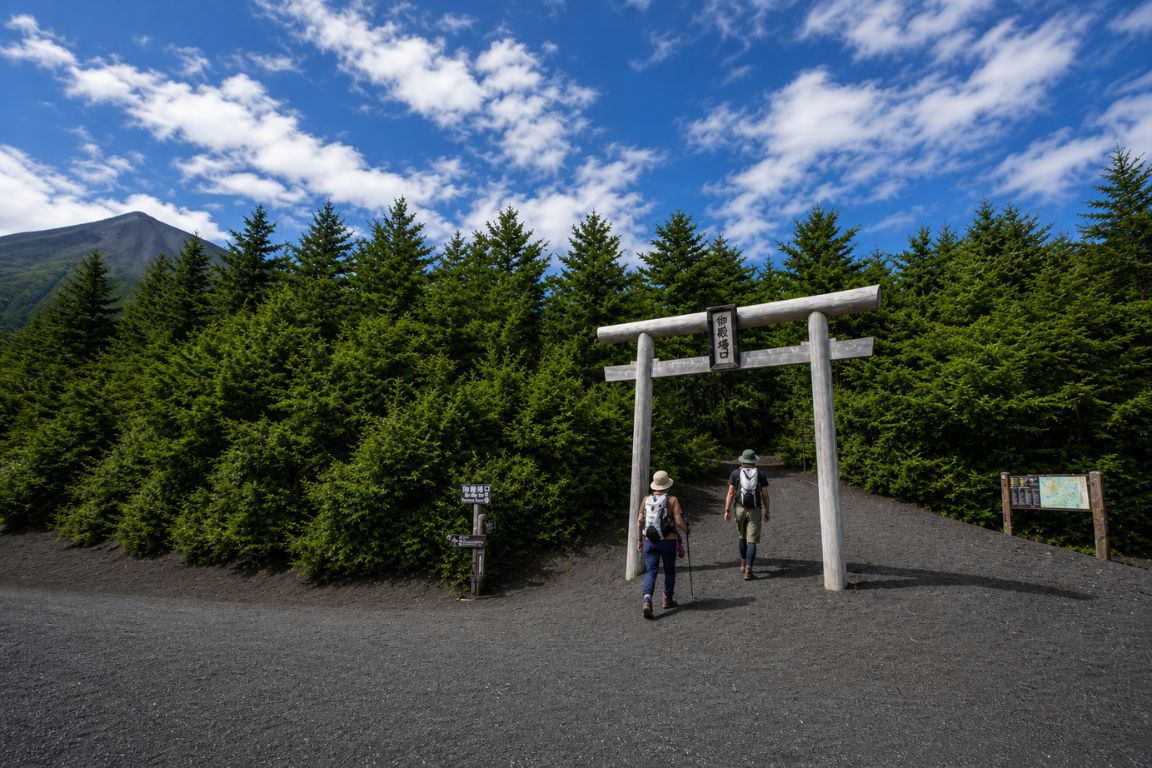 For most first-time climbers coming from Tokyo, the Yoshida Trail is the clear choice. It starts at 2,300 meters elevation at the Fuji Subaru Line 5th Station, has the most mountain huts, separate paths for going up and coming down, and direct bus connections from both Shinjuku and Kawaguchiko. The Fujinomiya Trail is shorter but better suited to those traveling from western Japan.
There are four official climbing routes, each with its own 5th Station. The Yoshida Trail (Yamanashi side) handles more than half of all climbers. The Fujinomiya, Subashiri, and Gotemba trails are on the Shizuoka side. Each accesses a different face of the mountain.
The Yoshida Trail takes roughly 5 to 7 hours to ascend and 3 to 4 hours to descend for a reasonably fit hiker. Because ascent and descent use separate paths, there’s less trail congestion and a bit of variety on the way back down. The most mountain huts are here. The most English signage is here. It’s the reason we recommend it to virtually every first-timer.
The Fujinomiya Trail is the shortest route but also the steepest. It accesses a higher starting elevation (2,400 m) and suits travelers coming from Nagoya or Osaka via Shinkansen to Shin-Fuji Station. The Subashiri Trail merges with the Yoshida Trail near the top, offers a forested lower section that’s genuinely beautiful, but is harder to reach from Tokyo. The Gotemba Trail starts lowest at 1,440 m, takes longest, and is used mainly by experienced hikers who want the solitude.
One thing that trips people up: the 2026 rules require online pre-registration for all Shizuoka-side trails (Fujinomiya, Subashiri, Gotemba) via the official fujisan-climb.jp website. Walk-up access during peak periods is no longer guaranteed. The Yoshida Trail uses a separate Yamanashi reservation system. Don’t leave this until the morning of your climb.
If you’d rather leave the route strategy to someone who’s run these trails over 11,500 times, the 2-day climb with a professional guide is the booking that covers transport and trail selection based on fitness level and timing.
Want to know which Mount Fuji trail is most manageable for a first-time climber versus which ones demand serious preparation? Here’s our Mount Fuji tours hiking trails guide so you choose wisely.
What Is the Best Time of Year to Visit Mount Fuji from Tokyo?
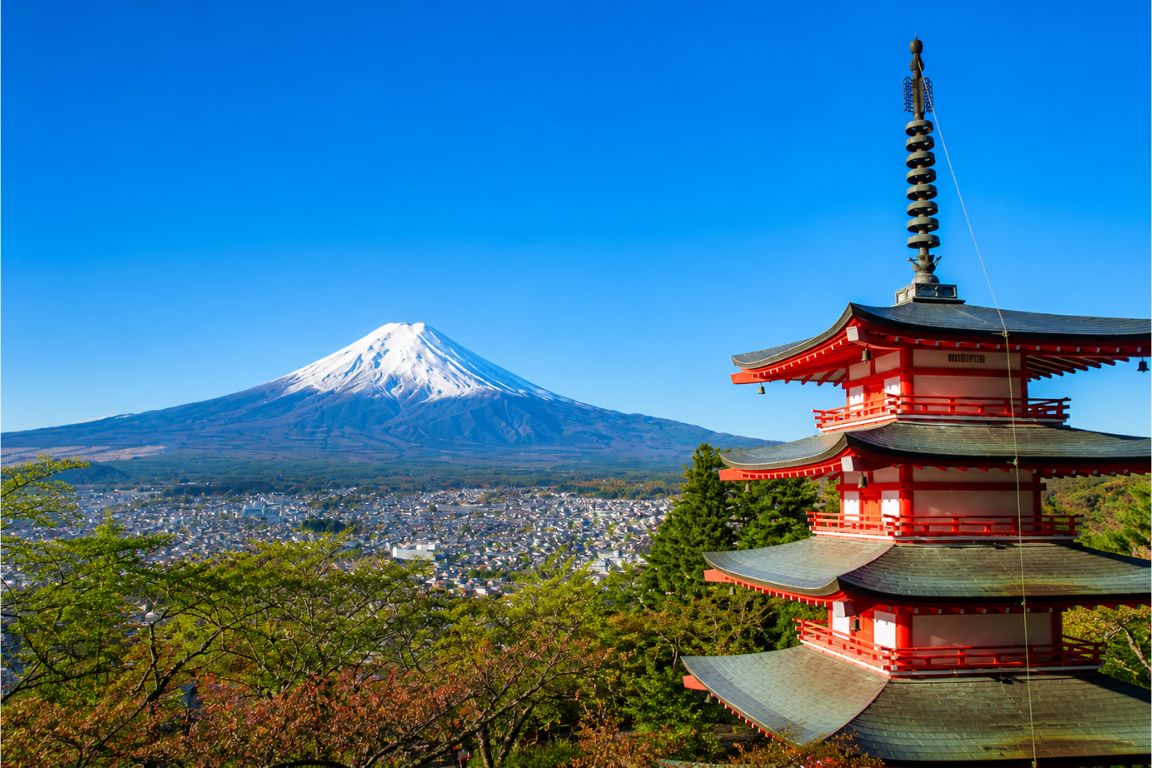 The answer depends on what you want. For climbing, the official season is July 1 to September 10. For the most dramatic views without climbing, October through February is when the air is clearest and the mountain looks its best. Cherry blossom season in late March and April is the most photogenic time for those not climbing. Summer has the crowds and the clouds.
Here’s what most travel blogs skip over: Mt. Fuji is clearly visible only about 80 days per year on average. The summer months, including the climbing season, are actually the worst time for visibility from below. Humid Pacific air in July and August frequently wraps the peak in cloud. You can be standing at Lake Kawaguchiko and not see a thing. We’ve had clients drive 2.5 hours in August, arrive to a grey wall, and wait four hours for a clearing that never came. The fix is an overnight rather than an earlier alarm, and our guide to choosing a base near the mountain compares the lake towns, Fujiyoshida and the Shizuoka side.
Winter changes everything. From December through February, dry continental air sweeps in from the north, and the mountain sits sharp and white against a blue sky more than half the days. January and February offer clarity rates of 50 to 60 percent. The snow cap is at its fullest. The mountain looks the way it looks in every painting you’ve ever seen of it.
Spring draws the biggest crowds for a reason. The Chureito Pagoda shot, cherry blossoms layered in front of the peak, is one of the most photographed scenes in Japan. That window is narrow, usually around late March to mid-April, and the area gets very busy. The shibazakura (pink phlox flowers) bloom from late April into May at Fuji Motosuko Resort and offer a slower-paced but equally striking version of the same idea.
Autumn, October and November especially, is our personal favorite. The air has cleared since summer. Foliage comes in around the lakes. The mountain gets its first fresh snow on the summit by mid-October, and the contrast of red maple trees against a white peak is genuinely stunning. Crowds are lighter than spring or summer. The climbing season has closed, so everything around the lakes moves at a different pace.
Trying to figure out which season gives you the best combination of visibility, weather, and manageable tourist numbers? Check out our best time to visit Mount Fuji tours guide before you lock in your dates.
| Spring (Mar-May) | Closed | Good mornings | High (cherry blossoms) | Chureito + sakura, shibazakura |
| Summer (Jun-Sep) | Open Jul 1-Sep 10 | Often poor below | Very high | Summit sunrise, sea of clouds |
| Autumn (Oct-Nov) | Closed | Improving | Moderate | Foliage + first summit snow |
| Winter (Dec-Feb) | Closed | Best of year (50-60%) | Low | Snow cap, clear skies, Diamond Fuji |
Do You Need a Permit or Ticket to Visit Mount Fuji?
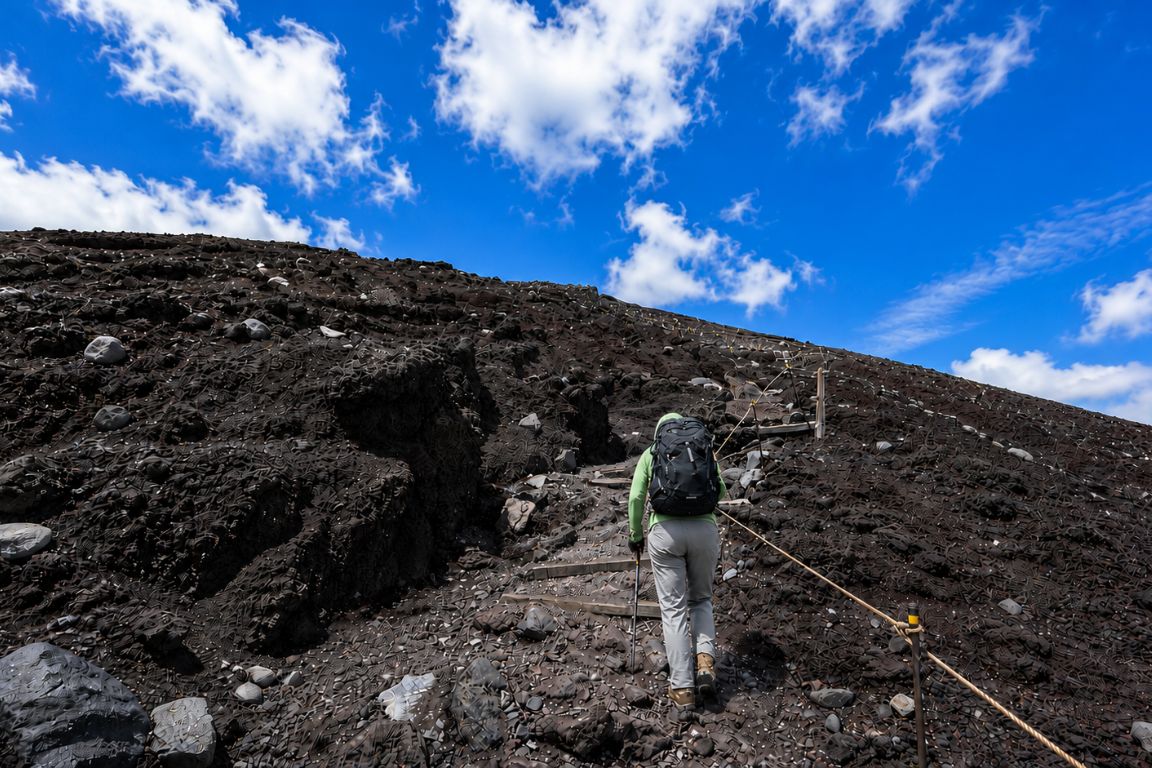 If you’re climbing, yes. All four trails now require a mandatory ¥4,000 fee per person, and the Shizuoka-side trails (Fujinomiya, Subashiri, Gotemba) require online pre-registration before you arrive. The Yoshida Trail uses a separate Yamanashi system. Gates physically block trail access and payment is required to pass through. For non-climbers visiting the 5th Station or lake areas, no permit is required.
The fee doubled from ¥2,000 to ¥4,000 starting in 2025 and remains at that level for 2026. It goes toward trail maintenance, restroom facilities, and rescue operation costs. This is not a voluntary donation anymore. Physical gates at each 5th Station trailhead enforce it. Cash only at the gate, though online pre-payment is available and recommended.
The Yoshida Trail has a daily cap of 4,000 climbers. Arrive after the cap is hit and the gate will turn you away. Climbers with confirmed mountain hut reservations are exempt from the cap, but they still pay the fee. The trail gate closes at 2:00 PM and reopens at 3:00 AM, a rule designed to stop “bullet climbing,” which is the dangerous practice of going straight up through the night without rest.
Pre-registration for Shizuoka trails requires creating an account through the official SHIZUOKA FUJI NAVI app, completing a short safety module (15 to 20 minutes), and paying the fee. The whole thing takes about 20 to 30 minutes. Do it at least 24 hours before your planned climb, not the morning of.
For sightseers, there’s no permit for visiting Lake Kawaguchiko, the Chureito Pagoda, Oshino Hakkai, or the 5th Station as a non-climber (except that during climbing season, private cars are restricted from the 5th Station access road and you’ll need to take a shuttle bus from the designated parking areas).
Should You Climb to the Summit or Just Visit the Base?
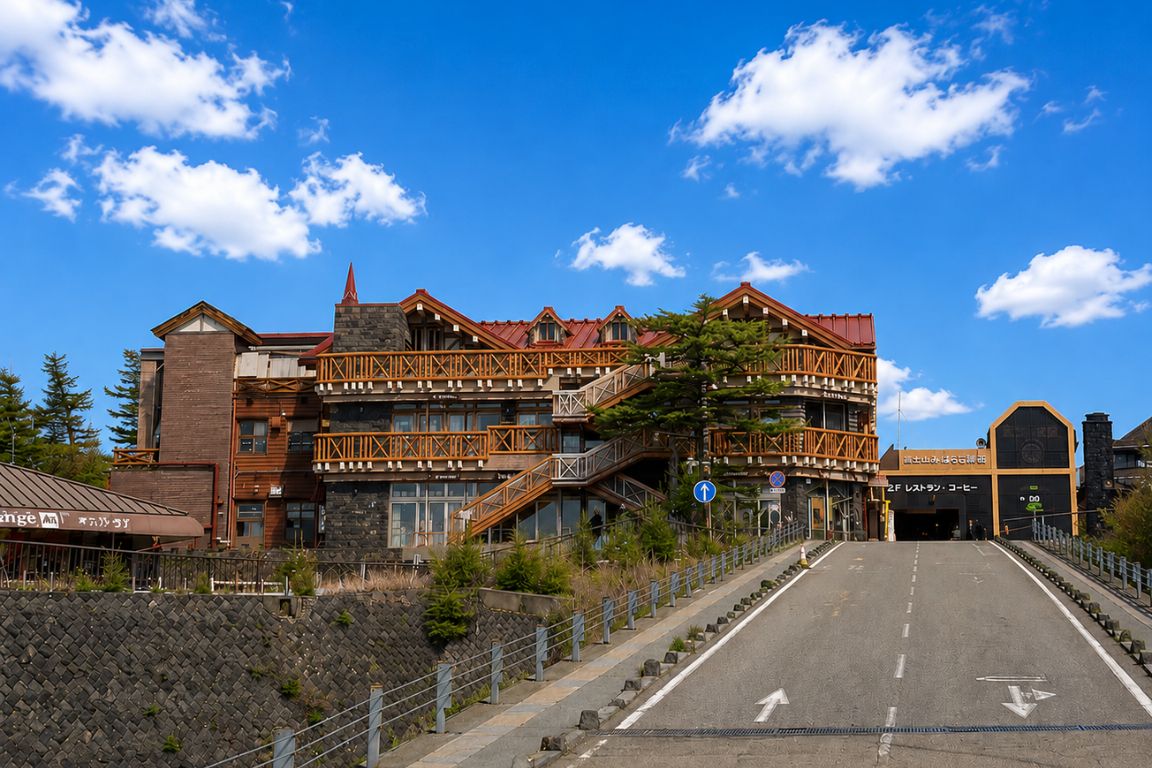 Climbing Mt. Fuji is a genuine athletic undertaking, not a scenic walk. The summit sits at 3,776 meters, and altitude sickness affects a real portion of climbers, especially those who rush. The roundtrip from the 5th Station takes 8 to 12 hours for most people. If you’re reasonably fit, enjoy hiking, and can commit a full day or preferably two, the summit experience is unlike anything else. If you want Mt. Fuji scenery without the physical demand, the base area and lake viewpoints deliver it easily.
What nobody tells you before the climb: the famous sunrise, called Goraiko, doesn’t happen at the 5th Station. It happens at the crater rim, 3,776 meters up. The last hour before the summit is the one where people go quiet. Not because it’s spiritual, exactly, but because the air is thin and conversation takes energy you need for your legs. Then the sky turns pink and gold. The cloud layer below you lights up. You realize you’ve climbed above the weather. That moment does something to people. We’ve been watching it happen for over a decade.
The practical reality is that most first-time visitors underestimate the physical demand. The volcanic scree on the upper trails is slippery on the descent. Summit temperatures in summer sit between 5°C and 8°C, and wind makes it feel colder. Altitude sickness starts affecting some people above 2,500 meters, which is below the summit. Descending fast when symptoms appear is not a sign of weakness. It’s the right call.
The 5th Station itself, at about 2,300 meters, offers genuine Fuji atmosphere. There’s a noticeable shift in air, views out over the cloud-dotted plains below, and a sense of being on the mountain without the full physical commitment. A lot of visitors go there to see what the mountain is like and decide then whether they want to push on or not. That’s a perfectly valid approach.
Wondering which climbing season dates apply, whether altitude sickness is a real concern, and what a guided tour adds beyond just showing you the trail? This can you climb Mount Fuji on a tour guide covers the practical details most first-timers overlook.
Questions about whether the summit is right for your fitness level? Compare a guided 2-day climb with going independent in the tour vs DIY guide.
What Are the Best Viewpoints If You’re Not Climbing?
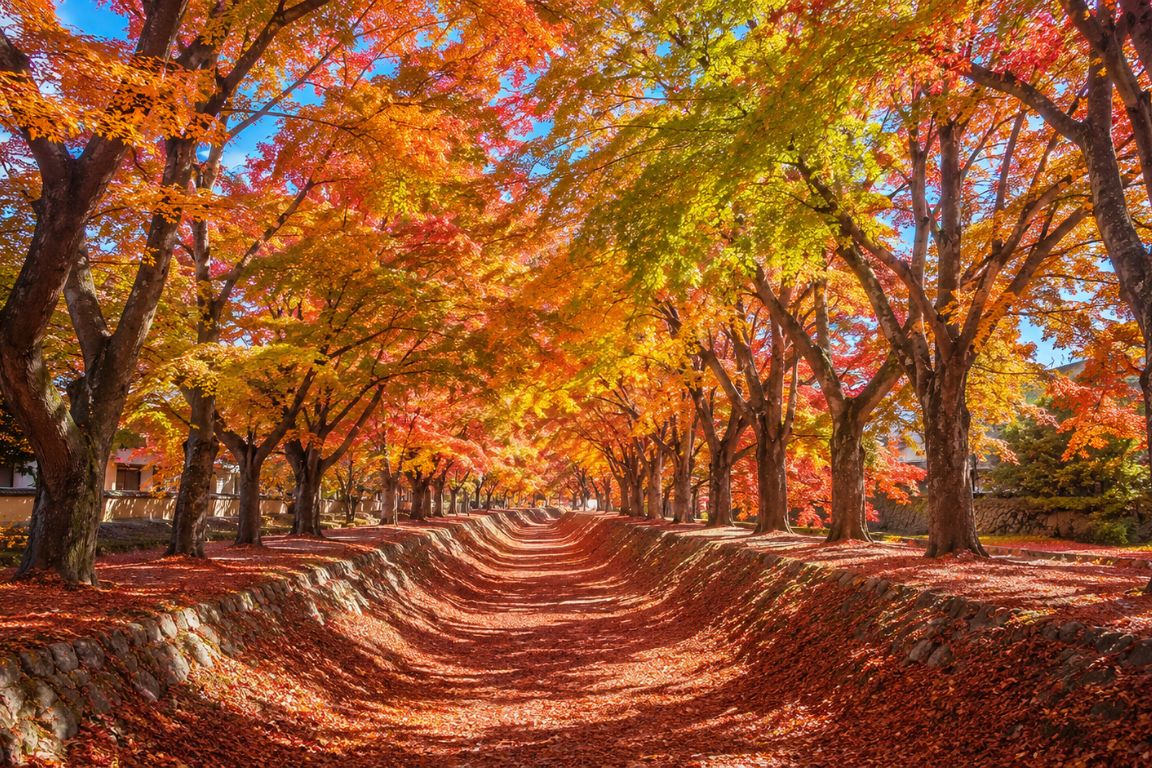 The northern shore of Lake Kawaguchiko is the most reliably beautiful place to see Mt. Fuji. Chureito Pagoda offers the iconic pagoda-with-mountain shot, best in cherry blossom season. Oishi Park on the lake’s north shore gives a wide, unobstructed view across the water. For something less crowded, the Kawaguchiko Ropeway puts you above the tree line with the peak directly in front of you.
The Chureito Pagoda shot is the one you’ve seen everywhere, a red five-story pagoda with Mt. Fuji rising behind it, sakura blossoms in the foreground. It’s on a hillside in Arakurayama Sengen Park, about 398 steps up from the base. Entry is free. It gets busy mid-morning, so arrive before 8:00 AM if you want it to yourself. The light is better then anyway.
The north shore of Lake Kawaguchiko is the view that never gets old. On calm mornings, the mountain reflects in the water. Momiji Corridor, a stretch of maple trees along the road to Oishi Park, lights up brilliant red in November. Oishi Park itself sits right on the north shore with wide open sightlines. There’s a lavender field there in July. It’s the kind of place where you look up from your phone and stay looking for longer than you planned.
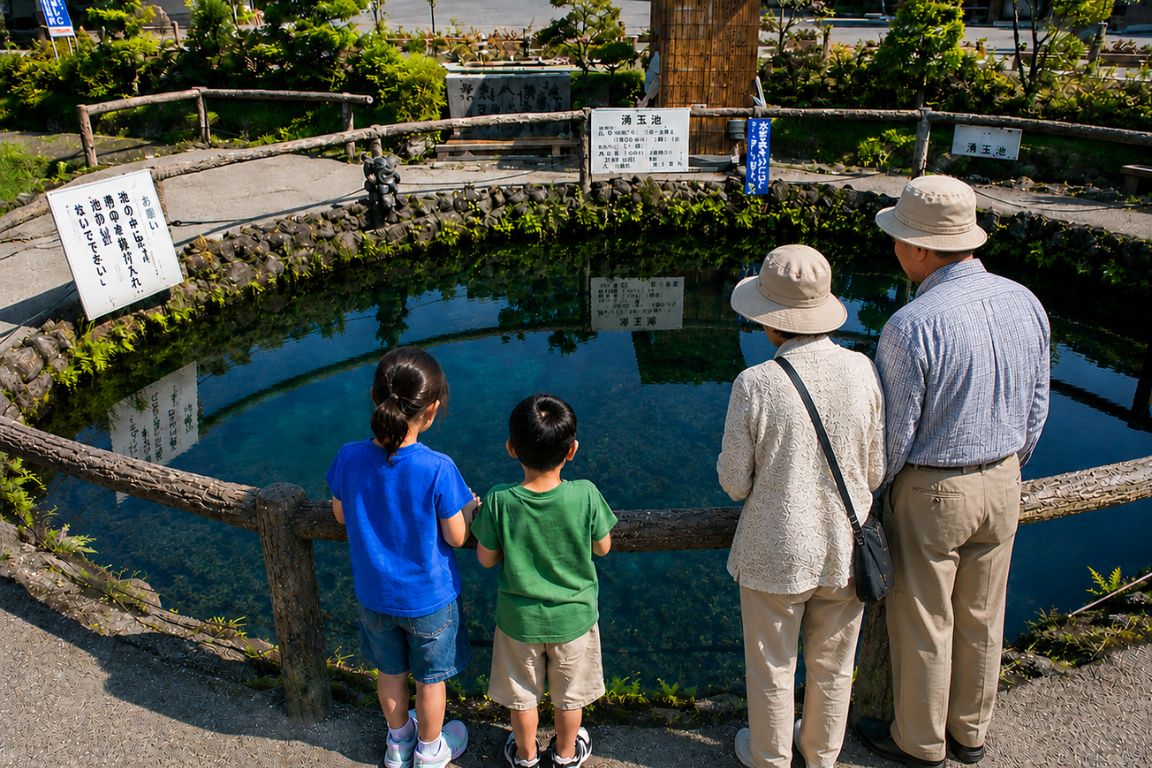
Oshino Hakkai is a village east of Kawaguchiko where eight natural spring ponds fed by snowmelt from Mt. Fuji sit in a traditional rural setting. The mountain is visible behind it on clear days. It’s quieter than Chureito and shows a different side of the Fuji area. Most people spend 30 to 45 minutes here.
For photographers willing to go a little further, the Kawaguchiko Ropeway (¥1,000 return, prices verified May 2026) lifts you to a viewpoint above the town. The forest walk down takes about 30 minutes and is genuinely peaceful. In 2025 the deck was expanded with a suspended platform that juts out over the cliff edge. Worth it.
Not sure which viewpoints and scenic spots around Mount Fuji are actually worth your time versus which ones look better in photos than they do in person? Here’s our Mt. Fuji tours scenic spots explained guide so you prioritize the right ones.
Chureito, Kawaguchiko & Oshino: Scheduled Dates
Link Chureito Pagoda, Oishi Park and Oshino Hakkai in one day by coach.
Check Dates For Chureito, Kawaguchiko & OshinoHow Long Should You Spend: Is One Day Enough?
 One day from Tokyo is enough to see Mt. Fuji, reach the 5th Station, or cover the main Kawaguchiko viewpoints. But it’s rushed, especially if public transport connections don’t line up. Two days gives you a fighting chance at good weather (if the first day is cloudy, you have a second shot), and lets you see more of the lake area without running between buses. For anyone planning to climb, one day from Tokyo is not enough unless you’re doing a night hike with a mountain hut reservation.
The day-trip math works like this. If you leave Shinjuku at 8:00 AM, you’re at Kawaguchiko by 10:30 AM. You have until about 4:00 PM before you need to catch transport back to make the last reasonable buses and trains. That’s five and a half hours on the ground. For sightseers, that covers Chureito Pagoda, the north shore, and Oshino Hakkai with some rushing. For 5th Station visitors, it’s comfortable but tight.
The bigger problem with one day is the weather. Mt. Fuji creates its own weather systems. The mountain can be invisible when Tokyo is sunny. On average, the mountain is clearly visible roughly 80 days per year from the Kawaguchiko area. You don’t know until you’re there, and no forecast is reliable at that precision. Two days doesn’t guarantee clarity, but it halves your risk of making a 5-hour round trip to stare at cloud.
For climbers, the standard approach is a two-day trip with a mountain hut overnight around the 7th or 8th Station. You climb in the afternoon on day one, sleep a few hours, start for the summit at 2:00 to 3:00 AM, reach the top for sunrise, and descend to the 5th Station by noon. Attempting the roundtrip as a single day push from Tokyo is physically possible for fit hikers, but altitude sickness risk is higher when you push fast, and it leaves no margin for bad weather or slower pace on the trail.
What Should You Pack for a Mount Fuji Day Trip from Tokyo?
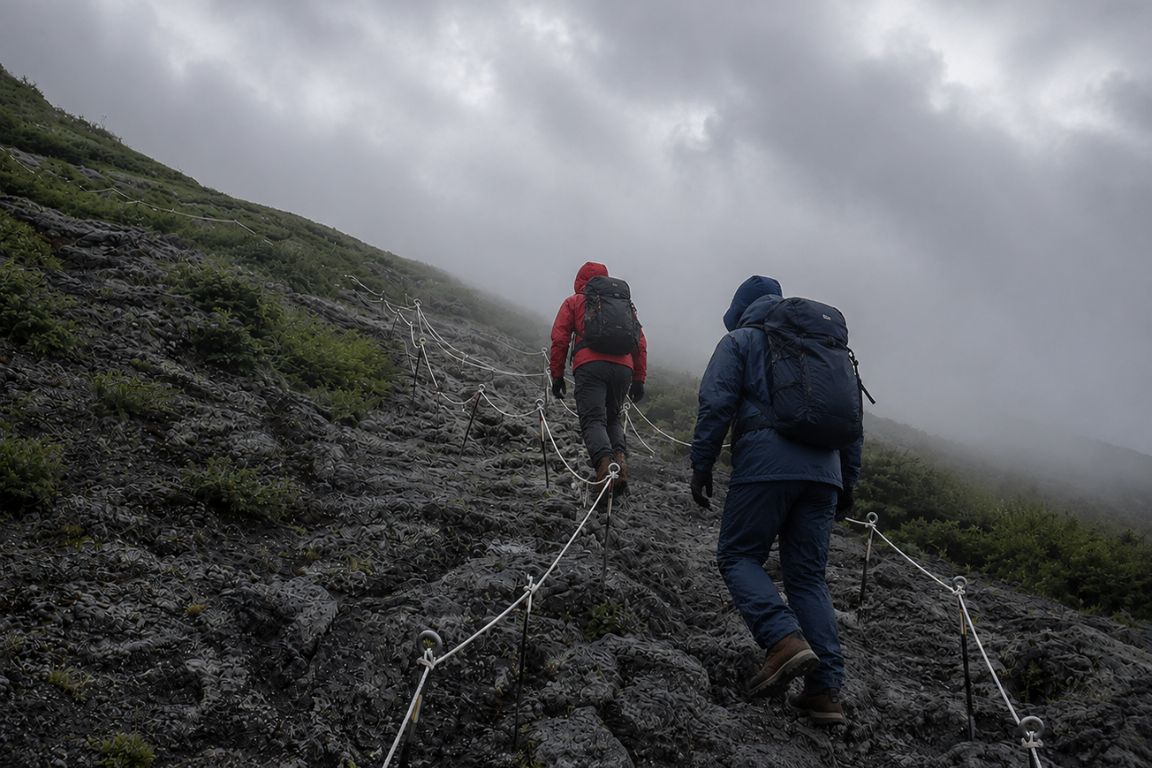 For non-climbers and 5th Station visitors: layers, a wind-resistant jacket, comfortable walking shoes, and cash. For climbers: waterproof hiking boots, thermal base layer, insulating mid-layer, waterproof shell, gloves, hat, headlamp, 2 liters of water minimum, snacks, and cash for fees and hut purchases. Altitude changes what your body needs. A warm day in Tokyo means nothing at 3,700 meters.
The temperature at the 5th Station runs roughly 10°C cooler than Tokyo at the base of the mountain. The summit can be 20°C cooler, sometimes more, with wind chill. In August, when Tokyo is 35°C, the summit sits between 5°C and 8°C. Cotton kills up high. It holds sweat against your skin and chills you fast once you stop moving. Merino wool or synthetic base layers are the correct call. Bring them even if you’re not planning to climb all the way.
Bring cash. While Japan is moving toward cashless payment, not every small shop around the Fuji Five Lakes area accepts cards. The climbing fee itself is cash only at the gate. Mountain hut meals and purchases are cash only. There’s an ATM at the 5th Station and at Kawaguchiko Station, but don’t count on it being convenient in the moment.
Sunscreen and sunglasses are genuinely important. The UV exposure at altitude is significantly higher than at sea level, and volcanic rock reflects more light than you expect. We’ve seen badly sunburned climbers in full cloud cover.
Want to stay comfortable across a full day on the mountain without overpacking or getting the clothing completely wrong? Here’s our what to wear for Mount Fuji tours guide so you get it right.
What Do Most First-Time Visitors Get Wrong About the Trip?
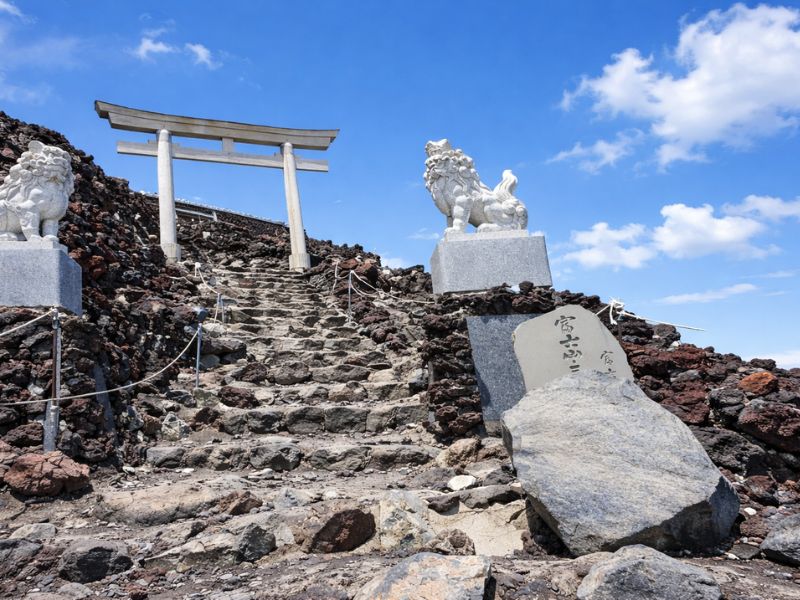
The single most common mistake is not checking visibility before leaving Tokyo. Fuji’s peak is cloud-covered more often than not, and no amount of arriving there fixes that. The second biggest mistake is underestimating travel time within the lake area. Buses are less frequent than Tokyo trains, distances between viewpoints are longer than maps suggest, and rushing ruins the experience.
Weather is the one that stings the most. A clear sky in Shinjuku tells you almost nothing about what the mountain looks like 100 km away. Mt. Fuji generates its own micro-weather. The surrounding lakes sit at different elevations. The 5th Station is 2,300 meters up, in a completely different climate zone from the lakeside villages below. People arrive in t-shirts expecting a warm sightseeing day and find themselves shivering in 15°C wind near the shore. Check a Mt. Fuji-specific visibility forecast the night before, not the general Tokyo weather. Use isfujivisible.com or similar services that track actual mountain conditions.
The other one we see constantly: arriving without a mountain hut reservation and expecting to summit for sunrise. As of 2025, the Yoshida Trail gate closes at 2:00 PM. You physically cannot enter after that without a confirmed mountain hut reservation. This rule exists because “bullet climbing,” going straight up through the night, sent too many people into the mountain without rest or proper acclimatization. The rule is enforced. A gate, not a suggestion.
Within the lake area, people consistently underestimate bus wait times. Sightseeing buses around Kawaguchiko run every 20 to 30 minutes, sometimes less frequently. Missing one doesn’t mean the next is two minutes away. If you’re trying to fit Chureito, the north shore, and Oshino Hakkai into a single day without a car, build buffer time into every connection. Renting a bicycle at Kawaguchiko Station is often faster than waiting for buses.
One more: the summit of Mt. Fuji is not scenic in the traditional sense. There’s a crater, a weather station, a shrine, and vending machines. The experience is the journey and the sunrise. Don’t come for a pretty summit landscape. Come for what happens on the way up and what you feel when you get there.
We’ve been getting travelers to the top since 2012. A 2-day guided climb is how transport, trail registration, and mountain hut booking get handled in one place.
First time planning a trip around seeing Mount Fuji and worried about missing it entirely? Here’s our best time to see Mount Fuji tours guide so you give yourself the best possible chance of a clear sighting.
How Do You Book a Guided Tour vs. Going Independent?
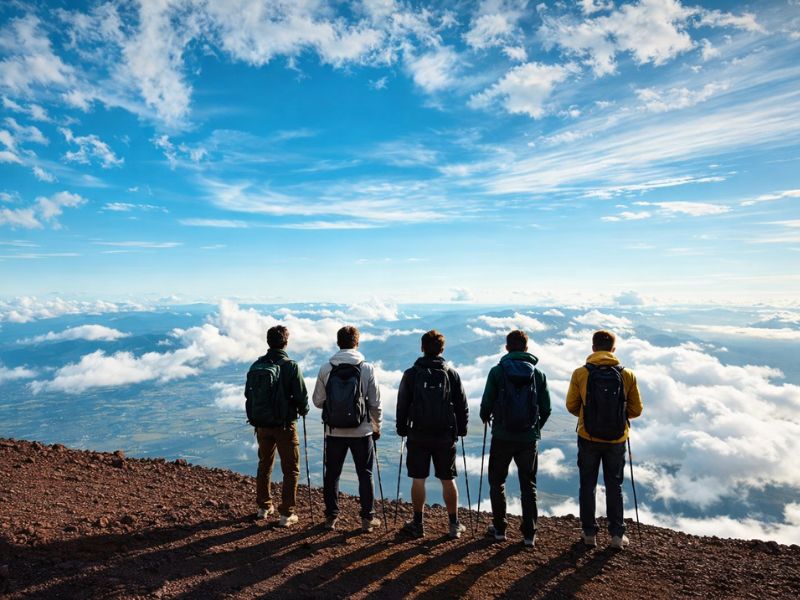
Going independent is cheaper and works well for non-climbers visiting the lake area. For the summit climb, especially for first-timers, a guided tour handles trail registration, mountain hut reservations, gear advice, altitude pacing, and emergency protocols in one booking. The fee difference is real but so is what you get for it.
The independent route for sightseers is genuinely straightforward. Bus from Shinjuku to Kawaguchiko, day pass for the local sightseeing buses (¥1,700 for two days as of May 2026), walk the north shore, catch the Ropeway, take the train to Chureito. You don’t need anyone holding your hand for that.
For the climb, the calculus is different. The 2025 and 2026 regulations added layers that catch people off guard: pre-registration deadlines, trail-specific systems, the gate closure at 2:00 PM, mountain hut booking windows that open in March and fill fast for peak weekends. A guided tour absorbs all of that. Guides also set pace. Altitude sickness isn’t about fitness. It’s about ascent rate. Someone who runs marathons can get altitude sickness faster than a casual hiker if they push too hard too quickly. Guides who have done this hundreds of times read the signs before you feel them.
Want an honest comparison between going with a guide and doing the Fuji trip on your own terms? Here’s our Mount Fuji tour vs DIY guide so you pick the option that fits your travel style.
What Our Clients Actually Experience: Data from Mt. Fuji Tours
| Climbers who reached the summit | 85% (guided groups) |
| First-time climbers who chose Yoshida Trail | 64% |
| Travelers who opted for 2-day trip over 1-day | 92% |
| Most common reason for not reaching summit | Altitude sickness (approx. 75% of those who turned back) |
| Travelers who combined lake sightseeing with climbing | 45% |
| Peak booking months for guided climbs | July and August (approx. 80% of annual bookings) |
| Travelers who said weather impacted their experience | 55% |
If you’d rather hand the logistics to someone who’s done this 11,500 times, the 2-day Mt. Fuji climb with a professional guide is the place to check trail permits and summit timing.
Frequently Asked Questions
Can you visit Mt. Fuji from Tokyo as a day trip?
Yes, but it’s tight. Budget 2 to 2.5 hours each way from Shinjuku by bus or train, leaving about 5 hours at the destination. It works well for sightseeing around Lake Kawaguchiko or a 5th Station visit. For climbing, one day from Tokyo is not practical. You’ll want at least one overnight.
Is Mt. Fuji worth visiting outside climbing season?
For many travelers, outside climbing season is actually better. The lake area is less crowded, the air is clearer (especially October to February), and autumn foliage around the Five Lakes is stunning. Winter gives the clearest mountain views of the year. You can’t climb the summit, but the surrounding scenery doesn’t require it.
How much does it cost to climb Mt. Fuji in 2026?
The mandatory trail fee is ¥4,000 per person on all four trails (prices verified May 2026). Add transport from Tokyo (¥1,750 to ¥4,130 each way), mountain hut accommodation if staying overnight (¥7,000 to ¥10,000 per person with meals), and food and gear. Budget roughly ¥20,000 to ¥35,000 for a two-day guided climb from Tokyo all-in.
Is a guide necessary to climb Mt. Fuji?
Not required, but genuinely useful for first-timers. The new pre-registration system, gate rules, and mountain hut booking logistics are manageable solo if you research carefully. Where guides add real value is in pacing on the trail, reading altitude sickness early, and handling weather decision-making. If you’re unsure about any of those, the guide fee pays for peace of mind and a statistically higher summit success rate.
When is the worst time to visit Mt. Fuji?
Visibility-wise, June through mid-July is the rainy season and the least reliable time to see the mountain clearly. August is peak season for crowds, with trails at maximum capacity and accommodation scarce. If you’re visiting mainly for the view rather than the climb, avoid July and August for sightseeing and come in winter or autumn instead.
What is the Yoshida Trail gate closure rule?
Starting in 2024 and continuing in 2026, the Yoshida Trail gate closes to new entrants from 2:00 PM to 3:00 AM. Climbers with confirmed mountain hut reservations can pass through during restricted hours, but everyone else is turned away. This prevents dangerous overnight ascents without proper rest.
Questions before you commit? Review the 2-day guided climb for how trail registration and mountain hut timing are handled, or read the tour vs DIY comparison. We’ve been getting travelers to the top since 2012.
Written by Akira Nakamura
Japanese tour guide since 2012 · Founder, Mt. Fuji Tours
Akira has guided over 11,500 travelers up Mt. Fuji and through the Fuji Five Lakes region since founding the agency.