How to Visit Mount Fuji from Osaka or Kyoto
Osaka sits about 350 km from the mountain, which changes the trip completely. Here is what the journey really costs in hours and yen, which gateway station to aim for, and the itinerary shape that works instead of the one most people try first.
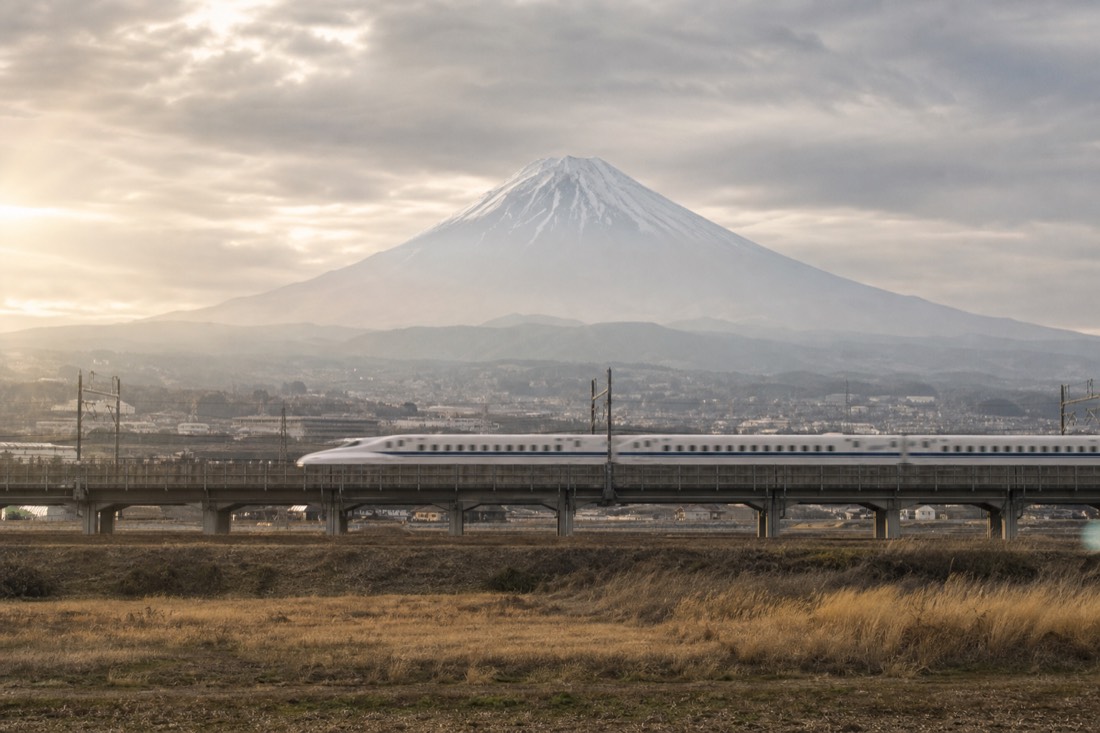
The first thing to understand about reaching Mount Fuji from Osaka is that the mountain is not near Osaka in any useful sense. It is 350 km away as the crow flies, sits in a completely different prefecture pair, and has no direct rail line running to it. Travellers who plan Kyoto in the morning and Fuji in the afternoon are working from a mental map of Japan that is roughly twice too small.
Keep the rail journey and the local sightseeing day separate. A Shin-Fuji pickup fits a southern stopover; a Kawaguchiko pickup fits a night at the lakes.
Booking Summary: Travel from Osaka or Kyoto independently. Compare a six-hour Shin-Fuji nature day with a local lakes tour; the rail-and-wasabi alternative starts in Tokyo and only fits the reverse itinerary.
Scroll to the end for the complete comparison and provider booking links. Interactive matching requires JavaScript.
That does not make the trip a bad idea. It makes it a two-day idea. Below is every route that actually exists, what each one costs in hours and yen at 2026 prices, and the itinerary shape we would build for someone arriving from western Japan rather than from Tokyo.
The honest time cost, route by route
Compiled from published 2026 Tokaido Shinkansen, Fujikyu bus and limited-express timetables. Treat these as planning allowances rather than a promise: a missed connection at Mishima adds an hour on its own.
How far is Mount Fuji from Osaka, and can you see it from there?
Mount Fuji sits roughly 350 km northeast of Osaka, and it is not visible from anywhere in the city. No amount of clear weather changes that: the mountain ranges of central Japan sit directly in the sightline, and the curvature of the earth would hide the summit at that distance even over flat ground.
The confusion is understandable. Mount Fuji is visible from Tokyo on clear winter mornings, and Tokyo is 100 km away. People reasonably extrapolate. But the visibility limit for a 3,776 m peak over intervening terrain is nowhere near 350 km, and the Kii peninsula, the Suzuka mountains and the Japanese Alps all sit in the way.
What you can see from western Japan is the mountain from the train. The Tokaido Shinkansen runs along the southern foot of the mountain between Shizuoka and Mishima, and on a clear day the view from that stretch of track is one of the best free things in Japan. Our guide to when the mountain is actually visible covers the seasonal odds in detail; the short version is that a February morning gives you a far better chance than an August afternoon.
What is the fastest route from Osaka to Mount Fuji?
The fastest realistic route is the Shinkansen from Shin-Osaka to Mishima, then the direct liner bus from Mishima Station to Lake Kawaguchiko. Rail takes about 2 hours 10 minutes on a Hikari, the bus about 1 hour 30 minutes, and door to door from central Osaka you should allow five hours including the walk to the platform and the wait at Mishima.
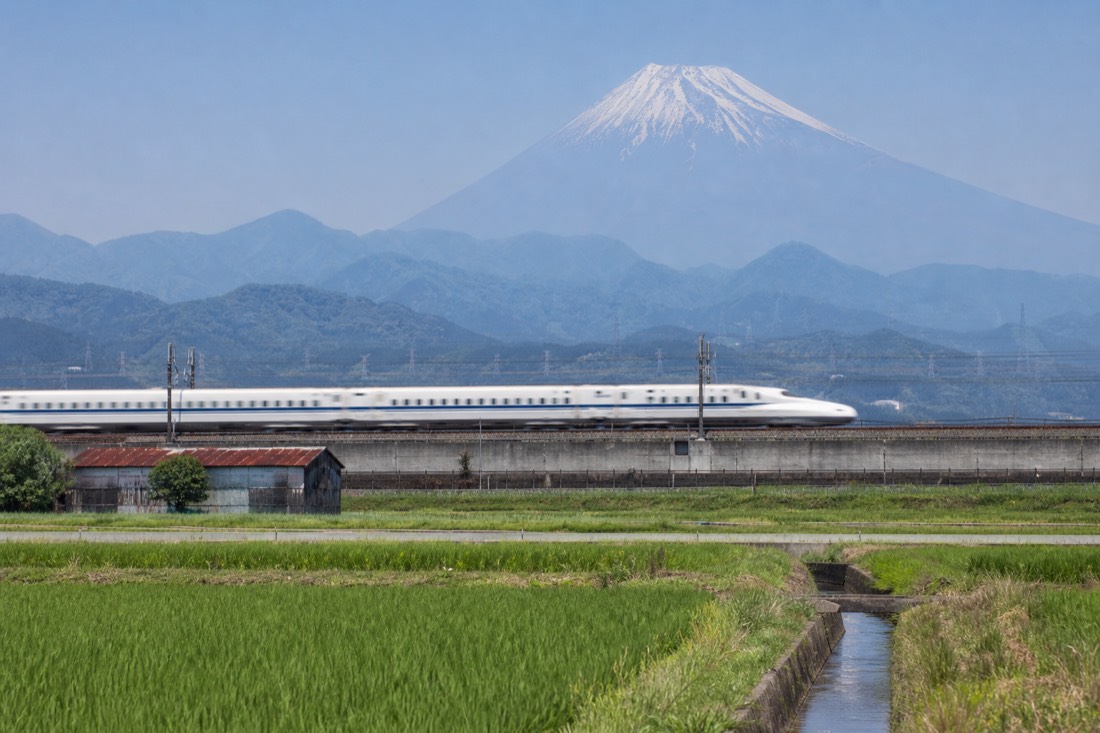
Mishima is the key. It is the easternmost Shinkansen stop before the line turns toward Tokyo, it sits on the southeastern side of the mountain, and it is the only Shinkansen station with a genuinely direct bus to the Fuji Five Lakes. Nozomi services, the fastest trains on the line, do not stop there. You want a Hikari, or failing that a Kodama, and you want to know that before you book a reserved seat.
One way on a Hikari with a reserved seat runs to around ¥12,300 at 2026 fares. The Mishima to Kawaguchiko liner is operated by the Fujikyu group and costs around ¥2,700 one way, running roughly hourly. Seats can be reserved through the operator's app and we would do that on a weekend, because a full bus means waiting an hour on a station forecourt.
| Route from central Osaka | Rail leg | Onward leg | Realistic door to door | Rough one-way cost |
|---|---|---|---|---|
| Shin-Osaka to Mishima, then liner bus | Hikari, about 2 hr 10 min | Bus, about 1 hr 30 min | About 5 hours | Around ¥15,000 |
| Shin-Osaka to Tokyo, then Fuji Excursion limited express | Nozomi or Hikari, about 2 hr 30 min | Train from Shinjuku, about 1 hr 52 min | About 6 hours | Around ¥19,000 |
| Shin-Osaka to Shinjuku, then highway bus | About 2 hr 45 min including the transfer across Tokyo | Bus, 2 to 2.5 hr | About 7 hours | Around ¥16,000 |
| Shin-Osaka to Shin-Fuji, then local bus | Kodama only, about 2 hr 45 min | Seasonal bus to the Fujinomiya 5th Station, about 2 hr | About 5.5 hours to the trailhead | Around ¥15,700 |
Those totals include transfer walking, ticket queues and a realistic connection buffer. They are planning allowances rather than timetable times, because the timetable time is the number that gets people stranded at Mishima at half past four.
Should you go via Mishima, Shin-Fuji or Tokyo?
Aim for Mishima if the Fuji Five Lakes are your destination, Shin-Fuji if you are climbing the Fujinomiya Trail or exploring the Shizuoka foothills, and Tokyo only if you were going to spend a night there anyway. The three gateways point at three different sides of the mountain and are not interchangeable.
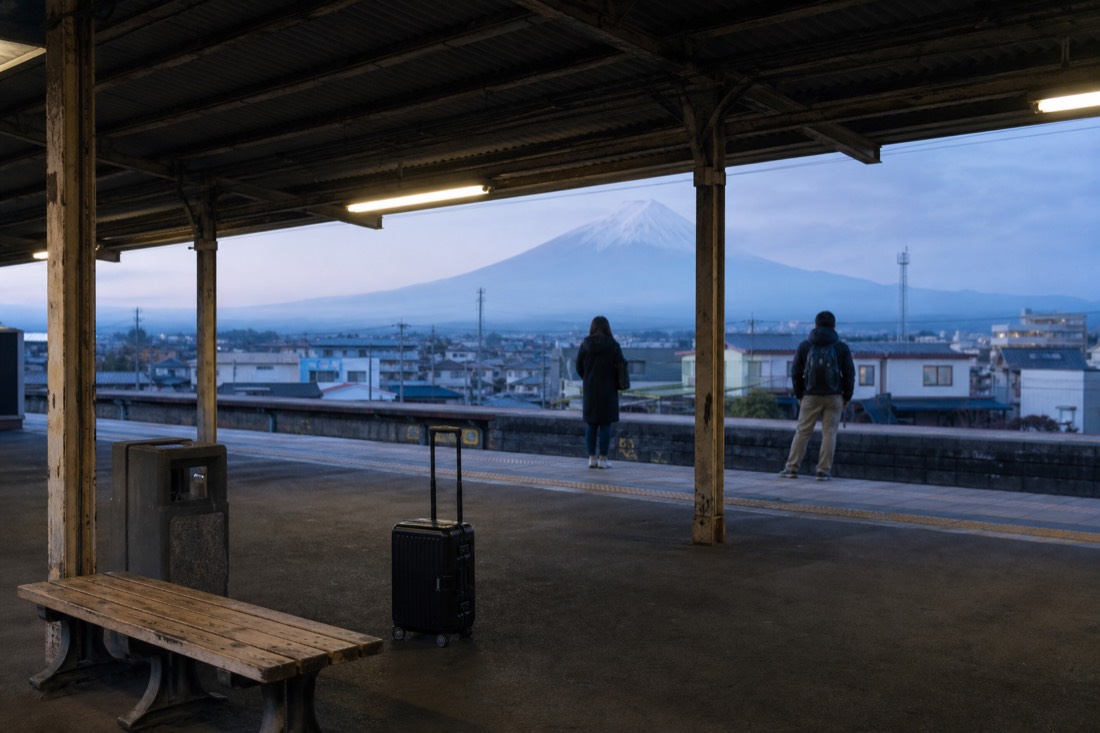
Mishima puts you on the direct bus to Kawaguchiko, which is the classic base: the north shore views, the ropeway, Oshino Hakkai, the Chureito Pagoda. Shin-Fuji is a Kodama-only stop on the south side, close to Shiraito Falls, the wasabi country and the Fujinomiya trailhead. Tokyo is a detour of about 90 minutes in each direction but opens up the full range of coach itineraries that leave Shinjuku every morning.
The Shizuoka option is the one western-Japan travellers usually overlook. A private nature tour from Shin-Fuji starts at the station itself, which removes the transfer problem entirely: you step off the Kodama and into a vehicle. For cruise passengers docking at Shimizu there is also a Shizuoka sake-tasting shore excursion built around the same side of the mountain. Both suit an arrival from the west far better than anything that begins in Shinjuku at seven in the morning.
The same geography opens up something the Tokyo-based itineraries cannot reach at all. The gorges cut into the volcanic rock west of the mountain carry a genuinely serious advanced canyoning tour near Mount Fuji, which runs from the Shizuoka side and is a three-hour activity rather than a full-day coach trip. If you are staying a night on that side anyway, it fills an afternoon better than another viewpoint.
| Gateway station | Which trains stop | Side of the mountain | Best for | Weak point |
|---|---|---|---|---|
| Mishima | Hikari and Kodama | Southeast | Reaching Kawaguchiko and the Five Lakes without going through Tokyo | The liner bus is roughly hourly, so a missed connection is expensive |
| Shin-Fuji | Kodama only | South | Fujinomiya Trail, Shiraito Falls, the Shizuoka foothills, tours that begin at the station | Slowest Shinkansen leg, and the 5th Station bus is seasonal |
| Odawara | Hikari and Kodama | East, toward Hakone | Hakone, the lake loop, onsen towns | Mount Fuji is distant and often hidden from Hakone |
| Tokyo or Shinagawa | All services | North, via Shinjuku | The full range of morning coach departures and the Fuji Excursion train | Adds about 90 minutes each way and a cross-city transfer |
Is a Mount Fuji day trip from Osaka realistic?
No, and this is the single most useful thing on this page. A same-day round trip from Osaka is 10 to 12 hours of transit for two or three hours at the mountain, and those hours land in the afternoon, which is the worst part of the day for visibility. Even a perfect-weather attempt tends to deliver a photograph of cloud.
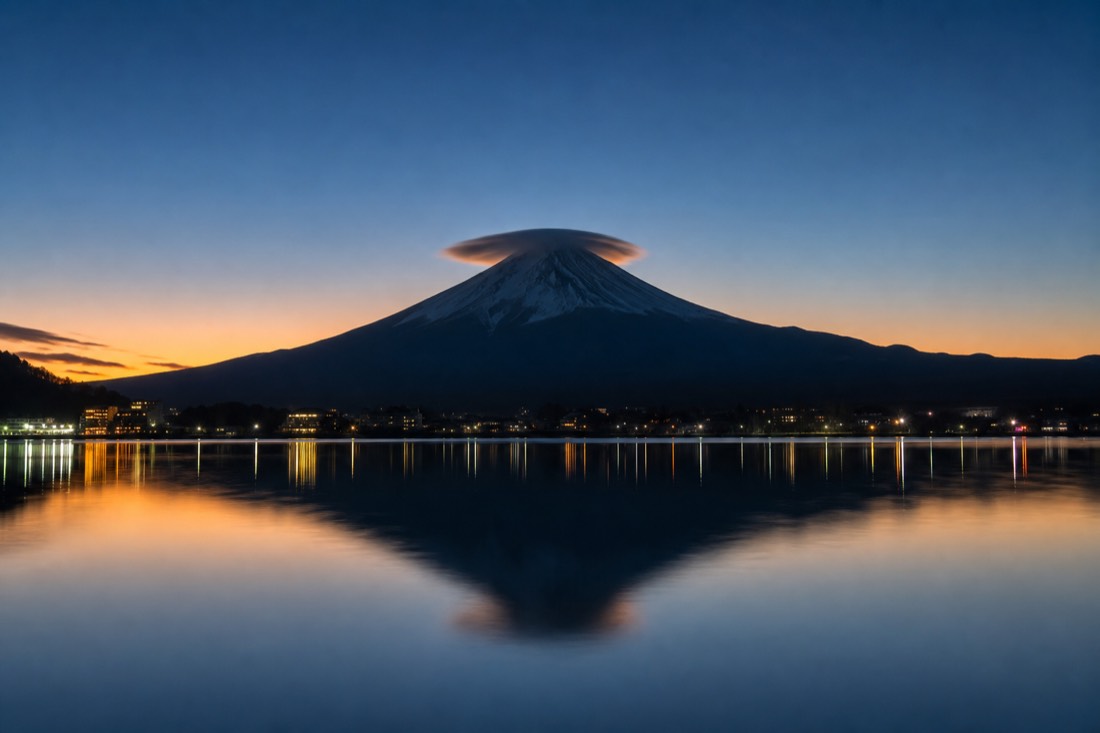
The reason is meteorological rather than logistical. Mount Fuji generates its own cloud during the day: warm air rises off the lower slopes, moisture comes up off the lakes, and a cloud skirt usually starts forming around the mid-mountain by late morning. Our best months to visit Mount Fuji guide sets out the monthly clear-view rates, and the pattern is consistent. The clear view belongs to people who are standing there before nine in the morning, and nobody who left Osaka after breakfast is standing there before nine.
Here is what a day-trip attempt actually looks like, hour by hour, if everything runs to time.
| Time | Where you are | What is happening |
|---|---|---|
| 06:20 | Leaving your Osaka hotel | First useful Hikari of the day, so you are up at 05:30 |
| 06:56 | Shin-Osaka | Board eastbound Hikari |
| 09:10 | Mishima | Transfer to the Kawaguchiko liner, allow 25 minutes |
| 11:10 | Kawaguchiko Station | Cloud has usually started building by now |
| 11:30 to 15:00 | Lake shore, ropeway, Oishi Park | Your entire time at the mountain: three and a half hours |
| 15:10 | Kawaguchiko Station | Last comfortable liner back if you want to eat in Osaka |
| 19:45 | Shin-Osaka | About 12 hours out, roughly 8.5 of them in transit |
Compare that with the same money spent on one night near the lake. You arrive mid-afternoon with no pressure, eat locally, sleep, and walk out to the north shore at seven the next morning when the odds of a clear mountain are at their highest. That is the trip. The day trip is the version of the trip that goes wrong.
What does the whole journey cost from Osaka?
Budget roughly ¥30,000 to ¥38,000 per person for a two-day round trip from Osaka covering rail, the local bus, one mid-range night near the lake and meals. Rail alone accounts for about ¥30,000 of that if you pay per journey rather than using a pass.
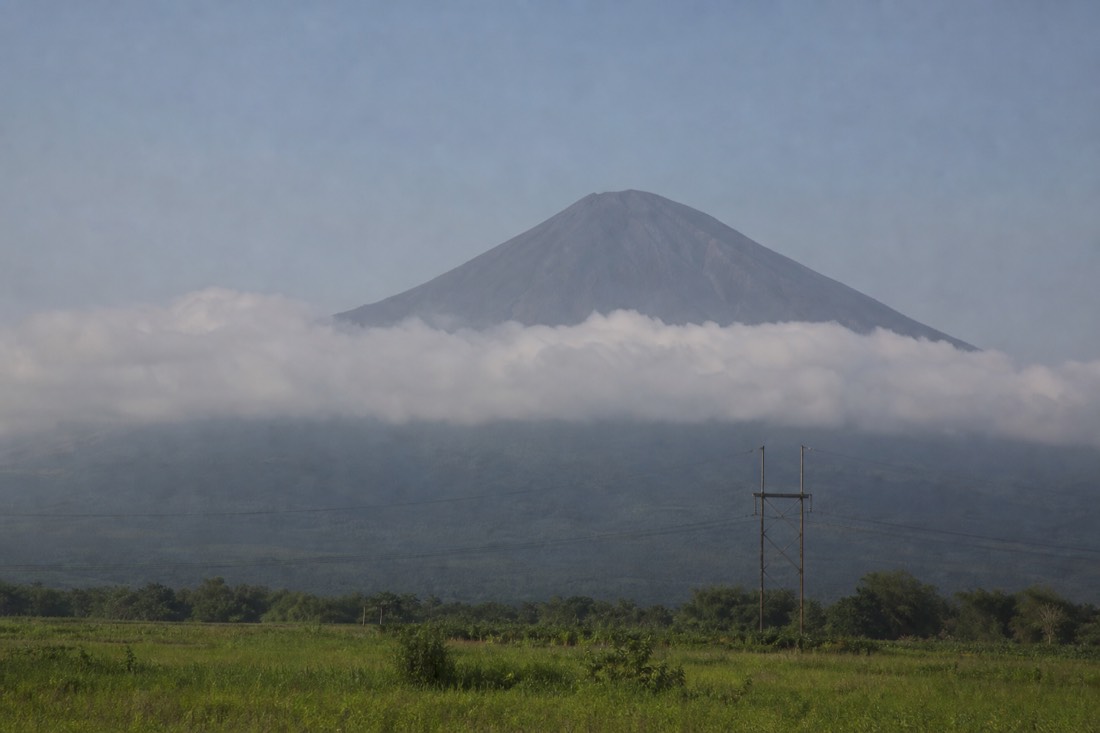
The rail leg dominates everything else. A return to Mishima is around ¥24,600 at 2026 reserved-seat fares, and the Kawaguchiko liner adds about ¥5,400 return on top. Once you are at the lake, local costs are modest by Japanese standards: the Kawaguchiko sightseeing bus, an entry ticket or two and lunch rarely add up to more than a few thousand yen.
| Line item | Planning allowance per person | Note |
|---|---|---|
| Shin-Osaka to Mishima, return | Around ¥24,600 | Reserved seat, Hikari service |
| Mishima to Kawaguchiko liner, return | Around ¥5,400 | Reserve on a weekend |
| One night, mid-range lakeside hotel | ¥15,000 to ¥30,000 | See our guide to choosing a base near the mountain |
| Local buses and one attraction | ¥2,000 to ¥4,000 | Ropeway, boat or Oshino Hakkai |
| Meals for two days | ¥4,000 to ¥8,000 | Hoto lunch, convenience-store breakfast, one sit-down dinner |
| Guided day tour, if you take one | Around $64 to $180 | Prices move; check the live listing before you plan around one |
Shin-Fuji Waterfalls & Trout Farm: Scheduled Dates
Visit Shiraito and Jinba Falls and a spring-fed trout farm with a private vehicle and an English-speaking nature guide.
Check Dates For Shin-Fuji Waterfalls & Trout FarmDoes the Japan Rail Pass make sense for this trip?
Only if Mount Fuji is one stop on a wider itinerary. A 7-day nationwide Japan Rail Pass costs ¥50,000 at 2026 prices, and an Osaka to Fuji return alone is about ¥24,600, so the pass does not pay for itself on this journey by itself. Add a Tokyo leg or a second long trip and the arithmetic changes.
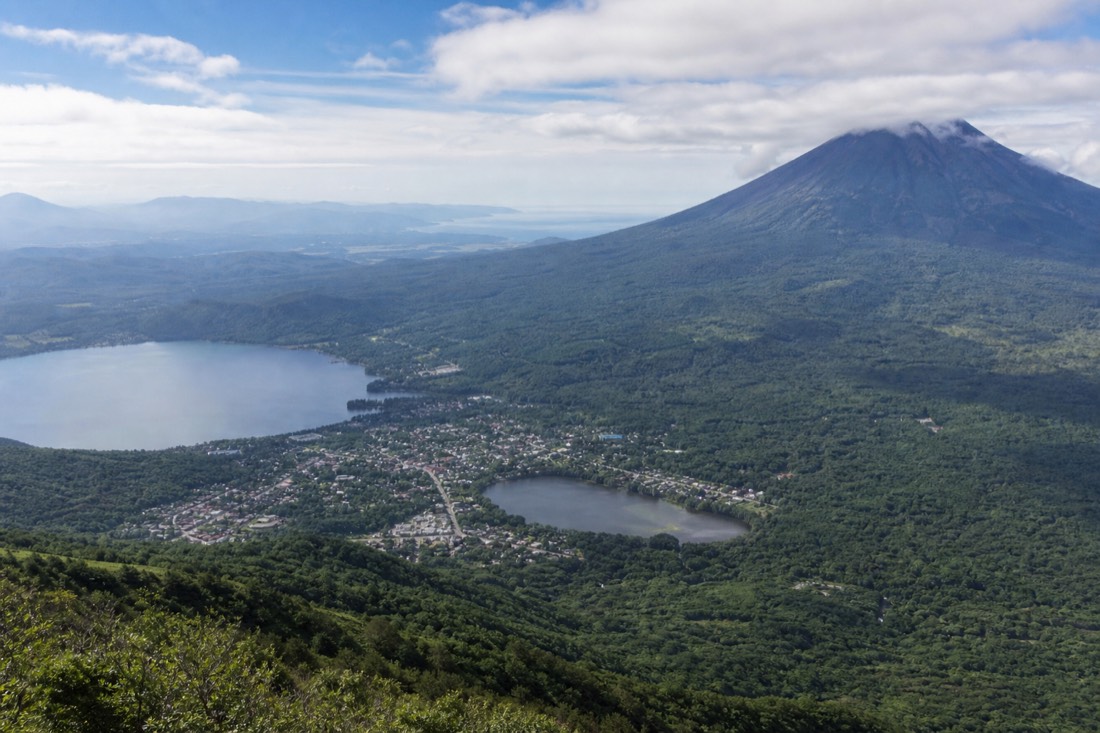
Two coverage details matter more than the price. First, the pass does not cover Nozomi services without a surcharge, so you are on Hikari or Kodama anyway, which is what Mishima requires. That means the pass costs you nothing in journey time on this particular route. Second, the pass does not cover the Fujikyu Railway line from Otsuki to Kawaguchiko, and it does not cover Fujikyu buses. Whichever way you approach the mountain, the last leg is a separate ticket.
| Leg | Covered by the nationwide pass? | What you still pay |
|---|---|---|
| Shin-Osaka to Mishima, Hikari or Kodama | Yes | Nothing |
| Shin-Osaka to Tokyo, Nozomi | Surcharge applies | Nozomi supplement |
| Mishima to Kawaguchiko liner bus | No | Around ¥2,700 each way |
| Otsuki to Kawaguchiko, Fujikyu Railway | No | Around ¥1,740 each way |
| Shinjuku to Kawaguchiko, Fuji Excursion | Shinjuku to Otsuki only | The Fujikyu section beyond Otsuki |
How do you get to Mount Fuji from Kyoto?
Identically, minus about 25 minutes and ¥1,500. Kyoto to Mishima on a Hikari takes roughly 1 hour 50 minutes to 2 hours 10 minutes and costs around ¥10,000 to ¥11,000 one way with a reserved seat, and from there you are on the same liner bus to Kawaguchiko.
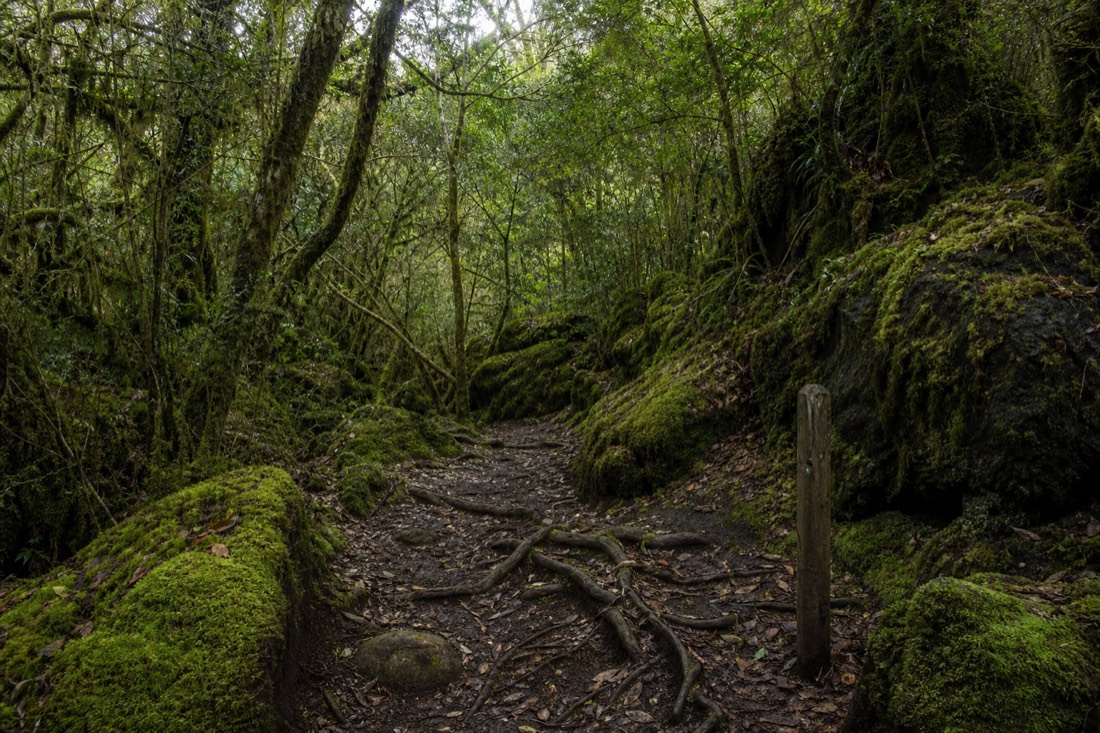
Kyoto travellers have one extra option worth knowing about, which is to break the journey at Odawara and spend the night in Hakone instead. Odawara is a Hikari stop, the Hakone Free Pass can be bought from there, and the volcanic valley, the lake and the onsen towns make a genuinely good stop on a Kyoto to Tokyo run. The catch is that Mount Fuji itself is distant and frequently hidden from Hakone. If the mountain is the point, keep going to Mishima. Our Kawaguchiko or Hakone comparison lays out that trade-off, and we take the same question apart from the other direction in Hakone's tourist-trap reputation.
| From | To Mishima | One-way reserved fare | Then |
|---|---|---|---|
| Kyoto | About 1 hr 50 min to 2 hr 10 min, Hikari | Around ¥10,000 to ¥11,000 | Liner bus, about 1 hr 30 min |
| Shin-Osaka | About 2 hr 10 min to 2 hr 20 min, Hikari | Around ¥12,300 | Liner bus, about 1 hr 30 min |
| Nagoya | About 1 hr 5 min, Hikari | Around ¥7,000 | Liner bus, or Kodama to Shin-Fuji for the Shizuoka side |
Which side of the Shinkansen shows Mount Fuji?
Mount Fuji stands on the north side of the Tokaido line, so travelling east from Osaka toward Tokyo you want a window seat on the left of the train. The view runs roughly between Shizuoka and Mishima, lasts about five minutes, and only exists if the peak is not in cloud.
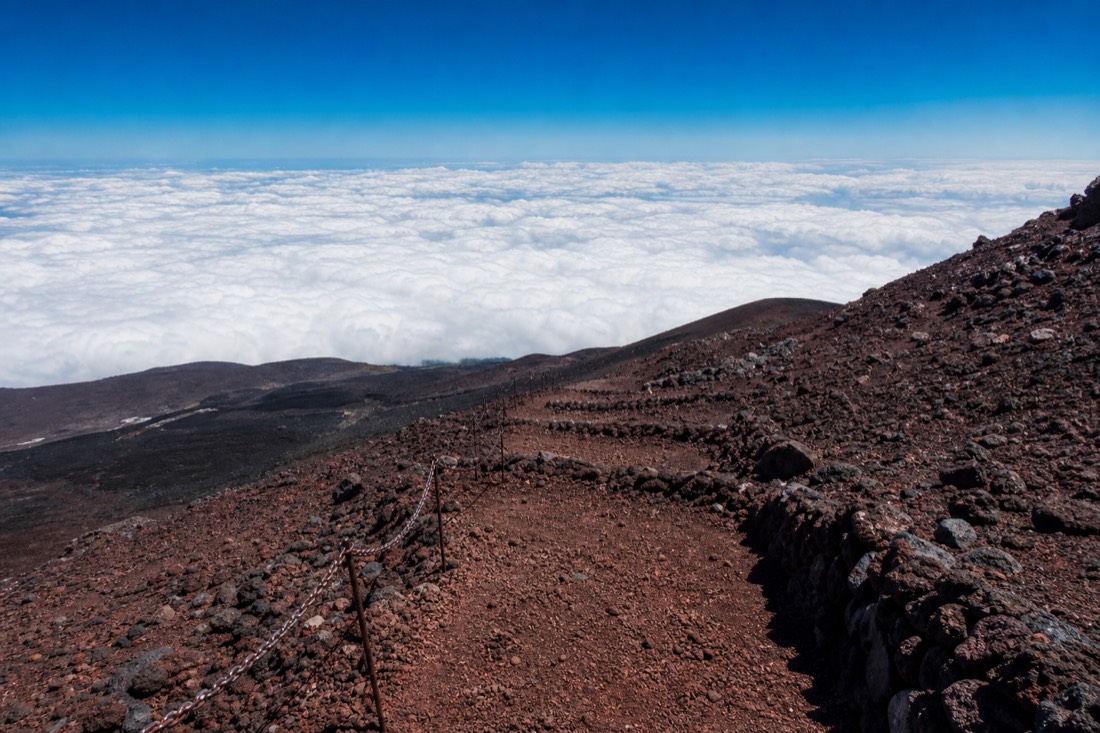
Two practical notes. The mountain appears surprisingly close and surprisingly fast, so have the camera out from Shizuoka rather than waiting for someone to gasp. And the odds are seasonal rather than random: in January and February the peak is clear on a large majority of days, in August it is often invisible for a week at a time. The north side of the mountain, which is where Kawaguchiko sits, holds consistently better visibility than the southern flank the railway runs along, which is why the train view is a bonus rather than a plan.
Travelling in the other direction, Osaka-bound out of Tokyo, the mountain is on the right. Either way the seat you want is the one facing north, and the window pairs on that side get booked first on clear winter weekends.
Which trailhead suits a climber arriving from western Japan?
The Fujinomiya Trail. It begins at 2,380 m, the highest of the four fifth stations, reaches the summit in the shortest distance of any route, and is reached by bus from Shin-Fuji or Fujinomiya station on the Shizuoka side, which is exactly where a Kodama from Osaka puts you.
The trade-offs are real and worth stating before anyone books. Fujinomiya is the steepest of the four routes. It uses the same path for ascent and descent, so you meet two-way traffic the whole way. It has fewer huts than the Yoshida side. What it gives you in exchange is the shortest climb and the closest approach to Kengamine, Japan's true highest point, which is about 20 minutes from the Fujinomiya summit against 40 minutes or more from the Yoshida crater rim.
Buses to the Fujinomiya 5th Station run from Shin-Fuji in about two hours for roughly ¥2,740 one way, and from Fujinomiya Station in about 90 minutes for around ¥2,330. Both are seasonal: the road is closed to private vehicles during the climbing season and the shuttle only runs while the trail is open. The trail opens on 10 July and closes on 10 September, later than the Yoshida Trail's 1 July start, which catches out climbers who booked around the wrong date. Our full breakdown of the four official climbing routes compares gradients, hut density and access for each.
Two formats work well for a climber arriving from the west. The one-day summit trekking tour compresses the ascent into a single push with a guide, which suits fit hikers who cannot give the mountain two nights. Outside the official season there is also a winter bullet trek that departs from Shin-Fuji Station: it is a demanding snow climb rather than a summer walk, and it is not a substitute for the standard season.
Whichever route you choose, the ¥4,000 climbing fee applies on all four trails and online pre-registration is required. The Shizuoka-side trails register through the prefectures' climbing portal; the Yoshida Trail uses a separate Yamanashi system. Do not leave either until the morning of the climb.
What does the best two-day itinerary from Osaka look like?
Leave Osaka mid-morning rather than at dawn, arrive at the lake in the early afternoon with nothing scheduled, and put the mountain-viewing in the following morning before nine. That single reordering does more for the trip than any other decision on this page.
The instinct is to leave early and cram the first day. It is the wrong instinct here, because the afternoon of day one is the low-probability window and the morning of day two is the high-probability one. Treat day one as a travel day with a pleasant ending and day two as the actual reason you came.
| When | Day one | Day two |
|---|---|---|
| Morning | Leave Shin-Osaka around 09:00 on a Hikari | North shore before 08:00, then Oishi Park |
| Midday | Arrive Mishima, liner bus to Kawaguchiko | Oshino Hakkai or the Kachi Kachi ropeway |
| Afternoon | Check in, walk the lakeside, hoto for a late lunch | Liner bus back to Mishima around 15:00 |
| Evening | Onsen, dinner, early night | Back at Shin-Osaka by around 20:00 |
If the forecast for day two collapses, the fallback that works is to shift east rather than go home early: the bullet train return from Odawara format turns a cloudy Fuji morning into a Hakone loop and still gets you back to the Shinkansen. Weather insurance in this region means having a second plan on the same rail line, not hoping harder.
What do travellers from Osaka most often get wrong?
Four mistakes account for most disappointed Fuji trips out of western Japan: booking a Nozomi to a station it does not serve, treating the mountain as a half-day add-on, arriving in the afternoon, and assuming the Japan Rail Pass covers the last leg. All four are avoidable at the planning stage and none can be fixed on the day.
The Nozomi mistake is the most common and the most annoying. Nozomi is the fast service everyone has heard of, it is the default on booking sites, and it does not stop at Mishima or Shin-Fuji. People discover this on the platform.
The half-day assumption is the most expensive. Fuji is not Nara. There is no version of this where you leave Osaka at nine, see the mountain, and are back for dinner with a good photograph.
The afternoon-arrival mistake is the most heartbreaking, because the trip technically works and still fails. And the rail-pass assumption is the one that produces an unexpected ¥2,700 at a bus door.
Who should skip this journey altogether? Anyone with fewer than four nights left in Japan and Tokyo still unvisited, anyone travelling in mid-summer whose main goal is a photograph of the peak, and anyone unwilling to build the trip around one early morning. For everyone else it is one of the better two-day detours in the country, and the Mt. Fuji tours that start on the Shizuoka side make the logistics considerably lighter than doing every transfer yourself.