What to Wear for Mount Fuji
What should you wear to climb Mt. Fuji? Learn the required 3-layer system, essential gear, and the one mistake (cotton) that can make the climb dangerous.
Last updated: May 12, 2026
Choose the activity before buying or renting kit. A summit overnight, an Ochudo walk and a coach sightseeing day require different preparation.
Booking Summary: The summit package includes an English-speaking guide and hut, with gear rental extra. The lower-mountain Ochudo walk lists rental shoes, rainwear and sticks. Sightseeing is a separate option with no summit ascent.
Scroll to the end for the complete comparison and provider booking links. Interactive matching requires JavaScript.
Quick Reference: Mt. Fuji Clothing Checklist
| Hiking boots (mid or high-cut, waterproof) | Mandatory gate check | Break in 20-30 km before climb; ankle support essential |
| Two-piece waterproof rain gear (jacket + trousers) | Mandatory gate check | Separate pieces only; poncho not accepted at Yoshida gate |
| Warm layer (fleece or down jacket) | Mandatory gate check | Summit is 0-8°C in summer with wind chill |
| Moisture-wicking base layer | Essential | Polyester or merino wool; no cotton |
| Hiking trousers (quick-dry, no jeans) | Essential | Stretch fabric for steep sections; nylon or polyester blend |
| Gaiters | Strongly recommended | Essential on Subashiri/Gotemba sand runs; useful on all trails |
| Gloves (wind-resistant) | Strongly recommended | Summit temps can feel below 0°C; light liner + shell works well |
| Warm hat or beanie | Strongly recommended | Much of body heat lost through the head; pack even in August |
| Brimmed sun hat or cap | Recommended | UV stronger at altitude; use with chin strap to prevent wind loss |
| Sunglasses (UV protection) | Recommended | UV intensity increases with elevation; also useful in volcanic dust |
| Buff or neck gaiter | Recommended | Doubles as dust protection on sand runs and wind protection at summit |
| Merino or synthetic hiking socks | Essential | No cotton socks; bring a dry spare pair in a waterproof bag |
What Should You Wear to Climb Mount Fuji?
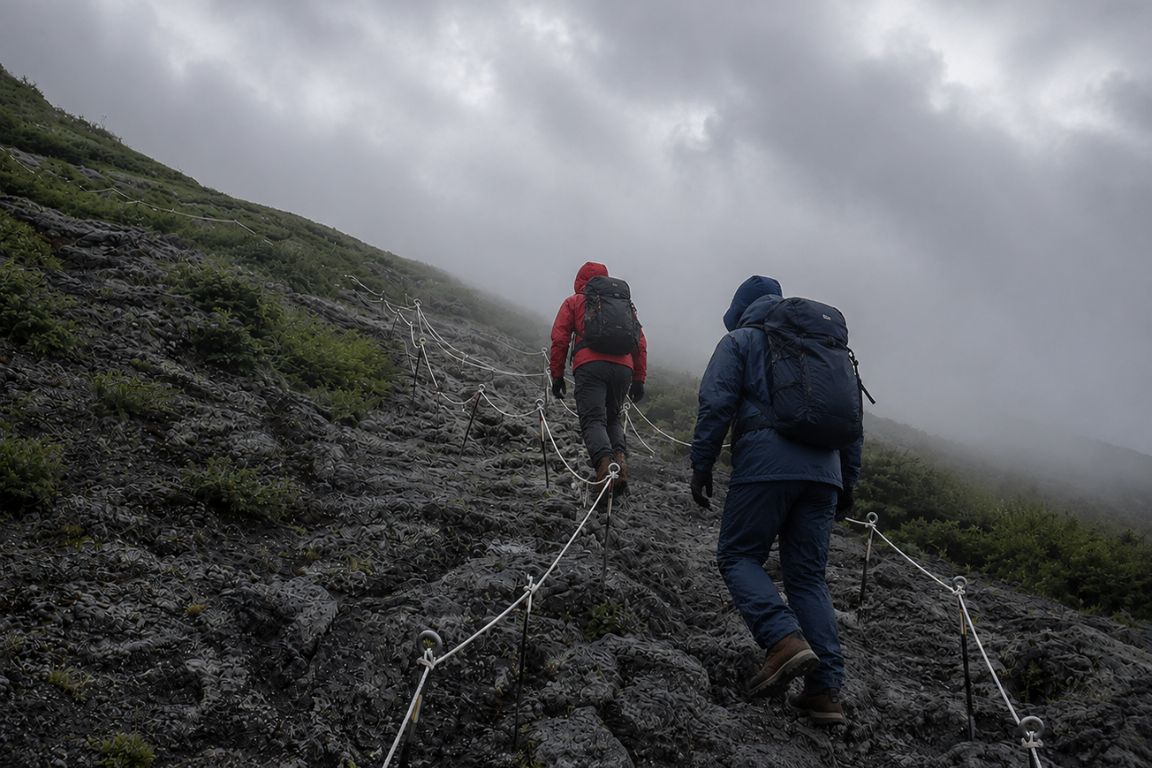 Three layers, proper boots, and no cotton. That is the short answer. The longer answer is that Mt. Fuji takes you from sea-level summer heat at the trailhead to sub-zero wind chill at the 3,776-meter summit over the course of a single climb. The same body must handle sweating on the lower slopes, bitter cold during the pre-dawn summit wait, and dust storms on the descent. The three-layer system – wicking base, insulating mid, weatherproof outer – is not a fashion suggestion. It is the clothing architecture that keeps your body functional across that temperature range.
In 2026, the clothing requirement is also a legal one. Rangers at the Yoshida Trail trailhead gate check for three mandatory items before allowing climbers through. Miss any of them and you will be turned away. The three items are: proper hiking boots, two-piece waterproof rain gear (jacket and separate trousers), and warm clothing (a fleece or down layer). This check was introduced because too many climbers arrived at Mt. Fuji in shorts, T-shirts, and sneakers, treating Japan’s highest active volcano as a casual urban walk, and ended up in medical emergencies or requiring rescue.
The temperature math is simple and worth understanding before you pack. The lapse rate on a mountain – the rate at which temperature drops with altitude – is approximately 0.6°C per 100 meters. From Tokyo’s summer base of around 28°C to the Yoshida 5th Station at 2,305 meters is already a 14°C drop. From the 5th Station to the summit adds another 9°C. Total: the summit in August averages 5 to 8°C in still air, and wind chill at sustained 20 to 35 km/h winds (common at the summit) drops that effective temperature to around -5°C or colder. People who reach the summit in summer clothing appropriate for Tokyo – which is what many first-timers pack – are unprepared. We see this every season. It is preventable.
The other variable is pace. You sweat heavily on the ascent. Body heat generated by 6 hours of uphill hiking on volcanic terrain warms you enough that the lower and middle sections of the trail feel manageable in lighter layers. The problem comes when you stop – at a mountain hut, at the summit for the sunrise, waiting in a queue above the 8th Station. The moment movement stops, wet clothing accelerates heat loss. This is why the layering system matters: you need to be able to add insulation quickly when you stop, and strip it back when you start moving again.
Want to know if climbing Mount Fuji on a guided tour is realistic for someone without serious hiking experience? Here’s our can you climb Mount Fuji on a tour guide so you set the right expectations.
The Layering System: How to Dress for 2,305m to 3,776m
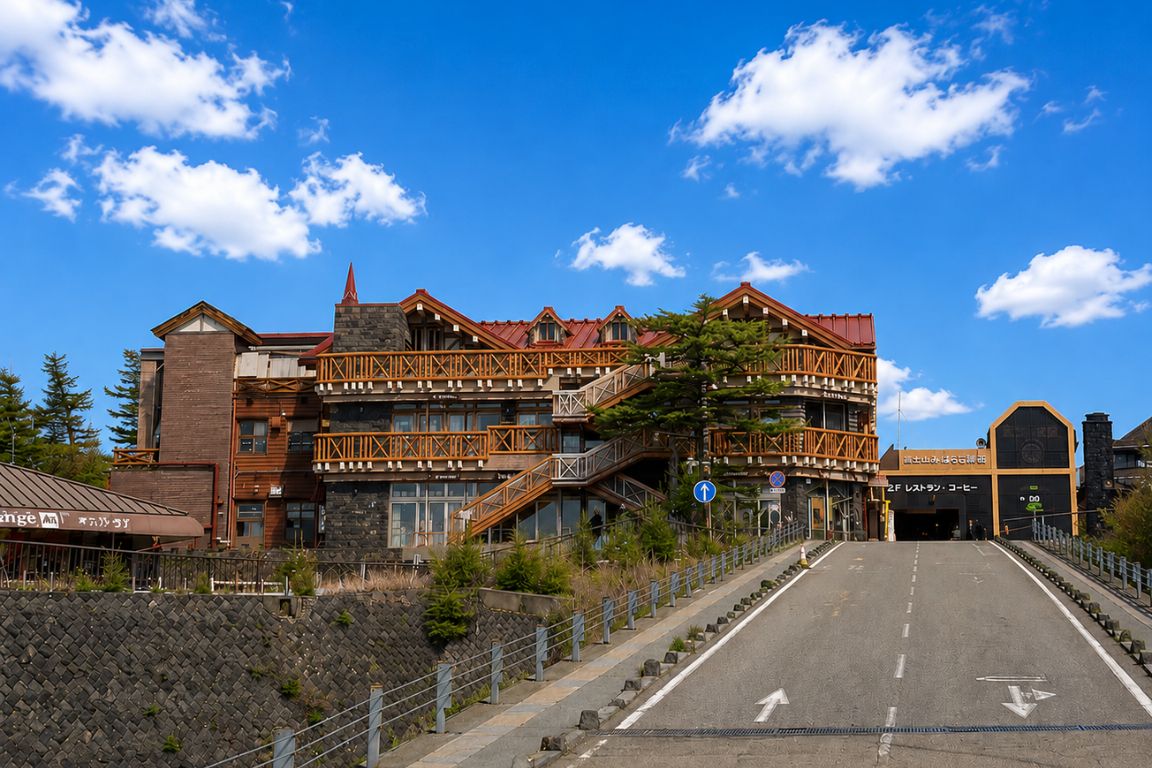 The layering system solves the biggest clothing challenge on Mt. Fuji: you will be too warm at the bottom and too cold at the top, often within the same hour. Three layers – base, mid, outer – let you add and remove insulation throughout the climb without stopping for long. The base layer manages moisture. The mid layer traps warmth. The outer layer blocks wind and rain. Each layer works independently and in combination. This is not gear marketing language. It is the reason people reach the summit safely rather than turning back from cold and exhaustion.
The system works because each layer has a specific job. The base layer sits against your skin and its job is to move sweat away from your body. When you are working hard on a steep volcanic path, your body produces significant heat and moisture. If that moisture stays against your skin, it chills you when you slow down. A wicking base layer moves that moisture outward, keeping the skin-contact surface drier.
The mid layer’s job is insulation. It traps warm air close to your body. When you are moving, you often won’t need it. When you stop – at a hut, waiting for dawn, standing at the summit – you put it on over the base layer and it holds your body heat in. A good fleece or lightweight down jacket can be pulled on and off in 30 seconds and folded into a pack without taking much space.
The outer layer’s job is protection from wind and rain. Mt. Fuji creates its own weather. Clear conditions at the 5th Station can become sideways sleet within 20 minutes. The outer shell does nothing for insulation when dry and the mid layer is doing that job. But the moment rain or wind hits, without a proper shell, body heat evacuates rapidly. This is why the outer layer is checked at the gate, not the mid layer: the rain gear is the emergency barrier between warmth and hypothermia.
How this works in practice on the climb:
5th Station to 7th Station (lower to mid-mountain): Often warm from exertion. Many climbers hike in base layer plus hiking trousers with the mid and outer packed. Add the shell if wind picks up or rain starts.
7th to 8th Station: Temperature drops noticeably. Most climbers put on their mid layer here. The terrain gets more demanding and body heat remains high, but the air is genuinely cooler.
8th Station to summit (above 3,100m): All three layers typically on. Wind is unpredictable and cold. The pre-dawn wait at the summit requires everything you have.
Inside the mountain hut at night: Strip down; it is warm. Have the base and mid accessible in your pack for easy re-layering at 2:00 AM when the summit push begins.
We’ve put together a full planning breakdown in our how to visit Mount Fuji tours from Tokyo guide so you know exactly what to book, when to go, and what to expect on the day.
Base Layer: Moisture-Wicking Is Non-Negotiable
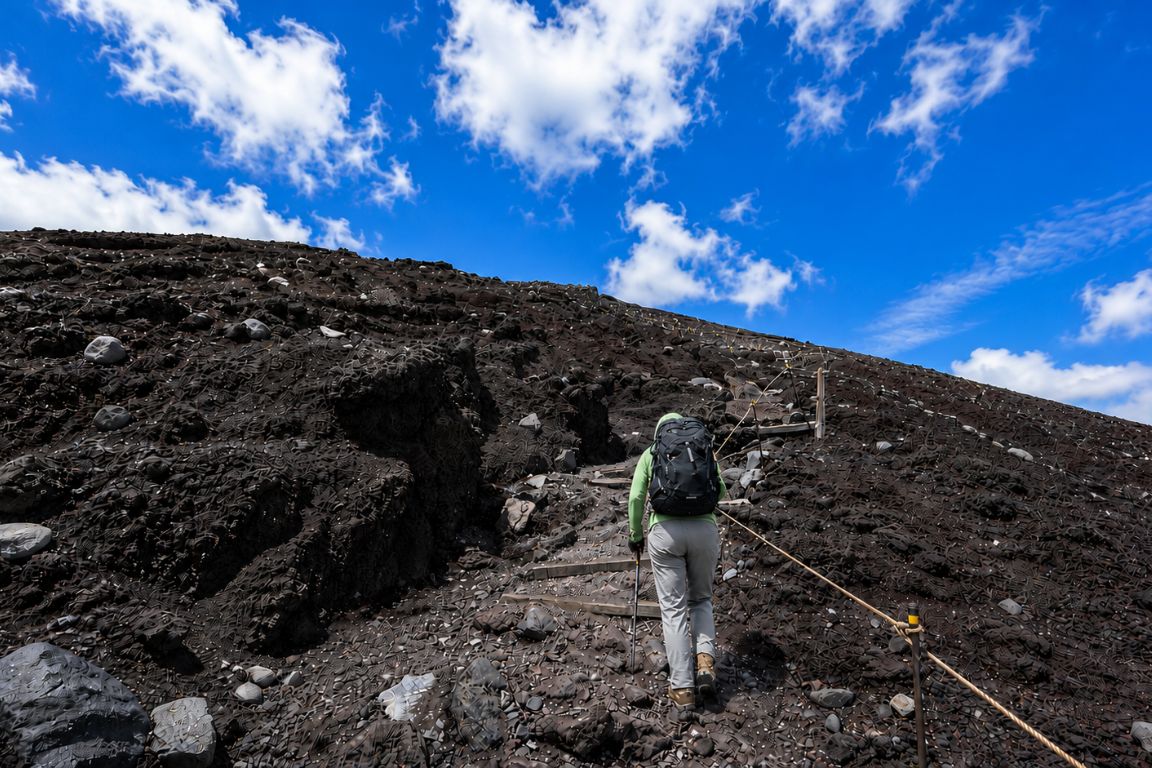 The base layer is the most important piece of clothing in your kit and the one most often gotten wrong. It must be a moisture-wicking synthetic (polyester) or merino wool garment – not cotton, not a regular T-shirt, not a sweatshirt. Merino wool is the preferred choice of experienced mountain hikers for its natural odor resistance, warmth when damp, and softness against skin during long climbs. Quality polyester performs well and is less expensive. The key requirement is that the fabric moves moisture away from your skin rather than absorbing and holding it.
Cotton is specifically the fabric to avoid and the reason matters enough to explain clearly. When cotton absorbs moisture – from sweat or rain – it loses virtually all its insulating properties. Wet cotton conducts heat away from your body approximately 25 times faster than dry air. At altitude, on a cold summit, after a sweaty ascent, a wet cotton base layer creates genuine hypothermia risk. The body temperature drops, the person becomes confused and exhausted, and the medical situation deteriorates quickly. This happens on Mt. Fuji every season to people who thought a regular T-shirt would be fine in July.
Polyester and merino wool both continue to function when damp. Polyester wicks moisture actively to the fabric’s outer surface where it evaporates. Merino wool absorbs some moisture but retains thermal properties and dries relatively quickly. Either is appropriate for Mt. Fuji. The difference matters most in extended conditions where re-warming is limited – exactly what a summit night involves.
For the upper body: a long-sleeve base layer is better than short-sleeve for Mt. Fuji. The lower sections of the trail can be warm enough to want short sleeves, but above 3,000 meters in the pre-dawn hours you will want full arm coverage under everything else. A long sleeve also protects your wrists when the mid layer is removed at lower elevations.
For the lower body: a moisture-wicking base layer for the legs is useful for overnight climbers, especially for the cold mountain hut and summit sections. Long underwear in a synthetic or merino material, worn under your hiking trousers, provides meaningful insulation on the summit push without adding much weight. This is optional for day-focused climbing but strongly recommended for the pre-dawn two-day ascent.
Socks: the same principle applies. Cotton socks get wet and stay wet, creating friction and blisters over 10-plus hours of hiking on volcanic terrain. Merino wool hiking socks or thick synthetic hiking socks are the appropriate choice. Bring one dry spare pair in a waterproof bag – having dry socks for the final push is a significant comfort upgrade that costs almost nothing in weight.
Mid Layer: Insulation for the Summit
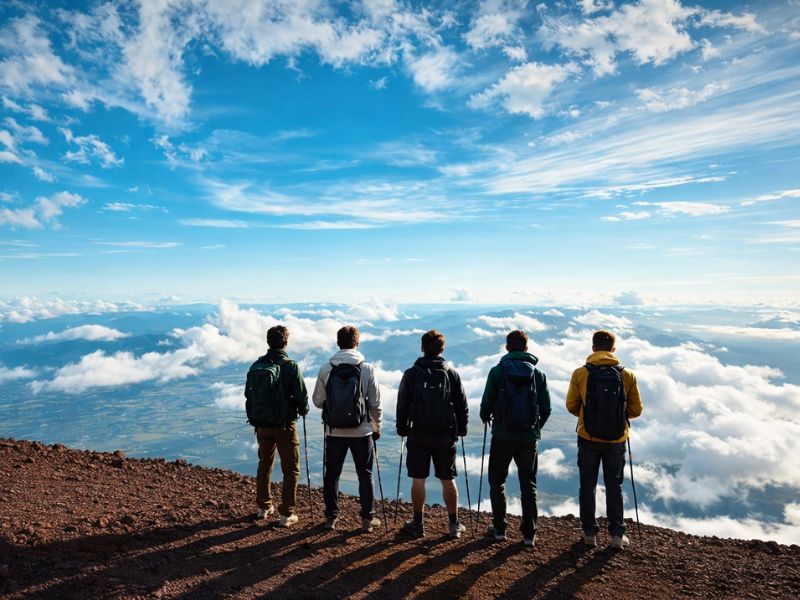
The mid layer’s job is to trap warmth when you need it and compress into your pack when you don’t. A lightweight fleece jacket or a packable down or synthetic insulated jacket are both appropriate. The mid layer is not worn continuously, it goes on when you stop moving and comes off when you start again. At the summit in the pre-dawn hours with wind chill pushing effective temperature below freezing, the mid layer is the most physically important garment you are wearing. Pack it at the top of your bag, not buried at the bottom.
Fleece is reliable and performs well when damp. It dries faster than cotton mid layers and maintains reasonable insulation even with some moisture present. A fleece jacket with a collar or zip-neck adds neck protection that matters in summit winds. Grid fleece (lighter weight with a textured inner surface) is the preferred choice for this purpose, it is lighter than full fleece but still insulating and easier to pack.
Down jackets offer more warmth per gram than fleece but are compromised by moisture. If your down jacket gets wet – from rain that beats your outer shell or from heavy sweat – it loses insulation rapidly. For Mt. Fuji where weather can be severe and the inner-shell boundary can still get damp, a synthetic insulated jacket (which behaves more like down in dry conditions but retains more warmth when wet) is arguably a better choice than real down for people who are uncertain about keeping it dry. That said, many experienced climbers use down jackets on Mt. Fuji with good results when their rain shell functions correctly.
The mid layer sizing matters. You need to be able to put it on and take it off over the base layer while wearing the outer shell. Buy or rent a mid layer that fits over your base with room to spare under the shell without restricting arm movement. If the mid layer is too tight under the outer shell, you will avoid putting it on because of the effort, and that is when people get cold.
For the lower body: an insulated or fleece mid-layer for the legs is less commonly worn but worth considering for very cold conditions above the 8th Station or for climbers sensitive to cold. Many climbers find the combination of long underwear base plus waterproof trousers sufficient. Others add thin insulated over-trousers at the summit level. Experiment with what works for your body’s cold tolerance before committing to packing extra weight for the climb.
Outer Layer: The Rain Gear Requirement
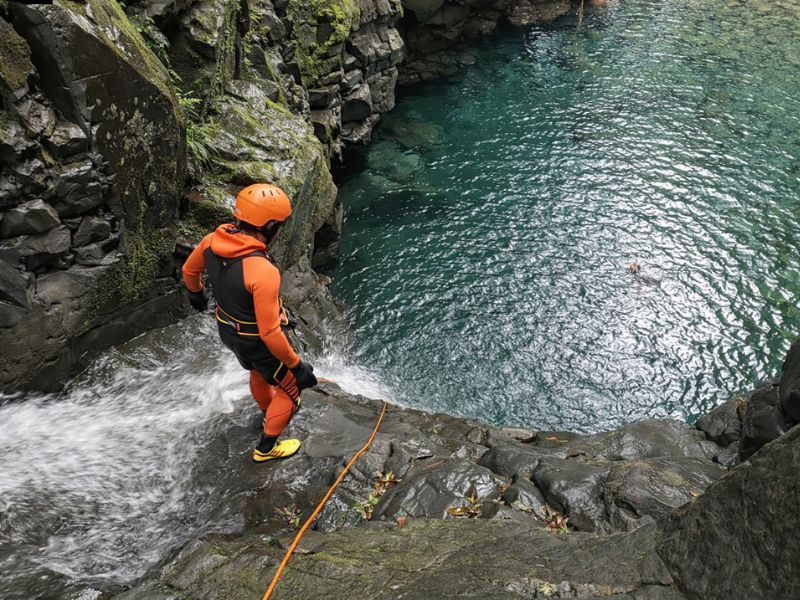
The outer layer must be a waterproof, windproof shell jacket and separate waterproof trousers. This is one of the three mandatory items checked at the Yoshida Trail gate. A poncho does not satisfy the requirement, it is a single piece and provides no wind protection. A regular raincoat that is not waterproof-breathable will become saturated in sustained rain and begin transferring moisture inward. The minimum specification is a jacket and trousers that block wind and rain completely. Gore-Tex or equivalent membrane fabric is preferred. The shell must have an attached, adjustable hood.
Why two pieces? Because the gate check specifically requires a jacket AND separate trousers. In serious mountain rain, a jacket alone leaves your legs unprotected. Wet hiking trousers in cold wind cause rapid heat loss from the legs and can contribute to hypothermia from the lower body up. The regulations reflect the rescue history: many of the emergencies on Mt. Fuji have involved people whose upper bodies were protected but whose legs were soaked and cold.
Breathability matters more than many people expect. A waterproof shell that is not breathable will trap body heat and moisture inside, soaking your mid and base layers from the inside out during the ascent. After several hours of heavy exertion in a non-breathable shell, you are almost as wet inside as you would be in rain without it. Gore-Tex, eVent, or branded equivalents from major outdoor retailers vent moisture vapor from the body while blocking liquid water from entering. This significantly extends the time before your inner layers become damp.
Practical notes for the shell: size it to fit over the mid layer. If you bought the shell in warm weather without trying it over fleece, it may fit too tightly when fully layered. An adjustable drawcord hood that can be tightened around your headlamp is important – loose hoods funnel rain down the back of your neck. Pit zips (underarm vents) allow you to dump heat during the ascent without removing the jacket. Side pockets that are accessible while wearing a climbing pack are more practical than low pockets that get covered by a hip belt.
Rental options: Full rain gear sets (jacket plus trousers) are available for rent near the Yoshida 5th Station and from gear rental shops in Kawaguchiko and Shinjuku. A two-piece set typically rents for ¥2,000 to ¥3,000. This is a completely reasonable choice for a one-time climb if you don’t own appropriate gear. Confirm the rental includes separate trousers and not just a jacket before booking. Prices verified May 2026.
We’ve put together a full day planning breakdown in our Kawaguchi day trip from Tokyo guide so you know exactly what to prioritize, how to get there, and how to sequence the day around the best Fuji viewpoints.
Footwear: Why Hiking Boots Matter More Than Anything Else
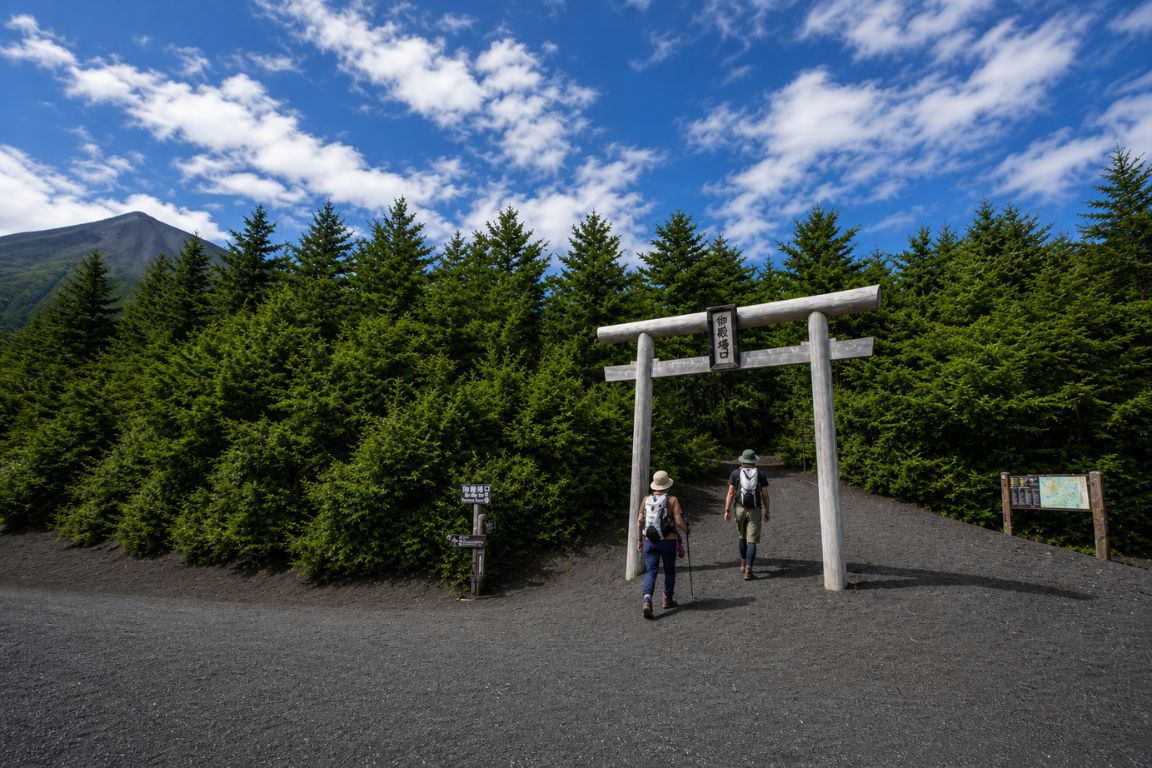 Hiking boots are the mandatory item that rangers check most strictly at the Yoshida gate. Climbers in sneakers, sandals, or flat-soled shoes are turned away, this is enforced literally. The requirement is mid-cut or high-cut waterproof hiking boots with ankle support and aggressive tread. The terrain on Mt. Fuji is loose volcanic rock and gravel for most of the ascent, and steep gravel-sand on the descent. This terrain destroys ankles in low-cut shoes, causes severe blisters in thin-soled trainers, and becomes dangerously slippery in wet conditions without proper tread. Boots must also be broken in before the climb – new boots cause blisters within the first hour on a 10-hour climb.
The ankle support requirement is not overstated. The loose volcanic scoria on Mt. Fuji’s upper sections shifts underfoot on every step. On the descent – particularly the sand runs on the Subashiri and Gotemba trails – the ground offers little resistance, and without ankle support, rolled ankles happen regularly. High-cut boots that cover the ankle joint prevent this. Low-cut trail runners with good tread are acceptable for fit, experienced hikers but they offer no ankle protection and sand will fill them quickly without gaiters.
Waterproofing is non-optional. Mt. Fuji rain can arrive in minutes and turn trails into streams on the lower sections. Wet feet on a 10-hour climb cause blisters within a few hours. Boots made with waterproof-breathable membranes (Gore-Tex lining or equivalent) keep feet dry from external moisture while allowing some vapor to escape from the inside. Non-waterproof boots are dry in good weather but become liabilities the moment conditions change.
Breaking in new boots before the climb is essential and often skipped. The instruction is specific: walk at least 20 to 30 kilometers in the boots before the climb. This includes hills and varied terrain, not just flat pavement. New boots have stiff collars and midsoles that create friction points at the heel, ankle, and forefoot. Those friction points become blisters within the first 2 hours of hiking on volcanic terrain. By 6 hours into the ascent, a bad blister can end a climb. We have seen this more times than we can count. Break in the boots.
For the Subashiri and Gotemba trails specifically, gaiters worn over the boot top are essential because the sand runs involve descending through loose volcanic material that enters any gap between boot and trouser. Without gaiters, your boots fill with sharp volcanic grit within minutes of the sand run section, creating friction at every step for the rest of the descent. Gaiters – fabric cuffs that seal the boot-trouser interface – prevent this completely.
Boot rental: rental hiking boots are available at the 5th Station shops and at Kawaguchiko rental facilities, typically ¥3,000 to ¥4,000. Western shoe sizes above EU 45 (UK 11, US 12) can be hard to find in rental stock. If you have large feet, arrange rental well in advance or bring your own. All prices verified May 2026.
Want to know which Mount Fuji trail is most manageable for a first-time climber versus which ones demand serious preparation? Here’s our Mount Fuji tours hiking trails guide so you choose wisely.
Ochudo Pilgrim Path Walk: Scheduled Dates
Walk a 2.5 km section of the Ochudo pilgrim path with an English-speaking mountain guide and local pickup.
Check Dates For Ochudo Pilgrim Path WalkAccessories: Gloves, Hat, Gaiters, and What Else You Need
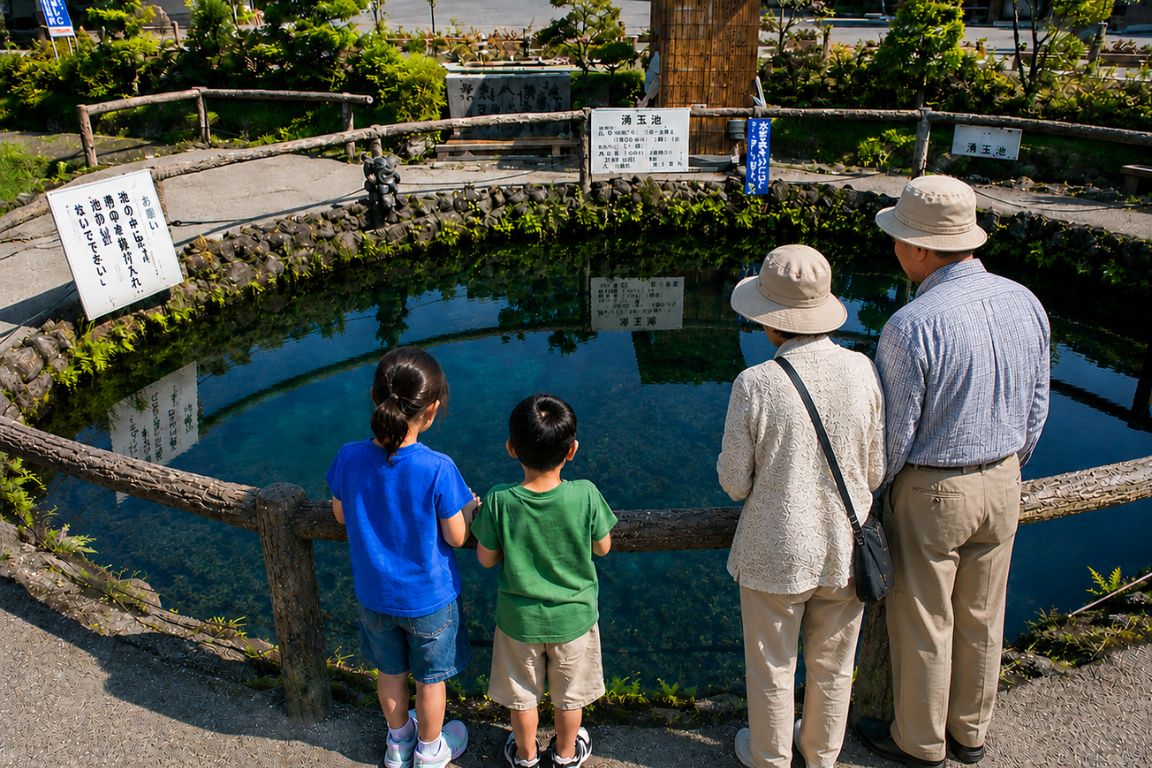 Beyond the three-layer system and boots, five accessories make a meaningful difference to the experience: gloves, a warm hat, gaiters, sunglasses, and a buff or neck gaiter. Gloves and a beanie are for the summit cold – wind chill at the crater rim in August can feel below 0°C and exposed hands and an uncovered head lose heat rapidly. Gaiters protect your boots from volcanic sand. Sunglasses protect your eyes from UV radiation that intensifies significantly at altitude. A buff doubles as sun and dust protection on the lower trail and wind protection at the top.
Gloves: A two-glove system works best – thin liner gloves for dexterity and warmth while moving, and a wind-resistant outer shell mitten or glove to put over them during cold stops or in rain. Liner gloves let you use your phone, open zips, and handle small items. The outer shell provides the wind barrier that makes the critical difference at 3,700 meters in a 30 km/h wind. Running gloves or thin athletic gloves alone are insufficient at the summit in most weather conditions. Pack gloves even in August. We have seen people in August at the crater rim with hands so cold they couldn’t hold their cameras.
Warm hat or beanie: The head and neck lose heat disproportionately in wind. A simple merino or fleece beanie that fits under the hood of your rain jacket covers the thermal liability. Pack it in a jacket pocket, not the bottom of your pack. The temperature change from the 8th Station to the summit is significant enough that you want this accessible within 10 seconds.
Gaiters: For the Yoshida Trail the main benefit is modest – the descent has some volcanic gravel sections but no deep sand runs. For the Subashiri and Gotemba trails, gaiters are close to essential. The Sunabashiri on Subashiri and the Osunabashiri on Gotemba involve long descents through loose volcanic gravel. Without gaiters, volcanic sand enters the boot-trouser gap and works its way into your socks within 5 minutes. Full-length gaiters that cover from below the knee to the boot sole are the most effective. Low gaiters (ankle height) do the job on the sand runs and are lighter to carry.
Sunglasses: UV radiation increases by approximately 10 to 12% per 1,000 meters of altitude. At 3,776 meters you are receiving roughly 40% more UV than at sea level. Sunburn at altitude happens faster than most people expect, especially on reflective volcanic gravel on a clear day. Sunglasses with UV400 protection are sufficient. Wraparound styles offer better side coverage in volcanic dust conditions. For the sand run descents, sunglasses also protect against blowing volcanic grit.
Buff or neck gaiter: A lightweight tube of stretch fabric with multiple uses on the climb. Around the neck it protects against cold wind at the summit and during the hut night. Pulled up over the nose and mouth it filters volcanic dust on the descent (particularly on sand runs). Used as a headband it keeps sweat out of your eyes on the lower hot sections. Worn as a sun protection sleeve on the arms if needed at altitude. One piece of gear with five uses and it weighs almost nothing. Bring one.
Sunscreen: SPF 30 minimum, SPF 50 preferred. Bring a small travel tube you can access from a jacket pocket without stopping. Apply before starting, reapply at the mountain hut. The volcanic terrain above the treeline is fully exposed and the UV intensity at altitude means even on overcast days, meaningful UV reaches the skin.
What NOT to Wear on Mount Fuji
 The items that get people into trouble or turned away at the gate: cotton in any layer (kills insulation when wet, slow to dry), jeans (heavy when wet, no insulation, restrict movement on steep sections), sneakers or trainers (no ankle support, inadequate tread on volcanic rock, turned away at Yoshida gate), ponchos (single piece, does not satisfy two-piece rain gear requirement, ineffective in wind), fashion waterproofs that are not breathable (trap sweat inside, soak inner layers from inside out), and new unbroken-in boots (cause blisters within hours on volcanic terrain).
Cotton, in any layer: This deserves the most emphasis because it is the most common mistake. When cotton gets wet – from sweat or rain – it loses approximately 95% of its thermal properties and begins actively conducting heat away from the body. Wet cotton conducts heat away approximately 25 times faster than dry air. On a cold summit with wind chill pushing temperatures below 0°C, a wet cotton base layer is a genuine medical risk, not a comfort inconvenience. The effect is cumulative: you sweat on the ascent, the cotton absorbs it all, you arrive at the summit or the hut with a soaking-wet layer against your skin, and when you stop moving, heat loss begins rapidly. This applies to T-shirts, regular sweatshirts, and cotton underwear. Every layer that touches your skin should be synthetic or merino wool.
Jeans: Denim is heavy, absorbs moisture readily, and provides no insulation when wet. A single pair of wet jeans adds over a kilogram of unnecessary weight and creates a cold wet layer that sits against your legs for the remainder of the climb. Jeans also restrict movement on steep rocky sections because denim has no stretch. On the volcanic terrain above the 7th Station where you sometimes need to raise your knees to chest height, restrictive trousers are genuinely frustrating and slow you down. The official Mt. Fuji climbing website lists jeans as inappropriate clothing.
Sneakers, trainers, and fashion footwear: Rangers at the Yoshida Trail gate physically turn away climbers in sneakers. This is not a suggestion. Sneakers have thin soles that transmit every sharp volcanic rock through to your foot, leading to significant foot fatigue and pain before the 7th Station. They have no meaningful ankle support on loose terrain. Most are not waterproof and become soaking within the first rain shower. Some trainers – with aggressive tread and Gore-Tex lining – approach acceptable territory, but the gate rangers check for dedicated hiking footwear. If in doubt, rent proper boots from the facilities near the 5th Station.
A single-piece poncho as “rain gear”: A poncho may keep your torso dry but it does nothing for your legs in driving rain, provides no wind protection (it acts like a sail in strong summit winds), and does not satisfy the mandatory two-piece rain gear check. Cheap rain ponchos sold near tourist areas in Tokyo are not appropriate rain gear for Mt. Fuji regardless of price. The requirement is waterproof jacket AND separate waterproof trousers.
New unbroken-in hiking boots: This is the gear mistake that ends the most climbs. New boots that haven’t been walked in have stiff collars and midsoles that create friction hotspots within the first hour. On a 10-hour volcanic mountain climb, those friction hotspots become open blisters. A serious blister on the heel or ankle can make the descent an ordeal and in some cases requires people to stop and wait for assistance. The solution is simple: buy or rent your boots at least two weeks before the climb and walk 20 to 30 kilometers in them over varied terrain before the day.
A final note: everything above applies specifically to the climbing experience. If you are visiting the 5th Station as a sightseeing destination without hiking to the summit, the temperature at 2,305 meters still requires a windproof outer layer and warm mid regardless of Tokyo’s summer temperature. The same 15°C temperature differential applies. Many sightseeing visitors arrive at the 5th Station from Tokyo in summer clothes and are visibly cold within 10 minutes. Pack a windproof jacket even for a sightseeing-only visit.
What Our Clients Most Commonly Get Wrong: Data from Mt. Fuji Tours
| Brought new unbroken-in boots | 42% | Blisters by 7th station or above |
| Insufficient warm layer for summit | 38% | Uncomfortable at summit; some turned back early |
| Cotton base or mid layer | 55% | Cold after first rest stop; some required hut warming |
| No gaiters on Subashiri/Gotemba | 62% | Sand in boots during descent; significant discomfort |
| No gloves packed | 35% | Cold hands at summit; regretted it |
| Rain gear not in day pack (left in luggage) | 28% | Wet at gate check or during climb |
The most consistent pattern from guiding 11,500 travelers: the gear errors are the same year after year, and almost all of them are completely avoidable with preparation. The advice in this article eliminates the most common problems before they happen.
Questions about gear rental, what to buy before your climb, or whether your existing kit is suitable? Read the tour vs DIY comparison or check dates for a guided two-day climb, where hut booking and the gate gear check are part of the itinerary.
Frequently Asked Questions
What temperature should I expect on Mt. Fuji in summer?
The 5th Station (2,305m) averages around 15°C below Tokyo’s temperature – so roughly 13 to 15°C on a typical July or August day. The summit (3,776m) averages 5 to 8°C in the peak summer months. Wind chill, which is common at the summit and upper trails, can push the effective temperature to 0°C or below even in August. The temperature difference between when you leave Tokyo in the morning and when you stand at the summit before dawn is typically 25°C or more.
Is a poncho acceptable as rain gear on Mt. Fuji?
No. A poncho does not satisfy the mandatory two-piece rain gear requirement checked at the Yoshida Trail gate. You need a separate waterproof jacket and separate waterproof trousers. Ponchos are also ineffective in the wind speeds common on the upper mountain – they act as sails, make walking difficult, and leave your legs unprotected in driving rain. A properly waterproof shell jacket and rain trousers are the required combination.
Can I rent hiking boots and rain gear near Mt. Fuji?
Yes. Gear rental is available at facilities near the Yoshida 5th Station, in Kawaguchiko, and from rental shops in Shinjuku. Full sets (boots, rain jacket and trousers, poles, headlamp, gaiters, backpack) typically rent for ¥10,000 to ¥16,000 for a two-day climb. Individual items are also available: rain gear from ¥2,000 to ¥3,000, boots from ¥3,000 to ¥4,000. Book rentals in advance, particularly for peak season (late July to August) and for larger shoe sizes. Prices verified May 2026.
Why can’t I wear jeans to climb Mt. Fuji?
Jeans are not appropriate for Mt. Fuji climbing for three reasons: they restrict leg movement on steep sections, they absorb moisture and become very heavy and cold when wet, and they provide no insulation once wet. The official Mt. Fuji climbing website lists jeans as unsuitable clothing. Quick-drying hiking trousers made from nylon or polyester-stretch blends are lightweight, allow full leg movement, and dry rapidly if wet.
What happens if I arrive at the Yoshida Trail gate in wrong gear?
Rangers turn you away. The gear check at the Yoshida gate is enforced strictly in 2026. If you are missing proper hiking boots, two-piece rain gear, or a warm layer, you will not be allowed to climb. This means traveling to the mountain, paying for transport, and returning without climbing. There is no workaround. If you are uncertain about your gear before the climb, check a guided two-day climb that includes kit guidance, or rent on-site at the 5th Station shops if you arrive without the required items.
Uncertain whether your gear is adequate for the climb? A guided two-day climb includes support with the required kit, or start with the tour vs DIY comparison if you are still deciding how to go.
Written by Akira Nakamura
Japanese tour guide since 2012 · Founder, Mt. Fuji Tours
Akira has guided over 11,500 travelers up Mt. Fuji and through the Fuji Five Lakes region since founding the agency.