Kawaguchi Day Trip from Tokyo
Planning a Kawaguchiko day trip from Tokyo? Learn how to get there, best viewpoints, transport tips, and how to time your visit for clear Mt. Fuji views.
Last updated: May 12, 2026
Kawaguchiko is a strong independent day trip. For arranged sightseeing, distinguish a coach leaving Tokyo from a private tour that starts only after you reach the lakes.
Booking Summary: The Tokyo coach visits Chureito, Oishi Park and Oshino Hakkai. The local private option can discuss a smaller set of stops, but does not include Tokyo transfers or the 5th Station.
Scroll to the end for the complete comparison and provider booking links. Interactive matching requires JavaScript.
Quick Facts: Kawaguchiko Day Trip from Tokyo
| Distance from Tokyo | ~100 km west of central Tokyo |
| Travel time (highway bus) | ~1h 45 min to 2 hours from Shinjuku |
| Travel time (Fuji Excursion train) | ~1h 52 min from Shinjuku, direct |
| Bus fare (one way) | ¥2,000 online / ¥2,200 at terminal (Prices verified May 2026) |
| Fuji Excursion train (one way) | ¥4,130 (Prices verified May 2026) |
| Red Line sightseeing bus day pass | ¥1,500 adults / ¥750 children (Prices verified May 2026) |
| Kawaguchiko Ropeway (round trip) | ¥1,000 adults (Prices verified May 2026) |
| Lake cruise (Appare boat) | ¥1,000 adults per 20-minute cruise |
| Chureito Pagoda entry | Free (Arakurayama Sengen Park) |
| Oshino Hakkai (Sokonuki Pond) | ¥300 adults (other ponds free) |
| Best visibility window | Before 9:00 AM; winter months (Nov to Feb) most reliable |
| Recommended departure from Tokyo | 7:00 AM or earlier for maximum morning visibility |
Is Kawaguchiko Worth It as a Day Trip from Tokyo?
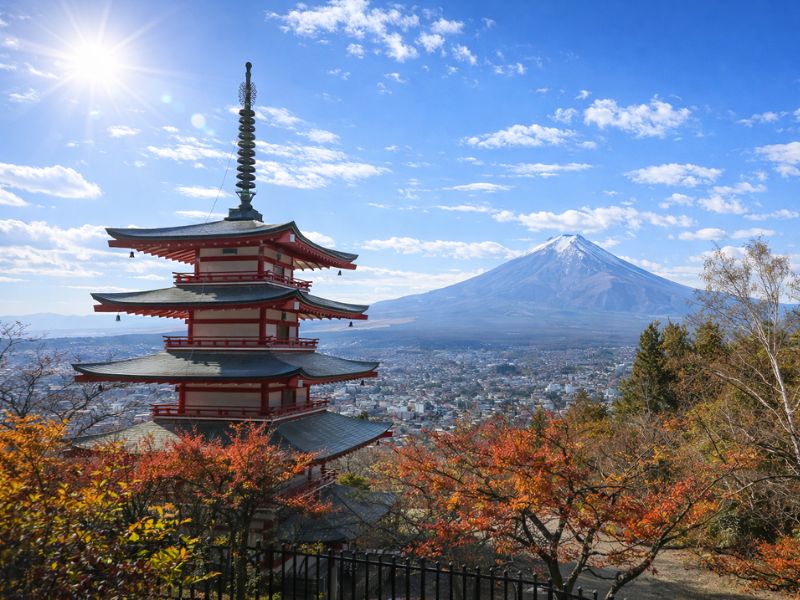
Yes, but with one honest condition: the entire experience depends on weather, and the mountain is not always visible. On a clear day, Kawaguchiko delivers the most dramatic close-up views of Mt. Fuji in Japan. On a cloudy day, the mountain disappears and the lake becomes a pretty but unremarkable rural destination. Check the visibility forecast the night before. If it’s clear, go. If it’s not, consider waiting for a better day or pairing the trip with an overnight stay for a second chance in the morning.
We’ve been guiding visitors through this area since 2012. Kawaguchiko on a clear morning, when the snow cap catches the first light and reflects in the still water of the north shore, is one of those Japan experiences that earns its reputation completely. The mountain looks impossibly large from this angle. Nothing prepares you for the scale of it when you finally see it unobstructed. Across 11,500 travelers we’ve taken through this region, the ones who leave most satisfied are the ones who arrived to a clear mountain and spent the morning at the lake before the clouds built up.
The ones who leave frustrated drove two hours to find nothing but grey sky. That outcome is avoidable with a little planning and flexibility. The visibility forecast at isfujivisible.com updates daily with real-time camera feeds. Use it the night before rather than relying on the general Tokyo weather forecast, which tells you nothing useful about a mountain 100 km away that generates its own weather.
One day is enough to cover the main viewpoints if you leave Tokyo early and keep moving through the morning. An overnight stay is the upgrade that turns a good visit into a genuinely memorable one, giving you both a sunrise window and a second morning attempt if the first is cloudy. But the day trip is worth doing, and worth doing well. Lunch is almost always hoto, and the rest of the local menu is in what to eat near Mount Fuji.
We’ve put together a full side-by-side in our Mount Fuji tour comparison guide so you know exactly which operator fits your budget, group size, and what you actually want to get out of the day.
How Do You Get to Kawaguchiko from Tokyo?
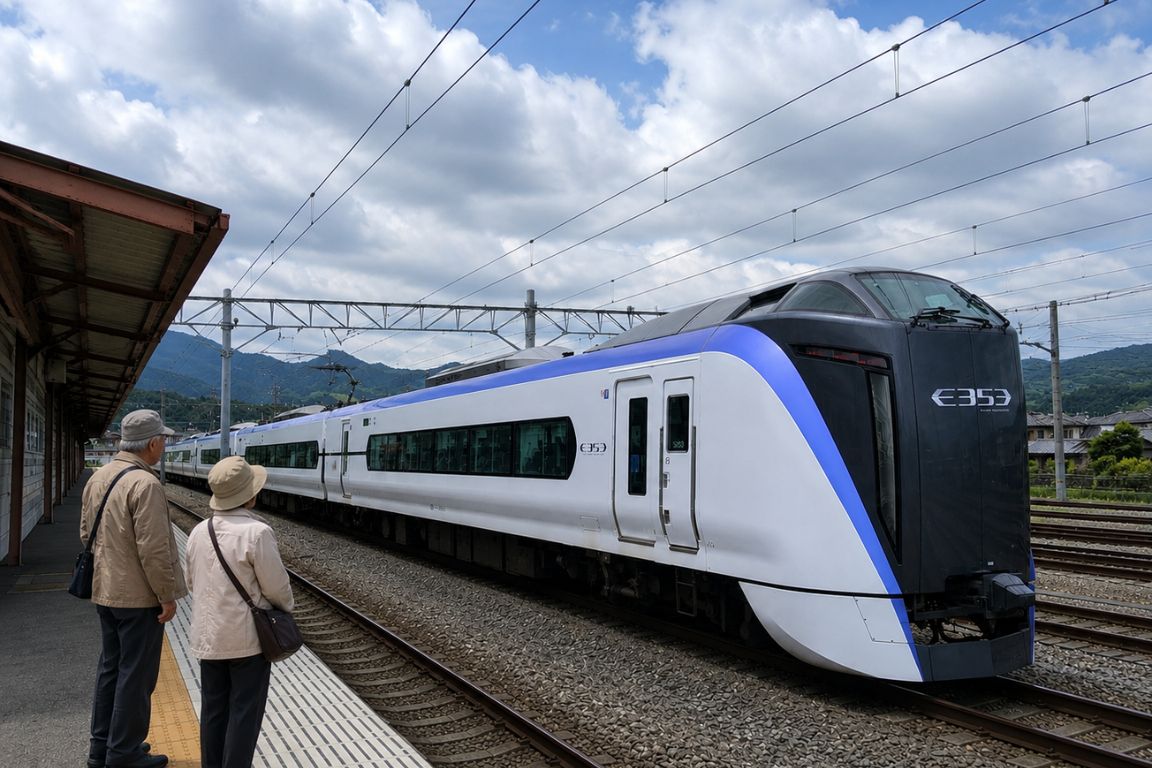 The highway bus from Shinjuku is the most practical option for most visitors: roughly 1h 45 min to 2 hours, ¥2,000 online or ¥2,200 at the terminal, departures about twice per hour. The Fuji Excursion Limited Express train from Shinjuku takes about 1h 52 min and costs ¥4,130, with reserved seating and no transfers. The bus is cheaper; the train is more reliable on timing since it doesn’t depend on traffic. Neither requires a JR Pass and neither is particularly difficult. Book bus seats in advance on weekends and peak seasons.
The highway bus is the default choice for budget-conscious travelers and for anyone who just wants to get there without thinking about it. Fujikyu and Keio Bus run roughly two departures per hour from the Shinjuku Expressway Bus Terminal. You can also board from Tokyo Station or Shibuya. Journey time from Shinjuku is about 1h 45 min on a clear day, and can stretch to 2.5 hours on heavy-traffic weekends. Book seats online at japanbusonline.com, highway-buses.jp, or through Willer for a ¥200 discount per ticket versus the terminal counter price. On peak spring and autumn weekends, buses sell out.
The Fuji Excursion Limited Express from Shinjuku is the most comfortable single-vehicle option. Eight round trips per day after a 2024 timetable revision. Mandatory seat reservation is required at ¥4,130 one way. No transfers. Panoramic windows. The train passes through forested mountain valleys on the approach and has an atmosphere that the bus doesn’t. Book through Eki-net or Klook at least a week ahead for peak dates, as the train sells out on popular weekends.
Want an honest comparison between the two most popular ways to get to Mount Fuji independently? Here’s our train vs bus to Mount Fuji guide so you travel smarter.
| Highway bus (Shinjuku) | ~1h 45 min to 2h | ¥2,000 (online) / ¥2,200 (terminal) | Most popular; book ahead on weekends; traffic-dependent |
| Highway bus (Tokyo Station) | ~2h | ¥2,200 | Good if staying near Tokyo Station |
| Fuji Excursion train (Shinjuku) | ~1h 52 min | ¥4,130 | Direct, reserved seating, most comfortable; book early |
| JR Chuo + Fujikyu Railway | ~2h to 2h 15 min | ¥2,430 to ¥3,600 depending on train | JR Pass covers Shinjuku to Otsuki; ¥1,170 extra Otsuki to Kawaguchiko |
| Rental car (from Tokyo) | ~2h to 3h | ¥6,000+/day + tolls | Best for groups visiting multiple lakes and viewpoints |
JR Pass holders: the pass covers the Shinjuku to Otsuki leg on the JR Chuo Line. At Otsuki, transfer to Fujikyu Railway for the final 55-minute leg to Kawaguchiko at ¥1,170 extra. The pass does not cover highway buses or the Fuji Excursion train’s Fujikyu section. For most JR Pass holders, this route is still worthwhile given they’ve already paid for the pass.
Getting around Kawaguchiko once you arrive: the Red Line Kawaguchiko Sightseeing Bus runs every 15 minutes from Kawaguchiko Station along the eastern and northern shores, covering the main viewpoints. The day pass at ¥1,500 covers unlimited rides on the Red, Green, and Blue lines. Bicycles are available for rent near Kawaguchiko Station for ¥1,000 to ¥2,000 for a half day, and are a genuinely enjoyable way to cover the north shore at your own pace. Chureito Pagoda is not on the sightseeing bus; it requires a separate Fujikyu Railway trip from Kawaguchiko to Shimoyoshida Station (15 minutes, ~¥240).
Getting to Mount Fuji from Tokyo is straightforward but getting the most out of the visit takes more planning than most tourists expect – our how to visit Mount Fuji tours from Tokyo guide breaks down everything you need to know before you go.
What Are the Best Things to See and Do in Kawaguchiko in One Day?
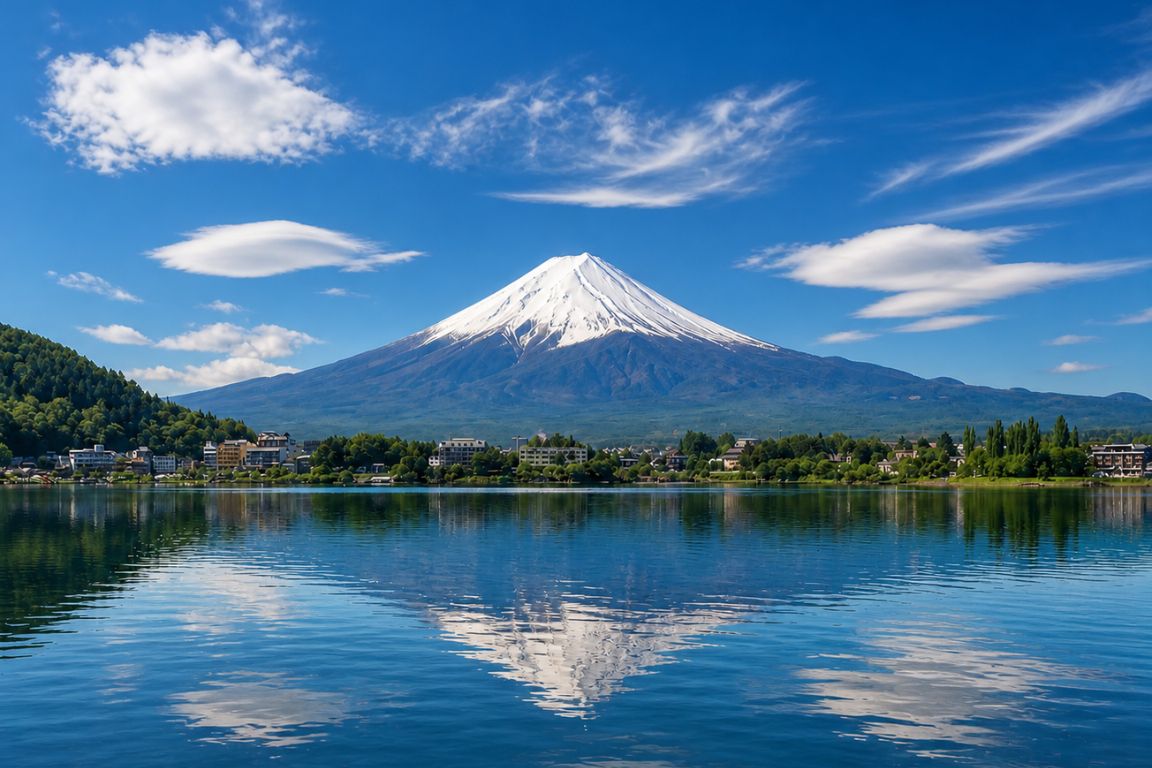 The essential stops are the north shore of Lake Kawaguchiko (the best unobstructed Mt. Fuji view anywhere), Oishi Park (seasonal flower foregrounds with the mountain behind), the Kawaguchiko Ropeway (bird’s-eye lake view), and Chureito Pagoda (the pagoda-and-mountain image). Oshino Hakkai adds a traditional village with spring-fed ponds about 30 minutes from the lake by bus. On climbing season days, the 5th Station is 50 minutes from Kawaguchiko Station by shuttle bus. One day comfortably fits the lake area, Chureito, and Oshino Hakkai if you start early.
The north shore of Lake Kawaguchiko is where the trip either succeeds or doesn’t. When the mountain is clear and the lake surface is still in the early morning, the reflection doubles the image: snow-capped peak above, perfect inverted cone below. The 30-minute walk or 10-minute bike ride from the Kawaguchiko Ohashi Bridge to Oishi Park at the western end of the north shore is one of the most reliably scenic stretches in the area. Early morning, before 9:00 AM, is when this is at its best. By 11:00 AM on most days the clouds start building from the south, and by early afternoon the mountain can be partially or fully hidden.
Oishi Park at the far end of the north shore changes its foreground by season. Lavender blooms in late June and July, creating purple fields in front of the mountain. Crimson kochia bushes fill the park in autumn. Cherry blossoms line the shore in April. In winter, the park is less colorful but the mountain views are at their clearest. The park itself is free to enter, accessible by the Red Line sightseeing bus (last stop, about 20 minutes from Kawaguchiko Station).
The Kawaguchiko Ropeway takes 3 minutes each way to climb to the Tenjoyama observation deck at 1,075 meters. From here, you look down over the lake with the mountain directly across. It’s a different perspective from lake level, showing the mountain’s upper body above the surrounding forests. The round trip costs ¥1,000 per adult. On the descent, the hiking trail down takes about 40 minutes through hydrangea bushes and is worth choosing over the return cable car if conditions are dry.
The lake cruise on the Appare sightseeing boat offers a 20-minute lap of the lake, with Mt. Fuji visible from the open deck on clear days. Tickets cost ¥1,000 per adult at Funatsuhama pier, about 10 minutes walk from Kawaguchiko Station. The boat runs every 30 minutes. On a clear morning, the open-water perspective of the mountain, unframed by tree lines or buildings, is something you don’t get from the shore.
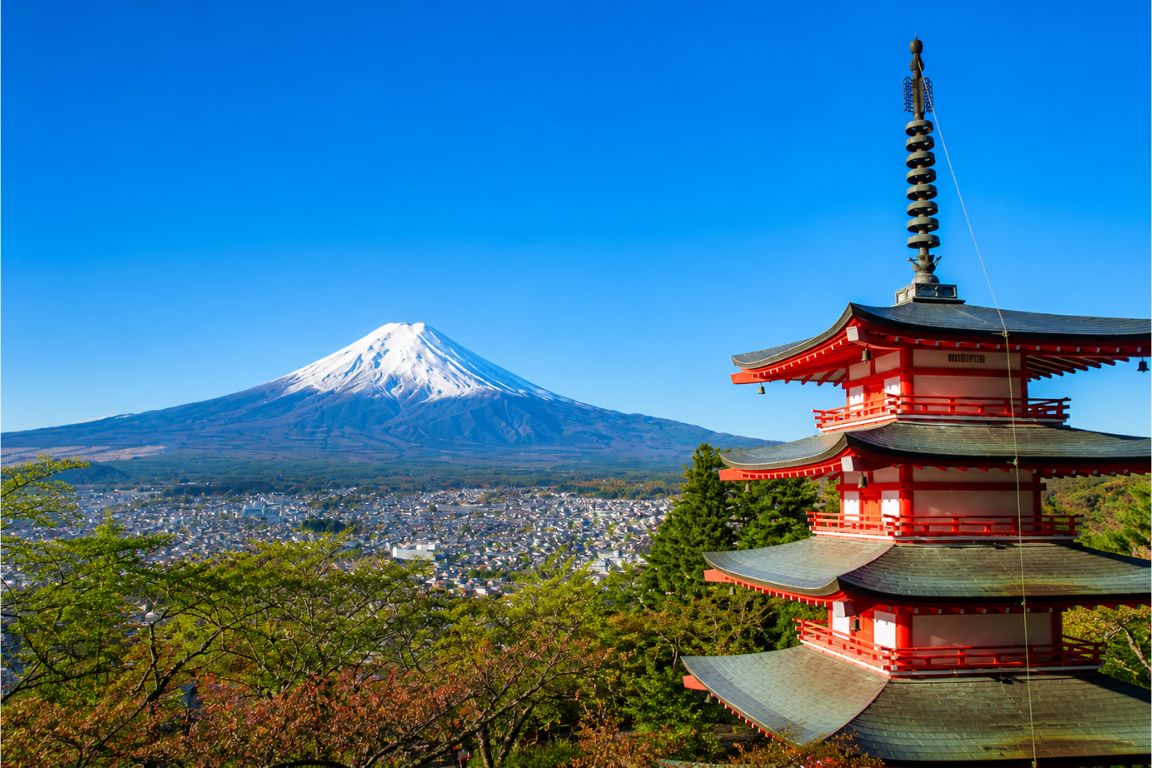
Chureito Pagoda is about 20 minutes from the lake area by local train. Take Fujikyu Railway from Kawaguchiko Station to Shimoyoshida Station, walk 10 to 15 minutes to Arakurayama Sengen Park, and climb 398 steps to the observation deck. The view is the five-story red pagoda in the foreground with Mt. Fuji directly behind. In cherry blossom season (late March to mid-April), this is the most photographed spot in Japan. Entry is free. Arrive before 8:00 AM on clear days to beat the queues, which can be 30 to 60 minutes by mid-morning in season.
Oshino Hakkai is a village 25 to 30 minutes from Kawaguchiko Station by bus, known for eight spring-fed ponds supplied by Mt. Fuji’s snowmelt filtered through the volcanic rock. The water is exceptionally clear. Traditional thatched-roof farmhouses line the paths between the ponds. The Sokonuki Pond requires a ¥300 entry fee; the other seven ponds are free. Allow 45 to 60 minutes. Food stalls sell soba made with Fuji spring water. The village has a peaceful, rural feel that contrasts with the busier lake area.
Curious what a full Mount Fuji tour day actually looks like beyond the highlight reel? Here’s our what to expect on a Mount Fuji tour guide so you know exactly what you’re getting into.
What Is the Best Kawaguchiko Day Trip Itinerary?
 Leave Shinjuku by 7:00 AM on the first highway bus or the earliest Fuji Excursion train. Arrive Kawaguchiko by 9:00 AM. Head immediately to the north shore for morning views. Take the Red Line bus to Oishi Park, back to the Ropeway, then the boat pier for a lake cruise. After lunch, take the Fujikyu Railway to Shimoyoshida for Chureito Pagoda. Return to Kawaguchiko and take the bus to Oshino Hakkai in the mid-afternoon. Back to Kawaguchiko Station by 5:00 PM for the return bus or train to Tokyo, arriving by 7:30 PM.
The sequence matters. Everything in Kawaguchiko is weather-dependent, and mornings are better than afternoons for visibility. Front-load your viewpoint stops before the cloud builds. Save Oshino Hakkai and Chureito for the afternoon because they don’t depend on a clear mountain for their appeal.
7:00 AM: Depart Shinjuku by highway bus or Fuji Excursion train. Buy a bento at the station before boarding.
8:45 to 9:00 AM: Arrive Kawaguchiko Station. Buy the Red Line sightseeing bus day pass (¥1,500) at the station booth. Check the mountain immediately. If it’s clear, move fast.
9:00 to 9:30 AM: North shore walk or the Kawaguchiko Ohashi Bridge. If you’ve rented a bicycle (available near the station), cross the bridge and follow the north shore path west toward Oishi Park. On foot, the walk from the station area to Oishi Park is about 50 minutes. By bike, about 20 minutes. By Red Line bus, about 20 minutes to the end of the line.
9:30 to 10:30 AM: Oishi Park. North shore panorama. Photos. Soft serve ice cream from the lakeside stalls if the season is right. The foreground changes by season: lavender in summer, kochia in autumn, bare paths in winter (with the clearest mountain views). Return by Red Line bus toward the Ropeway.
10:30 to 11:15 AM: Kawaguchiko Ropeway. Cable car up to Tenjoyama observation deck. Views of the lake and mountain from above. Optional hike down (40 minutes) if conditions are dry.
11:15 AM to 12:00 PM: Lake cruise from Funatsuhama pier (20 minutes, ¥1,000). Upper deck for unobstructed views if the mountain is still clear.
12:00 to 1:00 PM: Lunch at a restaurant near Kawaguchiko Station. Hoto noodles (thick flat noodles in miso broth with pumpkin and vegetables) are the local specialty. Expect queues at Hoto Fudou, the most famous shop; the wait is worth it but budget 30 minutes. There are several other hoto restaurants with shorter queues nearby.
1:00 to 2:30 PM: Chureito Pagoda. Take the Fujikyu Railway from Kawaguchiko Station to Shimoyoshida (15 minutes, ~¥240). Walk 10 to 15 minutes to the park entrance. Climb 398 steps. Spend 30 to 45 minutes at the top. The afternoon light comes from behind the mountain, so morning is technically better for photography, but the view is compelling any time on a clear day.
2:45 to 3:00 PM: Return from Shimoyoshida to Kawaguchiko Station by Fujikyu Railway.
3:00 to 4:30 PM: Bus to Oshino Hakkai (30 minutes from Kawaguchiko Station on the Fujikko Bus toward Oshino and Yamanakako). Walk the spring ponds. Soba lunch or afternoon snack from the village stalls if you skipped it earlier. Return bus to Kawaguchiko.
5:00 to 5:30 PM: Back at Kawaguchiko Station. Board the return highway bus or Fuji Excursion train to Shinjuku.
7:00 to 7:30 PM: Arrive Shinjuku.
Want to know if climbing Mount Fuji on a guided tour is realistic for someone without serious hiking experience? Here’s our can you climb Mount Fuji on a tour guide so you set the right expectations.
| North shore + Oishi Park | 9:00 to 10:30 AM | 60 to 90 min | Best visibility window; morning light; top priority |
| Kawaguchiko Ropeway | 10:30 to 11:15 AM | 45 min | ¥1,000 return; option to hike down (~40 min) |
| Lake cruise (Appare) | 11:15 AM to 12:00 PM | 30 to 40 min | ¥1,000; upper deck; every 30 min from Funatsuhama pier |
| Lunch (Kawaguchiko town) | 12:00 to 1:00 PM | 45 to 60 min | Hoto noodles recommended; queue at busy restaurants |
| Chureito Pagoda | 1:00 to 2:30 PM | 90 min including transit | Free entry; 398 steps; Fujikyu train from Kawaguchiko to Shimoyoshida |
| Oshino Hakkai | 3:00 to 4:30 PM | 60 to 75 min | Spring ponds, thatched village; 30 min bus from Kawaguchiko Station |
What Are the Best Viewpoints for Photographing Mount Fuji?
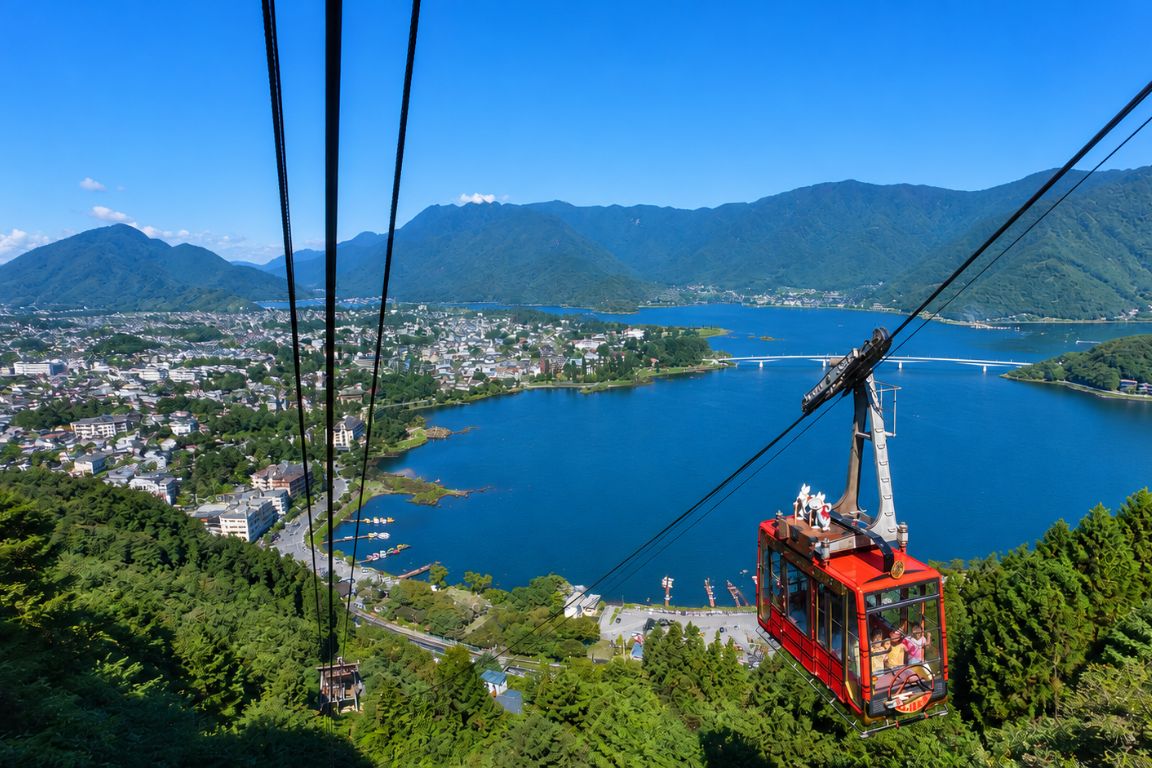 The five best Mt. Fuji photography spots near Kawaguchiko: the north shore of Lake Kawaguchiko (reflection shot, widest clean view), Oishi Park (seasonal flower foregrounds), Chureito Pagoda (pagoda framing), the Kawaguchiko Ropeway deck (elevated aerial perspective), and the lake cruise upper deck (open water view). Each gives a distinctly different frame. For the classic images Japan is known for, all five are within a single day trip. The north shore is the most important of the five.
The north shore is the anchor. On a calm morning with clear skies, standing at the Ubuyagasaki promontory or the north side of the Kawaguchiko Ohashi Bridge and looking west, Mt. Fuji rises directly above the far shore with the lake occupying the foreground. When the wind has been still overnight, the reflection appears on the water surface. This is the “Mirror Fuji” shot. It happens most reliably in autumn and winter when wind is low and the lake surface settles before sunrise. By mid-morning, even light wind breaks the reflection.
Oishi Park at the western end of the north shore is the flower platform. In June and July, lavender fields angle toward the mountain. In October and November, round crimson kochia bushes catch late afternoon light with Fuji behind them. The perspective here is wider than at other points along the shore, with the mountain visible over a broad planted foreground. Photographers routinely camp here at sunrise for the combination of open sky, settled lake, and the first color on the peak.
Chureito Pagoda produces the most iconic image in Japan’s travel photography, and it earns that reputation. The five-story pagoda was built in 1963 as a peace memorial, not an ancient temple, but its position on the hillside perfectly frames Mt. Fuji behind it. In cherry blossom season, the layered effect of pink sakura, red pagoda, and white-capped mountain is something that has no equivalent elsewhere in Japan. Even without the blossoms, on a clear day with autumn foliage or fresh snow, the view is one of the best in the country. Arrive before 8:00 AM to get the shot before the crowd assembles.
One less-known tip for Chureito: most visitors stop at the main viewing platform. If you climb an additional 5 to 10 minutes above the pagoda, there is a secondary viewpoint with an even higher angle and significantly fewer people. The pagoda drops out of frame but the mountain fills more of the sky, and the surrounding forests below give the shot a different quality. It’s worth the extra steps.
The Mt. Fuji Panoramic Ropeway (Kachi-Kachi Yama) provides the bird’s-eye view that ground-level spots can’t. From 1,075 meters you look over the forested ridgelines above town, with the lake directly below and Fuji across the water. On clear days you can also see Fuji-Q Highland’s roller coasters in the valley below, which adds a surreal human scale to the mountain beyond. The Ropeway has a swing installation on the observation deck (¥500) designed to photograph against the sky above the lake. A genuinely fun image when the mountain is clear behind you.
Not sure which viewpoints and scenic spots around Mount Fuji are actually worth your time versus which ones look better in photos than they do in person? Here’s our Mt. Fuji tours scenic spots explained guide so you prioritize the right ones.
Chureito, Kawaguchiko & Oshino: Scheduled Dates
Link Chureito Pagoda, Oishi Park and Oshino Hakkai in one day by coach.
Check Dates For Chureito, Kawaguchiko & OshinoWhat Should You Know Before You Go to Kawaguchiko?
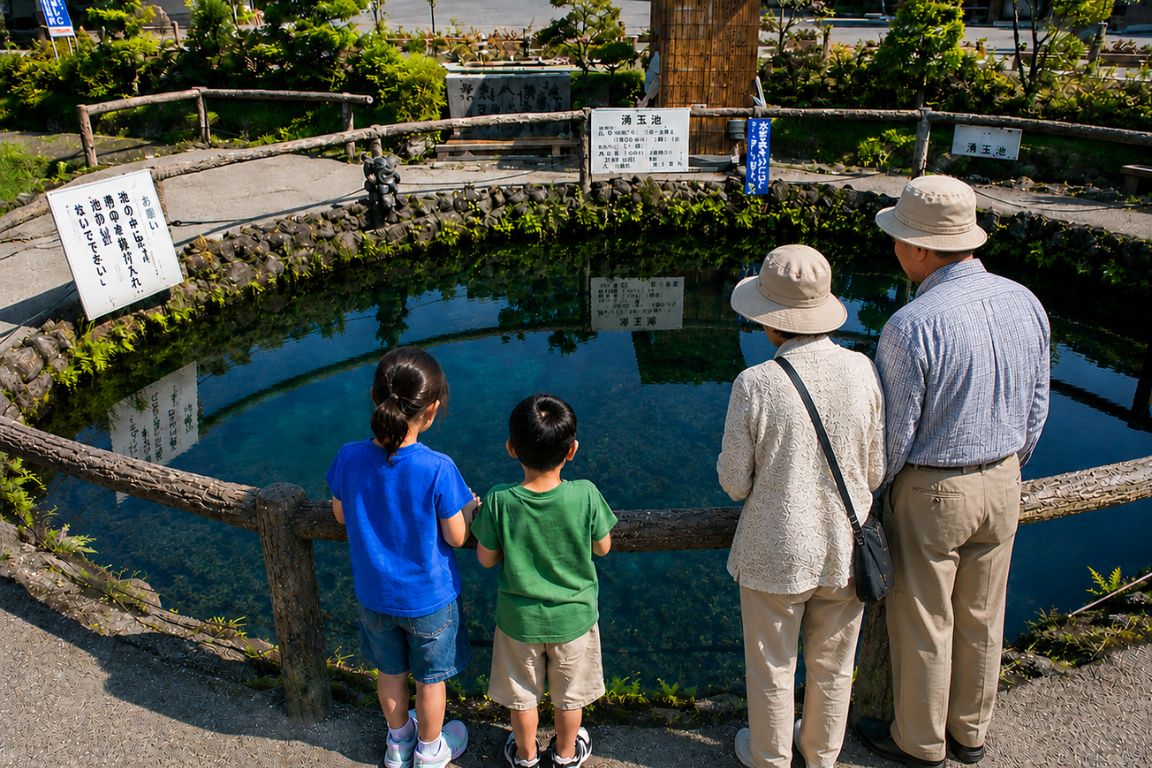 Five things most day-trippers wish they knew: check the visibility forecast the night before (not the Tokyo weather), prioritize the morning (clouds build from midday and the mountain can be gone by 11:00 AM), buy your bus ticket back to Tokyo in advance (return buses sell out on busy days), bring layers regardless of season (the lake area is consistently 5 to 10°C cooler than Tokyo), and accept that a cloudy day is possible even in winter. Plan your day around the possibility the mountain is hidden, not the certainty it will be visible.
The visibility issue is the most important and the most consistently underestimated. Kawaguchiko is at 830 meters elevation. Even on a Tokyo-clear day, thermal activity from Mt. Fuji itself can build cloud on the southern slopes by late morning. The mountain is visible around 80 days per year on average. In winter, that number improves significantly. In summer, especially June through August, the mountain can hide for days at a stretch. The visibility forecast at isfujivisible.com uses mountain-specific meteorological data and is far more reliable than the general Yamanashi or Tokyo forecast. Check it the evening before your trip, not the morning of, because by the morning you’ve already booked your transport.
The morning priority is worth stating plainly with numbers. Before 9:00 AM, visibility at Kawaguchiko is at its daily best across almost every season. After noon, clouds become more likely regardless of the morning conditions. If you arrive at 10:30 AM and go straight to lunch, you may miss the window entirely. Structure the day so your first bus from Kawaguchiko Station is at 9:00 AM sharp and you’re at Oishi Park or the north shore by 9:30 AM.
Return buses from Kawaguchiko to Shinjuku fill up, especially on weekend afternoons. Book your return before you leave Tokyo in the morning. Trying to book at 4:00 PM for a 5:30 PM return is a gamble you don’t want to take after a long day on your feet. The major highway bus booking sites (japanbusonline.com, Willer, highway-buses.jp) let you book same-day, but popular return slots go early on busy days.
The lake area is cooler than Tokyo year-round, sitting roughly 5 to 10°C lower on average. In autumn and winter this difference is significant. People arrive from Tokyo in October in a light jacket, stand on Oishi Park in a 12°C wind coming off the lake, and regret every layer they left at the hotel. Bring a proper mid-layer and a wind-resistant outer, no matter what season.
Cash is useful. While Kawaguchiko Station and many restaurants accept cards, some smaller attractions, the Chureito Pagoda donation box, the older sightseeing boats, and food stalls at Oshino Hakkai may be cash only. Carry ¥5,000 to ¥10,000 for the day.
Is One Day Enough for Kawaguchiko, or Should You Stay Overnight?
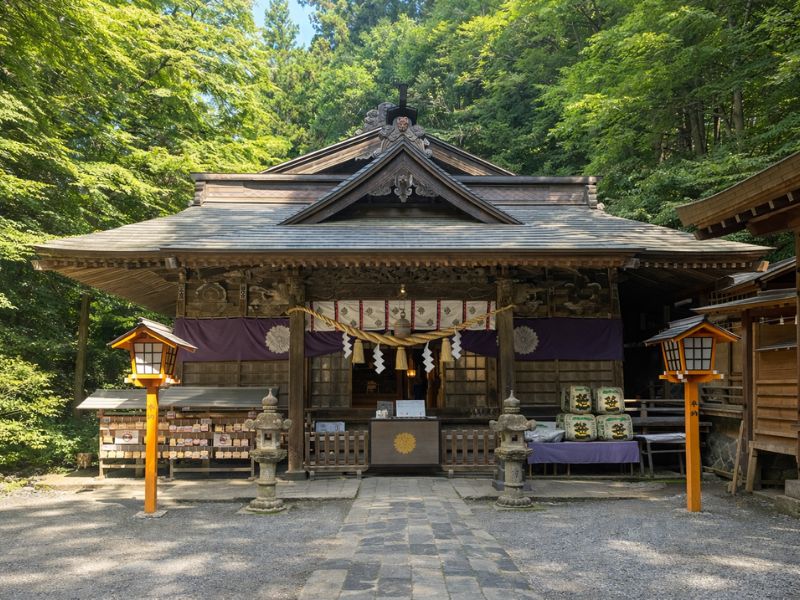
One day covers the main viewpoints if you’re efficient and leave Tokyo early. The specific limitation of a day trip is that you have exactly one morning visibility window. If the mountain is cloudy when you arrive, your entire trip is affected and there is no second chance. An overnight stay gives you two mornings and two evening opportunities, dramatically improving your odds of seeing the mountain clearly. For any traveler who specifically came to Japan to see Mt. Fuji, one night is strongly recommended.
The math is blunt. On an average day from October to February, Mt. Fuji is visible roughly 60 to 80% of the time. On an average summer day, that drops to 20% or below. A single visit gives you those odds once. An overnight stay doubles your windows. Staying two nights gives you three morning opportunities. If you’ve traveled long-haul to Japan and Mt. Fuji is on the bucket list, betting the entire experience on a single morning is the wrong kind of efficiency.
An overnight in Kawaguchiko also unlocks the one thing a day trip structurally cannot provide: the mountain at a different time of day, at a different light quality. Dawn at the north shore, when the lake is completely still and the first light hits the snow cap while the town is still sleeping, is not something you can replicate from a day trip unless you book the first bus from Shinjuku at 6:30 AM and make it to the lake by 8:30 AM. Staying in a lakeside room with a window facing the mountain means you see this without a travel alarm.
Accommodation around Kawaguchiko runs from budget guesthouses around ¥6,000 per person to mid-range lakeside ryokan at ¥15,000 to ¥25,000 per person with meals. The most coveted rooms face the mountain directly from the northeast shore. Kozantei Ubuya is the most consistently recommended property for Fuji-view rooms with private outdoor baths, but books out months ahead on peak weekends. Book accommodation at least 4 to 6 weeks before peak spring and autumn weekends.
If you'd rather not coordinate rooms and morning timing yourself, compare a guided day with an independent stay in the tour vs DIY guide, or start with a private customizable tour from Tokyo for the daylight hours.
Trying to decide between the lake views of Kawaguchiko and the hot spring resort town of Hakone? Check out our Kawaguchi vs Hakone guide before you commit to either.
Should You Do Kawaguchiko as a DIY Trip or Join a Tour?
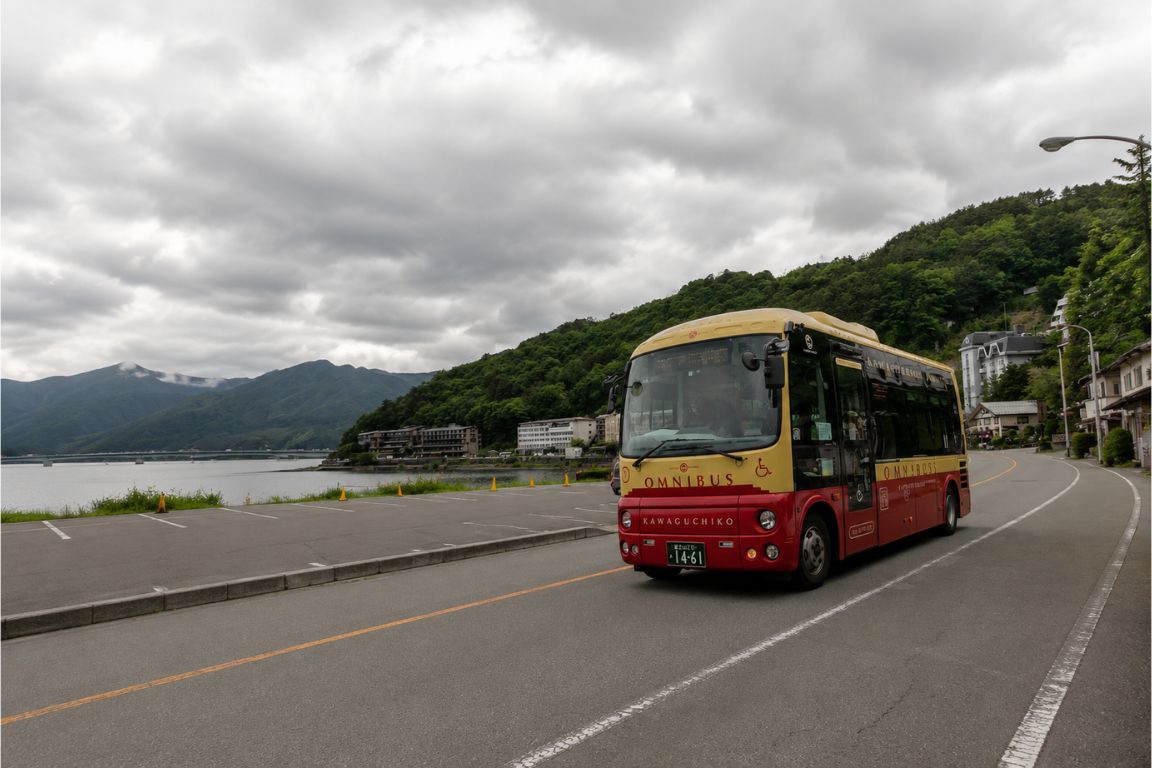 DIY works well for most visitors. The highway bus drops you directly at Kawaguchiko Station, the Red Line sightseeing bus handles the main viewpoints, and the area is well-signed in English. Join a guided tour if you’re traveling with children or elderly companions, want an English-speaking guide to explain what you’re seeing and adjust the route based on visibility in real time, or want to combine Kawaguchiko with the Mt. Fuji 5th Station in a single day without managing the bus logistics yourself.
The DIY case is strong for independent travelers. The route is clear. The sightseeing bus day pass covers the lake stops. The Fujikyu Railway handles Chureito. The Fujikko Bus covers Oshino Hakkai. Signage at Kawaguchiko Station is adequate in English and maps are available free from the tourist information desk by the station exit. The main decision points are: which bus to catch back to Tokyo, and how long to spend at each stop. Both of those you can manage with a phone and a bit of flexibility.
Guided tours earn their value in specific situations. Families with young children find the bus timing and connection logistics genuinely stressful when they also have strollers, tired kids, and heavy bags. A guided private tour with vehicle pickup from Tokyo removes every logistical pain point. It also means when the mountain is cloudy at Oishi Park at 10:00 AM but the tour guide knows from experience that it tends to clear at Chureito by 11:00 AM, you pivot accordingly rather than standing at the lake waiting.
The other guided-tour advantage is the 5th Station combination. During climbing season (July to September), the 5th Station is accessible by shuttle bus from Kawaguchiko Station (50 minutes, ~¥1,540 one way). Adding the 5th Station to a lake-focused day trip on public transport is time-consuming and requires careful bus schedule management. A guided tour that includes a driver handles this smoothly and builds in the right timing. Day tours from Tokyo covering Kawaguchiko, Chureito, and the 5th Station typically run ¥8,000 to ¥15,000 per person for shared tours, and ¥30,000 to ¥60,000 per group for private tours.
Not sure whether booking a guided tour or going independently gets you more out of a Mount Fuji visit? Here’s our Mount Fuji tour vs DIY guide so you decide before you commit to either.
What Our Clients Experience at Kawaguchiko: Data from Mt. Fuji Tours
| Clients who saw Mt. Fuji clearly on their Kawaguchiko day trip | 45% |
| Clients who arrived before 9:00 AM (vs. later) | 35% early / 65% late |
| Most cited regret on day trips without overnight stay | Missing the morning window (82% of feedback) |
| Clients who visited Chureito Pagoda | 92% |
| Clients who combined Kawaguchiko with 5th Station visit | 25% (climbing season only) |
| Clients who stayed overnight vs. day trip only | 40% overnight / 60% day trip |
| Best single month for client satisfaction at Kawaguchiko | January (77% reported clear mountain views) |
The pattern across our groups: clients who arrive early and start at the north shore before 9:30 AM report significantly higher satisfaction regardless of season. The ones who arrive at 11:00 AM and go straight to lunch have the worst odds. Morning at the north shore is not optional if the mountain is the reason you came.
If you'd rather leave the timing and stop order to a driver, the full-day private customizable tour from Tokyo is the listed option that can follow the morning visibility rather than a fixed group sequence.
Frequently Asked Questions
How much does a Kawaguchiko day trip from Tokyo cost?
Budget around ¥8,000 to ¥12,000 per person for a full day trip. That covers the round-trip highway bus (¥4,000 to ¥4,400), the Red Line sightseeing bus day pass (¥1,500), the Ropeway (¥1,000), the lake cruise (¥1,000), and lunch (¥1,000 to ¥2,000). Chureito Pagoda is free but requires a separate Fujikyu Railway fare of about ¥480 return from Kawaguchiko to Shimoyoshida. All prices verified May 2026.
What is the best time of year to visit Kawaguchiko?
For clear mountain views: November through February, with January and February offering the highest visibility rates (60 to 80% of days). For cherry blossoms with Fuji: late March to mid-April. For autumn foliage: mid-October to mid-November. Avoid June through August if visibility is your priority: the mountain can be hidden for days at a stretch during the humid summer months.
Is it worth going to Kawaguchiko if Mt. Fuji might be cloudy?
If Mt. Fuji is your primary reason for the trip, check the visibility forecast before committing. A day when the mountain is clearly visible and you see the north shore reflection at 9:00 AM is one of the best Japan experiences available. A day when it’s cloudy is a pleasant lake visit that doesn’t justify a 4-hour round trip from Tokyo. Use isfujivisible.com for real-time and 8-day forecast data specific to the mountain.
Do you need a car to visit Kawaguchiko?
Not for the main attractions. The Red Line sightseeing bus covers Oishi Park, the Ropeway, and the lake cruise area from Kawaguchiko Station. The Fujikyu Railway handles Chureito Pagoda. The Fujikko Bus reaches Oshino Hakkai. A car is useful if you want to visit the more remote western lakes (Saiko, Shojiko, Motosuko), drive the mountain road, or get to viewpoints like Iyashi-no-Sato Nenba village with heavy luggage. For a standard day trip or overnight stay focused on lake views, public transport handles it well.
What is hoto and where should you try it?
Hoto is a thick, wide wheat noodle soup specific to Yamanashi Prefecture, cooked in miso broth with pumpkin, mushrooms, and vegetables. It’s hearty, warming, and the right thing to eat after a cold morning at the lake. Hoto Fudou near Kawaguchiko Station is the most famous restaurant and usually has a queue. There are several alternatives within walking distance with shorter waits. Budget ¥1,200 to ¥1,500 per bowl.
Can you see Mt. Fuji from the bus on the way to Kawaguchiko?
On clear days, yes. The highway bus approach from Tokyo along the Chuo Expressway begins to reveal Fuji from about 30 minutes before arriving at Kawaguchiko, as the bus descends into the Five Lakes basin from the mountains. Sit on the left side of the bus for mountain views on the approach. The Fuji Excursion train similarly reveals the mountain through panoramic windows in the final approach stretch.
If you want a scheduled day that covers the lake and village stops in this guide, check the 6 Attractions tour from Tokyo. For a side-by-side of guided versus independent, use the tour vs DIY guide.
Written by Akira Nakamura
Japanese tour guide since 2012 · Founder, Mt. Fuji Tours
Akira has guided over 11,500 travelers up Mt. Fuji and through the Fuji Five Lakes region since founding the agency.