Hakone Day Trip from Tokyo
Planning a Hakone day trip from Tokyo? Discover the full loop, travel time, Free Pass value, and how to make the most of your day.
Last updated: May 12, 2026
Hakone works independently with an early start. If you prefer arranged transport, compare a Tokyo coach day with a private route; neither reproduces every stop of the independent loop.
Booking Summary: The shared Fuji–Hakone day combines a ropeway and lake cruise with a bullet-train return. The private option lets you discuss the route, while its activity tickets and meals cost extra.
Scroll to the end for the complete comparison and provider booking links. Interactive matching requires JavaScript.
Quick Facts: Hakone Day Trip from Tokyo
| Distance from Tokyo | ~90 km southwest of Tokyo |
| Travel time (Romancecar) | ~85 minutes Shinjuku to Hakone-Yumoto |
| Travel time (local train) | ~2 hours Shinjuku to Hakone-Yumoto |
| Hakone Free Pass (inc. return from Tokyo) | ¥7,100 for 2 days (Prices verified May 2026) |
| Romancecar surcharge | ¥1,150 (online) or ¥1,200 (at station) each way |
| Hakone Loop duration | 6 to 8 hours for the full circuit |
| Hakone Open-Air Museum entry | ¥2,000 adults / ¥1,800 online (discounted with Hakone Free Pass) |
| Ropeway one way fare | ¥2,000 (covered by Hakone Free Pass) |
| Lake Ashi cruise (Togendai to Moto-Hakone) | ¥1,700 (covered by Hakone Free Pass) |
| Best time to leave Tokyo | Before 8:00 AM for a full day trip |
| Ropeway seasonal closures | Periodic winter maintenance; check official site before visiting |
Is Hakone Worth It as a Day Trip from Tokyo?
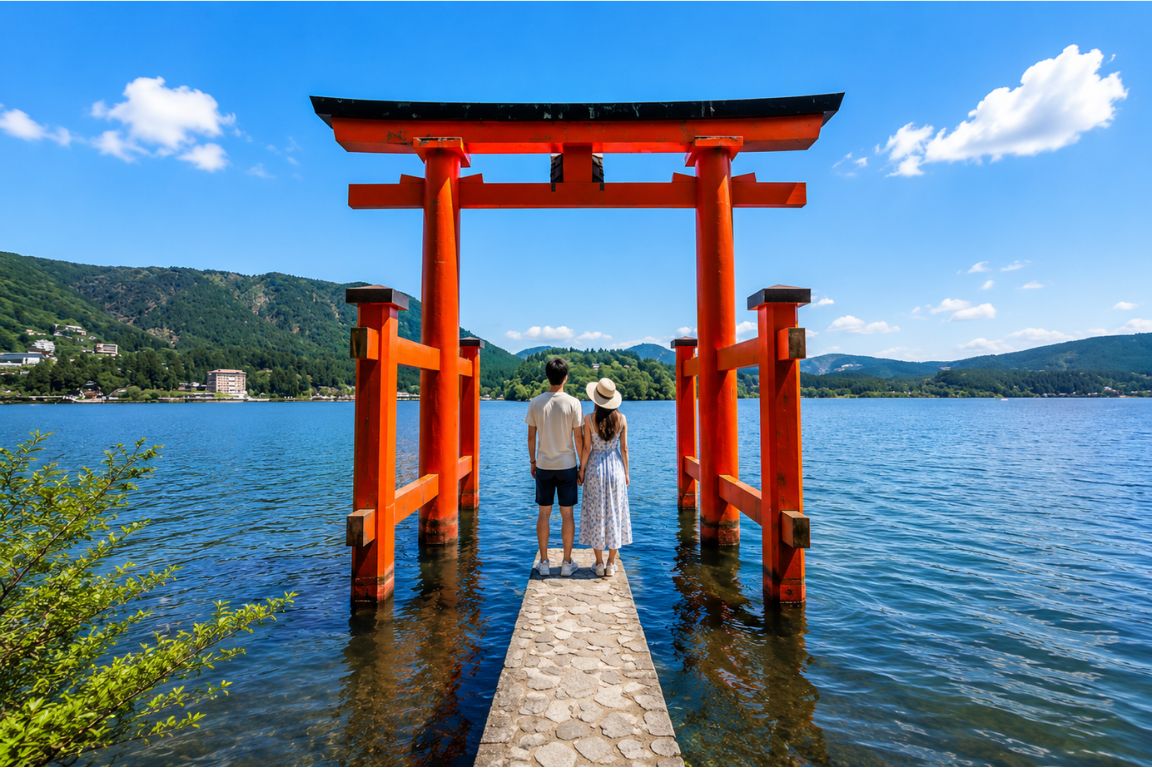 Yes, genuinely. Hakone is one of Japan’s most well-structured day trips, and the Hakone Loop delivers a surprising variety of landscapes and experiences within a single manageable circuit. You move from river valley hot spring towns up through forested mountain railways, over an active volcanic crater by ropeway, across a caldera lake by cruise ship, and back to the hot springs by bus. The whole thing is covered by one pass. On a clear day, Mt. Fuji adds itself to the view. Even on a cloudy day, the loop holds up.
What surprises most visitors is the contrast. You leave Shinjuku in the morning surrounded by Tokyo’s density, and two hours later you’re standing on a platform at Owakudani watching sulfur plumes rise from active vents below a ropeway gondola. The smell hits before the view does. Japan compresses a lot of geography into a small country, and Hakone is one of the places that makes that tangible.
The honest caveat: a day trip requires leaving early and keeping moving. If you want to linger at the Open-Air Museum for two hours, soak in a proper onsen, and sit at Hakone Shrine at dusk watching the light change on the torii gate, that’s a day and a half, not a day. One day gets you the highlights. An overnight gets you Hakone. We take the wider criticism head on in whether Hakone is a tourist trap.
For travelers on the Tokyo to Kyoto golden route, Hakone is also the most practical nature stop. Odawara Station connects directly to the Shinkansen. You can do Hakone, sleep in a ryokan, and catch the bullet train to Kyoto the next morning. That combination is one of the most satisfying two-day stretches in Japan.
We’ve put together a full side-by-side in our Mount Fuji tour comparison guide so you know exactly which operator fits your budget, group size, and what you actually want to get out of the day.
How Do You Get to Hakone from Tokyo?
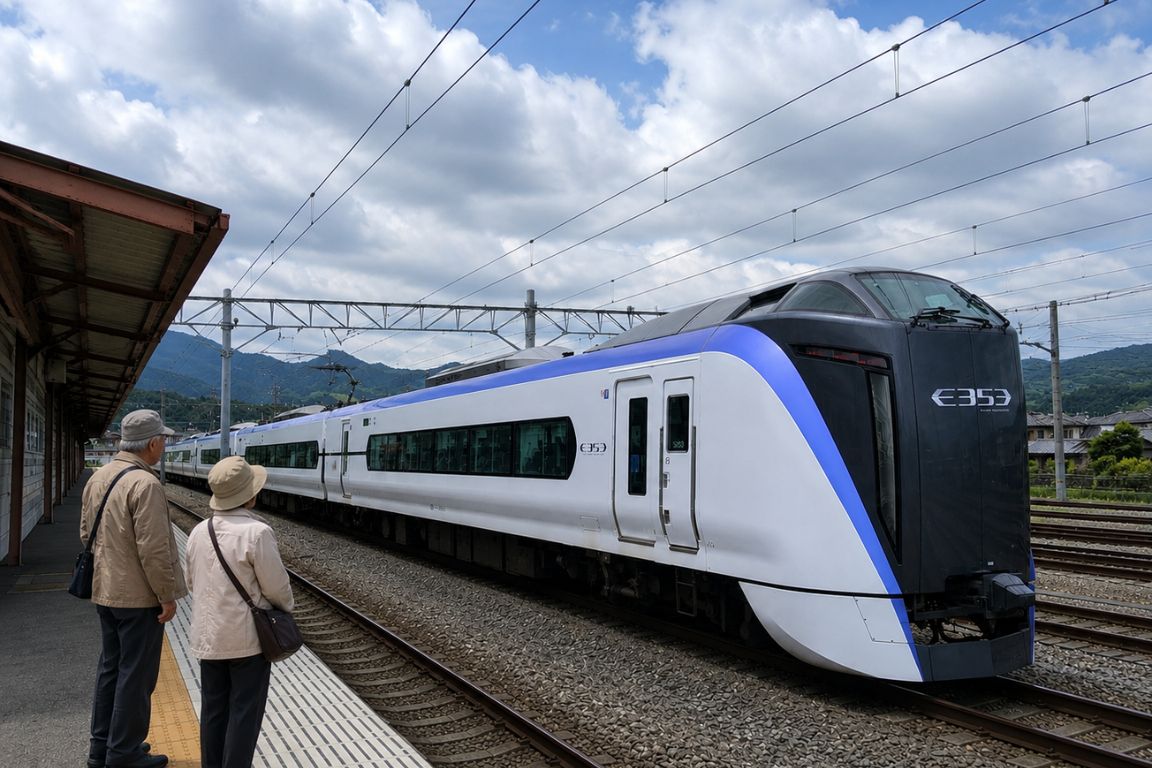 The most popular and comfortable way is the Odakyu Romancecar limited express from Shinjuku to Hakone-Yumoto, taking about 85 minutes with reserved seating. The Hakone Free Pass covers the base train fare, but you pay a separate ¥1,150 to ¥1,200 Romancecar surcharge. If you hold a JR Pass, take the Shinkansen from Tokyo Station to Odawara (about 35 minutes) and buy the Hakone Free Pass from Odawara. The budget option is the Odakyu regular express from Shinjuku, which takes about 2 hours but is fully covered by the Hakone Free Pass with no surcharge.
The Romancecar is worth the surcharge on a day trip. Reserved seats, big windows, a scenic approach through the mountains, and no standing for 85 minutes. On weekends and peak periods, Romancecar seats sell out early, so book online in advance through the Odakyu website or ticketing apps. Morning departures before 9:00 AM on Saturdays in spring or autumn can sell out weeks ahead.
If you hold a JR Pass, the Shinkansen from Tokyo or Shinagawa to Odawara (about 30 to 35 minutes) is the fastest way to get close to Hakone. At Odawara, buy the Hakone Free Pass starting from Odawara (¥6,000, slightly cheaper than the Shinjuku-origin version at ¥7,100 since it doesn’t include the Tokyo-Odawara leg). From Odawara, transfer to the Hakone Tozan Railway to Hakone-Yumoto and onward to Gora. The JR Pass does not cover any transport within the Hakone area itself, so the local Hakone Free Pass is still the most practical option for getting around once you arrive.
| Romancecar (Shinjuku to Hakone-Yumoto) | ~85 min | ¥7,100 pass + ¥1,150 surcharge | Most comfortable; reserve in advance |
| Odakyu express (Shinjuku to Hakone-Yumoto) | ~2 hrs | Included in Hakone Free Pass | Budget option; no surcharge, no reservation |
| Shinkansen (Tokyo/Shinagawa to Odawara) | ~35 min | ~¥2,530 (or JR Pass) + ¥6,000 local pass | Best if staying near Tokyo Station or holding JR Pass |
| Highway bus (Shinjuku to Hakone-Yumoto) | ~2.5 hrs | ~¥2,730 | Good if traveling with luggage; traffic dependent |
One thing that trips up first-timers: the Hakone Free Pass is sold at Odakyu stations including Shinjuku, and can also be purchased digitally through the EMot app or platforms like Klook. Digital purchase lets you skip the ticket counter queue in the morning, which matters when you’re trying to catch an early Romancecar. Allow extra time at Shinjuku Station if buying in person, especially on weekend mornings.
First time attempting the Tokyo to Mount Fuji journey and not sure where to begin? Here’s our how to visit Mount Fuji tours from Tokyo guide so you don’t underestimate what the trip involves.
What Is the Hakone Loop and How Does It Work?
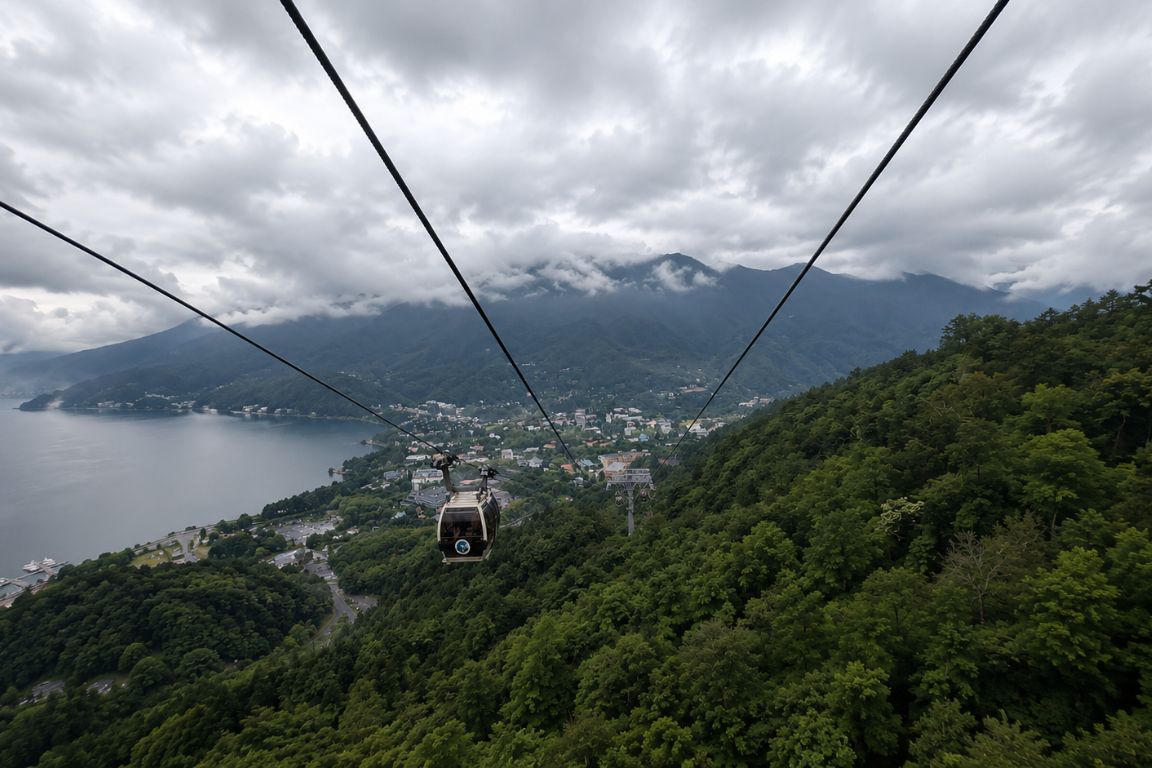 The Hakone Loop is a circuit of five different transport modes that takes you through Hakone’s main attractions in a single continuous route. Starting from Hakone-Yumoto, you take a mountain railway to Gora, a cable car to Sounzan, a ropeway over the Owakudani volcanic valley to Togendai on Lake Ashi, a pirate ship cruise across the lake to Moto-Hakone, and a bus back to Hakone-Yumoto. The Hakone Free Pass covers all of it. The loop takes 6 to 8 hours depending on stops.
The sequence matters. Here’s how the loop flows counter-clockwise, which is the most natural direction from Hakone-Yumoto:
The Hakone Tozan Railway from Hakone-Yumoto to Gora (40 minutes) is Japan’s oldest mountain railway, dating to 1919. The train climbs over 500 meters via three switchbacks through a narrow forested valley. It’s a legitimately scenic ride. The tracks follow a river gorge upward in a way that makes the engineering feel like part of the attraction.
At Gora, the Hakone Open-Air Museum is a short walk from Chokoku-no-Mori Station one stop before Gora. Entry runs ¥2,000 for adults and ¥1,600 with the Hakone Free Pass discount (prices verified May 2026). Allow at least 90 minutes, more if you want to do it properly. If you’re pressed for time on a day trip, this is the stop most likely to be shortened or skipped. Save it for an overnight visit if possible.
From Gora, the cable car takes you to Sounzan (10 minutes), and the ropeway runs from Sounzan to Togendai via Owakudani (30 minutes total). The ropeway is the visual centrepiece of the loop. The gondolas glide above volcanic terrain, and at Owakudani the crater vents below look genuinely active. You change gondolas at Owakudani. The section from Owakudani to Togendai reveals Lake Ashi below and, on clear days, Mt. Fuji in the distance.
At Togendai you board the Lake Ashi cruise. The “pirate ships,” replicas of European galleons named Vasa and Victory, are theatrical but genuinely enjoyable on the water. The 30-minute crossing from Togendai to Moto-Hakone gives open views across the lake. Hakone Shrine’s red torii gate rises from the water near Moto-Hakone, visible from the upper deck on the approach.
From Moto-Hakone, the bus returns to Hakone-Yumoto. Or you walk the 30 minutes of ancient cedar avenue that was once part of the Edo-period Tokaido Road, following the same route that connected Tokyo and Kyoto for centuries.
One important caveat: the Hakone Ropeway undergoes annual winter maintenance closures, typically in December through February, during which sections are replaced by buses. The loop still operates during these periods but takes longer. Before visiting in winter, check the official ropeway schedule at hakonenavi.jp for the current year’s maintenance dates.
Want an honest comparison between the two most popular ways to get to Mount Fuji independently? Here’s our train vs bus to Mount Fuji guide so you travel smarter.
What Are the Best Things to See and Do in Hakone in One Day?
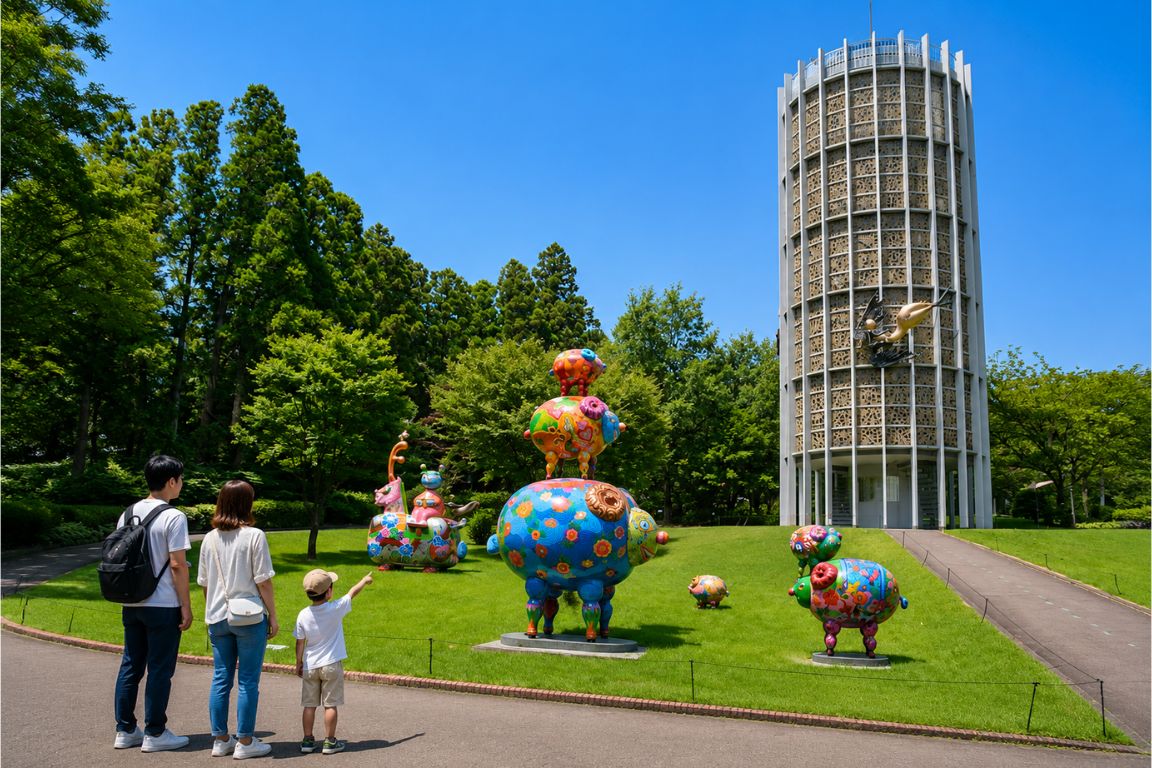 The essential Hakone experiences are Owakudani volcanic valley (active vents, black eggs, Fuji views), the Lake Ashi cruise (pirate ship, torii gate, open water), and Hakone Shrine (cedar forest, red torii rising from the lake). The Hakone Open-Air Museum is excellent but needs 90 minutes to do properly, making it a better addition for those staying overnight or starting very early. Hakone-Yumoto’s onsen town is the right bookend for the day.
Owakudani deserves more time than most visitors give it. The platform above the vents lets you watch sulfur clouds rise continuously from below. The smell is distinctive and strong, and the volcanic landscape stretches in a way that makes you aware you’re standing on the rim of something active. The black eggs (kurotamago) are boiled in the sulfurous water until the shells turn dark. Legend holds that eating one adds seven years to your life. The legend is optimistic, but the eggs are good and the experience of eating a hard-boiled egg next to an active volcano is specifically Hakone.
Hakone Shrine feels different from most Japanese shrines because the approach is through old-growth cedar forest, and the famous torii gate stands directly in Lake Ashi rather than on land. The contrast of the deep red gate against the grey-green water and mountains behind it is one of those Japan images that earns its reputation. The torii is accessible 24 hours. The shrine buildings close at 4:30 PM. If you’re doing the loop and arriving at Moto-Hakone in the late afternoon, the timing is right to end at the shrine before catching your bus back.
The Hakone Open-Air Museum is Japan’s first outdoor sculpture museum, opened in 1969. Its 70,000 square meters of gardens hold over 120 sculptures by international artists, with Mt. Hakone’s forested hills as backdrop. The Picasso Pavilion contains over 300 original works, one of the largest Picasso collections in Japan. There is also an open-air foot onsen bath in the garden. For art lovers, this is a full half-day on its own. For day-trippers doing the full loop, it’s the stop that gets compressed or cut.
Hakone-Yumoto’s hot spring town is the gateway and the ideal end point. The narrow streets above the station hold small onsen facilities, soba restaurants, and ryokan. For day visitors who want a soak without an overnight stay, several facilities offer day-use baths from around ¥1,000 to ¥1,500 per person. The Tenzan Onsen complex, a short bus ride from the station, is a well-regarded day-use option with multiple spring types.
There are more scenic spots around Fuji than most one-day tours can cover – our Mt. Fuji tours scenic spots explained guide breaks down which ones deserve priority based on what you actually came to see.
What Is the Best Hakone Day Trip Itinerary?
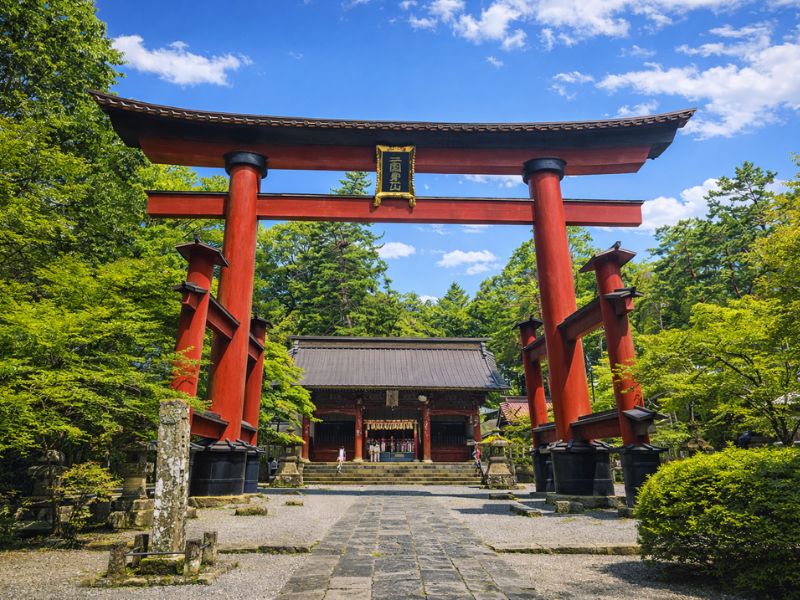
Leave Shinjuku no later than 8:00 AM on the Romancecar. Arrive Hakone-Yumoto around 9:30 AM. Take the Tozan Railway to Chokoku-no-Mori for the Open-Air Museum (or skip to Gora if pressed for time), then cable car to Sounzan, ropeway to Owakudani (get off and explore for 45 minutes), continue by ropeway to Togendai, board the pirate ship to Moto-Hakone, visit Hakone Shrine, walk the cedar avenue toward Hakone-machi or bus back to Hakone-Yumoto for an optional onsen soak. Return to Shinjuku by 7:00 to 8:00 PM.
Here is the hour-by-hour version:
7:30 AM: Board the Romancecar at Shinjuku. Buy a bento from the station before boarding or from vendors on the platform. Window seat on the right side (heading toward Hakone) for views of mountains on the approach.
9:30 AM: Arrive Hakone-Yumoto. Transfer immediately to the Hakone Tozan Railway toward Gora. If you plan to include the Open-Air Museum, get off at Chokoku-no-Mori Station (one stop before Gora). If skipping the museum, ride to Gora.
9:50 AM to 11:20 AM (optional): Hakone Open-Air Museum. Foot onsen bath in the sculpture garden, Picasso Pavilion, outdoor sculpture walk. This is 90 minutes minimum to do it properly. If you skip this, you gain 90 minutes for lingering elsewhere on the loop.
10:30 AM (skipping museum) or 11:30 AM (after museum): Cable car from Gora to Sounzan (10 minutes). Board the ropeway from Sounzan toward Owakudani.
11:00 AM to 11:45 AM: Get off at Owakudani. Walk the viewing platform above the vents. Buy black eggs. Check for Mt. Fuji views from the observation area. This section has morning clarity, so earlier is better for the Fuji view. Board the next gondola toward Togendai.
12:00 PM: Arrive Togendai on Lake Ashi. Board the Lake Ashi pirate ship cruise to Moto-Hakone or Hakone-machi (30 minutes). Upper deck for views. Look right for the Hakone Shrine torii gate as you approach Moto-Hakone.
12:30 PM: Arrive Moto-Hakone. Lunch at one of the lakeside restaurants (soba, tempura, kaiseki lunch sets). Allow 45 to 60 minutes.
1:30 PM to 2:30 PM: Hakone Shrine. Cedar forest approach, shrine buildings, torii gate by the lake, the small vermillion bridge slightly to the left of the main gate. This is less photogenic but less crowded than the main torii queue. Allow 45 minutes.
2:30 PM to 3:00 PM: Walk the Old Tokaido Cedar Avenue to Hakone-machi (30 minutes through ancient forest, historically significant, low effort). Or take the bus directly to Hakone-Yumoto if time is short.
3:30 PM to 5:00 PM: Hakone-Yumoto. Optional day-use onsen soak (¥1,000 to ¥1,500). Browse the small shopping street. Dinner at a soba or kaiseki restaurant before the return journey.
5:30 PM to 6:00 PM: Board return Romancecar or express from Hakone-Yumoto. Arrive Shinjuku around 7:00 to 7:30 PM.
Curious what a full Mount Fuji tour day actually looks like beyond the highlight reel? Here’s our what to expect on a Mount Fuji tour guide so you know exactly what you’re getting into.
| Hakone Open-Air Museum (optional) | ~9:50 AM | 90 min minimum | Best on overnight stay; rushed on day trip |
| Owakudani | ~11:00 AM | 45 minutes | Morning best for Fuji views; black eggs; active vents |
| Lake Ashi Cruise | ~12:00 PM | 30 minutes | Upper deck; watch for torii gate on approach |
| Lunch (Moto-Hakone) | ~12:30 PM | 45 to 60 min | Soba and kaiseki sets; lakeside setting |
| Hakone Shrine | ~1:30 PM | 45 minutes | Close by 4:30 PM; torii gate open 24h |
| Old Tokaido Cedar Avenue (optional) | ~2:30 PM | 30 minutes | Historic walking route; low effort; skip if tired |
| Hakone-Yumoto onsen (optional) | ~3:30 PM | 60 to 90 min | Day-use baths from ~¥1,000; good before return train |
Fuji, Hakone & Bullet Train: Scheduled Dates
A coach, Hakone ropeway and Lake Ashi cruise, with the Shinkansen back to Tokyo.
Check Dates For Fuji, Hakone & Bullet TrainWhat Should You Know Before You Go to Hakone?
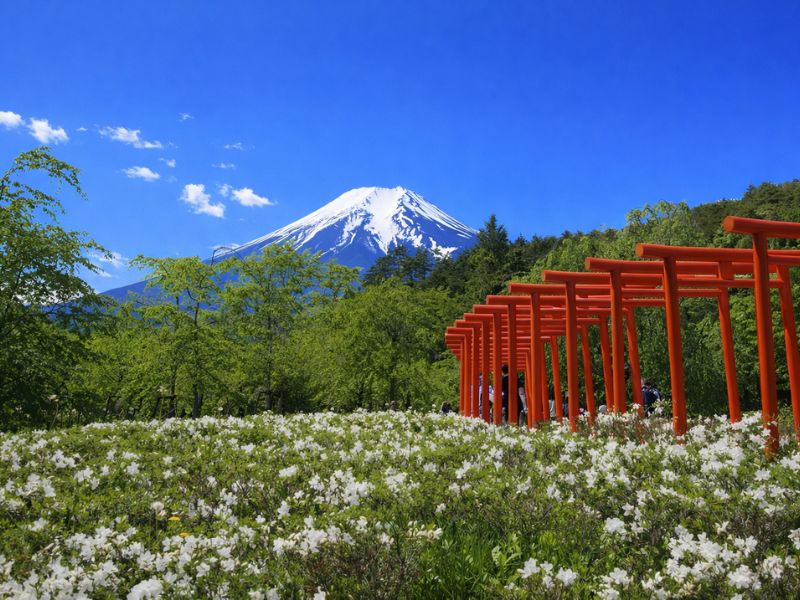
The five things most day-trippers wish they’d known: the Romancecar surcharge is separate from the Hakone Free Pass; the ropeway closes for maintenance annually (check dates before winter visits); morning departure is non-negotiable for completing the full loop; Mt. Fuji is not reliably visible and its appearance should be a bonus rather than the goal; and the torii gate photo queue at Hakone Shrine is long and the resulting image is typically under-lit. Plan around these and the day goes smoothly.
The Romancecar surcharge catches people every time. The Hakone Free Pass covers the basic Odakyu Line fare, but riding the Romancecar reserved-seat express requires a separate surcharge of ¥1,150 if booked online or ¥1,200 at the station. This applies each way. It’s not expensive but it’s easy to arrive at the platform assuming your pass covers everything and find you can’t board.
The ropeway closure is the most consequential logistical issue for a day trip. Every winter, sections of the ropeway close for maintenance, typically in December and January and sometimes into February. Replacement buses run but take significantly longer and the experience is different. If you’re visiting between December and February, check hakonenavi.jp specifically for the current year’s ropeway schedule before you book transport.
Mt. Fuji is not guaranteed. In summer, the mountain is hidden on the majority of days. In winter, visibility improves significantly, but clouds can still move in. Hakone’s topography means the mountain is also more frequently partially obscured than from Kawaguchiko. Build your day around the loop, not around the mountain. If Fuji appears over Lake Ashi from the cruise, or from the ropeway above Owakudani, it’s a meaningful bonus. If it doesn’t, the day is still a genuinely good one.
The Hakone Shrine torii gate photo deserves an honest note. The queue to stand in front of the gate for a photograph is usually long, sometimes 30 minutes or more. The photograph tends to be backlit because the gate faces the water and the light comes from behind the subject. The vermillion bridge slightly to the left of the main gate, less photographed but equally beautiful in the cedar forest setting, is worth the detour. Arriving at the shrine early in the morning or arriving after 3:30 PM reduces the queue considerably.
On cash and cards: most Hakone transport, including the ropeway and the cruise, now accepts IC cards and major credit cards. The Hakone Free Pass itself is available as a digital pass. Small restaurants and onsen facilities may still be cash-only, so carry ¥5,000 to ¥10,000 for meals and incidentals. The black eggs at Owakudani are cash only.
If you'd rather not manage the connection timing yourself, the Mt. Fuji & Hakone 1-Day Tour with Bullet Train Return runs as a guided day covering Hakone and the Fuji area from Tokyo. We’ve been navigating these routes since 2012.
Both towns sit in Fuji’s shadow but deliver completely different experiences – our Kawaguchi vs Hakone guide breaks down exactly what sets them apart and which one wins for different types of travellers.
Is One Day Enough for Hakone, or Should You Stay Overnight?
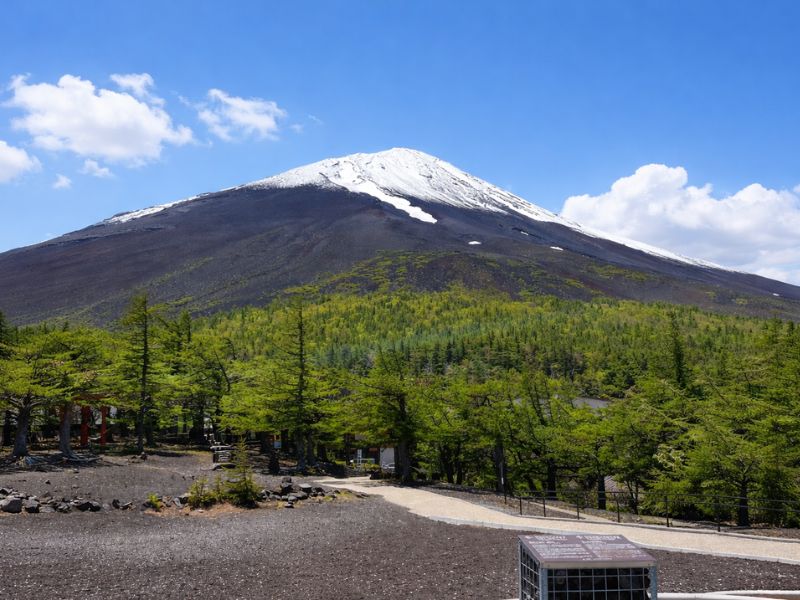
One day is enough to complete the loop and see the main attractions, but it requires moving efficiently and leaving early. An overnight stay changes the experience meaningfully: you can soak in an onsen in the evening, sleep in a ryokan, see the lake at different hours, spend proper time at the Open-Air Museum, and take the Romancecar back at a relaxed pace the next morning. If your Japan itinerary allows it, one night in Hakone is one of the better additions you can make.
The honest difference between a day trip and an overnight: pace and depth. A day trip is a very good day. An overnight is a genuinely memorable Japan experience. The thing that makes Hakone special beyond its landscape is the onsen culture, and you cannot access that properly in a rushed day trip. The ryokan ritual, tatami room, yukata robe, shared or private hot spring bath at night, kaiseki dinner, Japanese breakfast, is something you arrive for and leave having actually rested.
For the specific case of travelers heading to Kyoto or Osaka after Tokyo, the overnight in Hakone is the most natural insertion in the itinerary. Stay in Hakone one night, take the Shinkansen from Odawara to Kyoto the next morning, and arrive in western Japan having seen both the volcanic countryside and a proper traditional inn stay. The total journey time from Hakone to Kyoto via Odawara is about 2 to 2.5 hours. That’s one of Japan’s better transit days.
For accommodation, Hakone has options across all tiers. Budget guesthouses with shared onsen start around ¥6,000 to ¥10,000 per person per night. Mid-range ryokan with shared baths and meals run ¥15,000 to ¥25,000 per person. High-end properties with private outdoor baths and multi-course kaiseki dinner run ¥30,000 to ¥60,000 per person and up. The mid-range tier is where Hakone earns its reputation. Properties around Hakone-Yumoto, Gora, and Moto-Hakone all have strong options.
Note that the Hakone Free Pass is a 2-day or 3-day pass. If you’re doing a day trip, you use one day of the 2-day pass. But the pass pays off on day one even at 2 days. If you decide to extend, the pass is already valid.
Should You Do Hakone as a DIY Trip or Join a Tour?
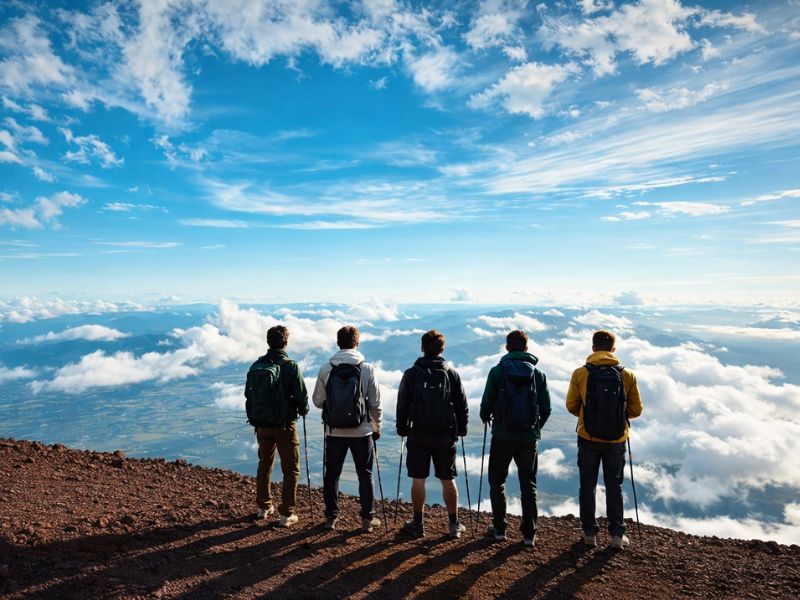
DIY with the Hakone Free Pass works very well for most travelers. The loop is well-signposted, the transport connections are logical, and the English signage throughout Hakone is good by Japanese standards. Join a tour if you’re traveling with young children or elderly companions, have very limited time and want a bilingual guide to handle logistics, or want to combine Hakone with Kawaguchiko and Mt. Fuji in a single day (which requires more orchestration than DIY can easily manage in a day).
The case for DIY is strong. The Hakone Loop is one of the most user-friendly tourist circuits in Japan. The Free Pass structures the day. The transport connections are clear. The signage is adequate. You move at your own pace, stop where you want, and don’t have a bus waiting. A couple or solo traveler with moderate travel confidence should have no problems navigating the loop independently.
Where guided tours earn their value at Hakone: families with children, travelers who speak no Japanese and find navigation anxiety-inducing, anyone who wants to add the Mt. Fuji area in the same day (the Kawaguchiko to Hakone route via Gotemba requires specific knowledge of bus connections that aren’t obvious), and travelers who want to understand what they’re seeing culturally rather than just passing through the stops.
A guided Hakone day tour from Tokyo typically includes round-trip transport, an English-speaking guide, and entrance to the ropeway and lake cruise. Prices run roughly ¥8,000 to ¥15,000 per person for shared group tours, and ¥30,000 to ¥60,000 per group for private tours. The main tradeoff is flexibility. Guided tours follow a fixed schedule, and if Fuji isn’t visible at the lake, the tour moves on regardless.
The best version of Hakone for most independent travelers: Romancecar to Hakone-Yumoto, Hakone Free Pass, counter-clockwise loop, the optional morning at the Open-Air Museum if you’re staying overnight, Owakudani in late morning, lake cruise at noon, shrine in the afternoon, onsen at dusk, Romancecar back. That structure is tried, reliable, and enjoyable.
Questions about combining Hakone with the broader Mt. Fuji area? The Private Mt. Fuji & Hakone Tour with Fully Licensed Guide covers both destinations in one day.
Not sure whether booking a guided tour or going independently gets you more out of a Mount Fuji visit? Here’s our Mount Fuji tour vs DIY guide so you decide before you commit to either.
What Our Clients Experience on Hakone Visits: Data from Mt. Fuji Tours
| Clients who chose day trip over overnight stay at Hakone | 72% |
| Clients who said Mt. Fuji was visible from Hakone during their visit | 45% |
| Most frequently cited highlight of Hakone visit | [Owakudani / Lake Ashi cruise / Shrine / Museum]: 82% |
| Clients who combined Hakone with Kawaguchiko same trip | 12% |
| Travelers who said they wished they’d stayed overnight | 68% |
| Clients who had ropeway suspended during their visit (winter visits) | 20% |
The pattern we see: first-timers doing day trips consistently say they wished they had more time. The Open-Air Museum and the onsen are the two things that get cut on tight day trips and the two things that people most regret missing. If your schedule allows one night, take it.
Frequently Asked Questions
How much does a Hakone day trip from Tokyo cost?
The Hakone Free Pass including return from Tokyo is ¥7,100 for 2 days (prices verified May 2026). Add the Romancecar surcharge of ¥1,150 to ¥1,200 each way if you use the express train. Budget ¥1,500 to ¥3,000 for lunch, ¥1,000 to ¥1,500 for an optional day-use onsen, and ¥2,000 for the Open-Air Museum entry (though the pass provides a discount). Total for a full day trip runs approximately ¥12,000 to ¥16,000 per person all-in.
Is the Hakone Free Pass worth it?
Yes, clearly. The pass costs ¥7,100 including return from Tokyo. Buying all the transport components separately (Shinjuku to Hakone-Yumoto return, Tozan Railway, Cable Car, Ropeway one way, Lake Ashi cruise) totals over ¥8,000 before any buses. The pass also gives discounts at around 70 attractions and facilities. For anyone doing the full loop, the pass pays off decisively on day one.
Can you see Mt. Fuji from Hakone?
Yes, on clear days, from the Hakone Ropeway and from Lake Ashi. Visibility is most reliable from December through February when the air is dry. In summer, the mountain is frequently obscured. The view is beautiful when it appears, but Fuji is a bonus at Hakone rather than the reason to go. For a guaranteed close-up mountain experience, Kawaguchiko is the better choice.
What is Owakudani and why should you go?
Owakudani is an active volcanic valley in the Hakone caldera, accessible by ropeway over the steaming terrain. The vents continuously release sulfur dioxide, and the thermal activity is visible and smellable from the platform. The famous kurotamago (black eggs) are boiled here in the sulfurous water until the shells darken. It’s one of the most specifically Hakone experiences on the loop and unlike anything you encounter elsewhere in Japan. Allow 45 minutes at the stop.
What happens if the ropeway is closed?
Replacement buses run on all sections during maintenance closures, and these are covered by the Hakone Free Pass. The buses take approximately 10 to 15 minutes per section (versus 15 minutes by ropeway) but road congestion during peak periods can add time. You still see Owakudani, but from ground level rather than from above. Check hakonenavi.jp for current ropeway status before planning your visit in winter.
Is Hakone suitable for families with young children?
Yes. The Hakone Loop uses covered transport modes that work in any weather, and children generally engage well with the ropeway, the volcanic terrain at Owakudani, and the pirate ship cruise. The Open-Air Museum has stroller rentals and dedicated children’s areas. For very young children, the main challenge is the length of the day. Starting early and keeping lunch flexible around the children’s energy levels makes the difference.
Planning Hakone alongside Mt. Fuji or Kawaguchiko? Start with the Mount Fuji tour vs DIY guide, or the Mt. Fuji Full-Day Private Customizable Tour from Tokyo. We’ve been running Mt. Fuji area tours since 2012 and know how to get the most out of each destination on your schedule.
Written by Akira Nakamura
Japanese tour guide since 2012 · Founder, Mt. Fuji Tours
Akira has guided over 11,500 travelers up Mt. Fuji and through the Fuji Five Lakes region since founding the agency.