Kawaguchi vs Hakone: Which Is Better for Mt. Fuji Sightseeing?
Kawaguchiko or Hakone? Choose Kawaguchiko for the best Mt. Fuji views, or Hakone for a varied day trip - compare access, experience, and logistics.
Last updated: May 12, 2026
Choose the lakes for a closer Fuji-focused day, or Hakone for a ropeway-and-cruise combination. The booking choice should follow that decision.
Booking Summary: Compare a Tokyo pagoda-and-lakes coach with a Fuji–Hakone coach, or discuss one region with a private driver-guide. A one-day tour cannot deliver two complete destination days.
Scroll to the end for the complete comparison and provider booking links. Interactive matching requires JavaScript.
Quick Facts: Kawaguchiko vs Hakone at a Glance
| Distance from Tokyo | ~2 hours from Shinjuku | ~85 to 90 minutes from Shinjuku |
| Mt. Fuji view quality | Closest, largest, most unobstructed | Visible but more distant, often partially obscured |
| Main draw | Mt. Fuji photography, lake scenery, climbing access | Hakone Loop (ropeway, train, cruise), onsen, art |
| Onsen quality | Good, with some Fuji-view baths | Japan’s most renowned hot spring resort area |
| Transport pass | Kawaguchiko Sightseeing Bus Pass (¥1,500/day) | Hakone Free Pass (¥7,100 inc. return from Tokyo) |
| Rainy day options | Limited without Fuji views | Strong: museums, onsen, covered activities |
| Best season | Winter (views), Spring (cherry blossoms), Autumn (foliage) | Year-round; Spring and Autumn for scenery |
| Onward connection to Kyoto/Osaka | Requires backtracking to Tokyo (4 to 5 hours) | Easy: Odawara to Kyoto ~2 hours by Shinkansen |
| Getting between the two | Fujikyu Bus via Gotemba: ~2 to 2.5 hours, ~¥2,500. No direct train. | |
| Local specialty food | Hoto noodles (miso broth, thick flat noodles, pumpkin) | Kurotamago (sulfur-boiled black eggs), soba, kaiseki |
Prices verified May 2026.
What Is the Difference Between Kawaguchiko and Hakone?
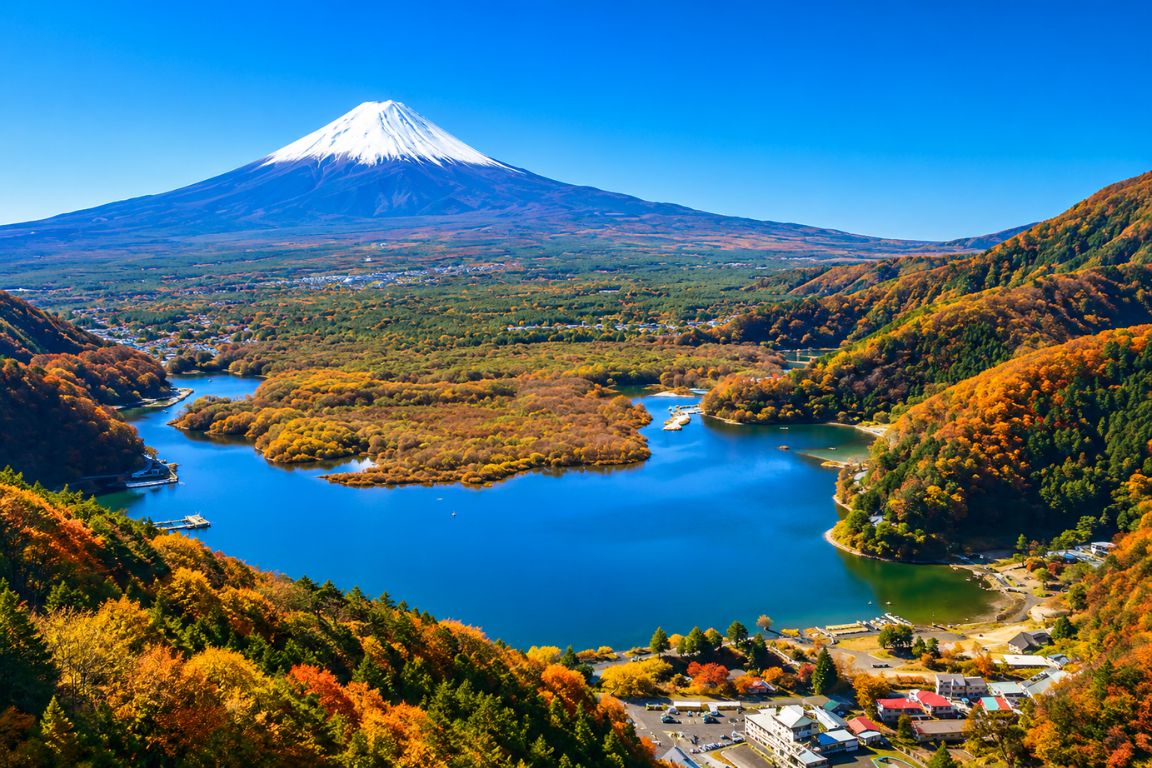 Kawaguchiko is a lakeside town at the northern base of Mt. Fuji, built around the mountain. Hakone is a well-developed hot spring resort town about 40 km to the southeast, set in the caldera of an ancient volcano, built around the “Hakone Loop,” a circuit of scenic transport modes. Both sit within Fuji-Hakone-Izu National Park. Their experiences are fundamentally different: one is about the mountain itself, the other is about a varied half-day to full-day resort loop that happens to offer mountain views on clear days.
The geography explains everything. Kawaguchiko and the Fuji Five Lakes area sit north of the summit. When you’re at the north shore of Lake Kawaguchi, you’re looking directly at Mt. Fuji’s face from about 20 to 25 km away. The mountain fills the horizon. On a clear morning, it reflects in the lake. At Chureito Pagoda, you photograph it through cherry blossoms or autumn foliage from a hillside above the city, the peak dominant behind the pagoda’s red frame.
Hakone approaches the same mountain from a completely different angle. You see Fuji from across Lake Ashi, around 40 km away, or from the Hakone Ropeway over Owakudani. It’s there. It can be beautiful, especially with the torii gate of Hakone Shrine rising from the lake in the foreground. But the mountain is smaller, further, and more frequently blocked by the surrounding hills that define Hakone’s volcanic caldera landscape. Hakone wasn’t built for Mt. Fuji viewing. It was built for hot springs.
That’s the core distinction, and it drives every other comparison in this article. Choose your destination based on what you actually want from the day.
Trying to compare Mount Fuji tours but finding all the packages look suspiciously similar? Check out our Mount Fuji tour comparison guide before you commit to anything.
Which Gives You Better Views of Mount Fuji?
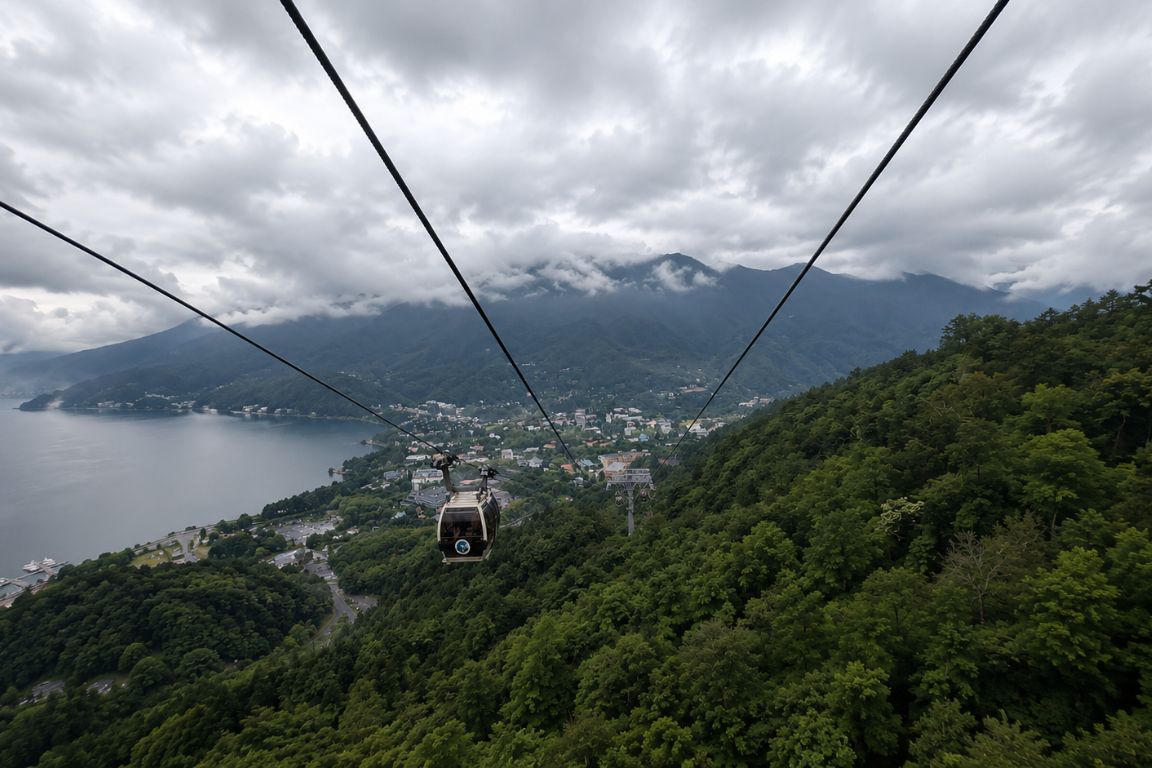 Kawaguchiko wins this comparison decisively. The mountain is closer, higher in the field of view, and visible from more spots around the lake with no surrounding hills cutting off the base. At Lake Kawaguchi‘s north shore, Fuji rises directly behind the water, and on calm mornings the reflection doubles the image. In Hakone, you see a more distant mountain and often only the upper portion, with the base hidden behind the surrounding ridgelines.
Distance is the technical issue. At Kawaguchiko, you’re looking at Mt. Fuji from roughly 20 to 25 km away at lake level. The mountain’s full profile from base to summit is visible on clear days. In Hakone, you’re viewing from around 40 km at Lake Ashi, and the caldera walls that give Hakone its dramatic landscape also obstruct the mountain’s lower half. You get Fuji’s peak and upper slopes, not the full cone.
Visibility from Hakone is also weather-dependent in a different way from Kawaguchiko. Both suffer from summer haze and cloud cover, but Hakone’s topography creates additional blocking layers. The classic Hakone Ropeway view of Fuji over Owakudani requires a high ceiling specifically, not just general clarity. On many days that would give you a decent view from Kawaguchiko, Hakone’s ridgelines still hide most of the mountain.
The specific shots that define Mt. Fuji photography are in Kawaguchiko’s territory. The Chureito Pagoda image exists because Kawaguchiko is close enough for the mountain to dominate the frame behind a foreground subject. The “Mirror Fuji” lake reflection shot requires the proximity and calm-water surface conditions of the north shore in early morning. The snow cap rising above lavender fields in June, or above red maple trees in November, happen specifically in the Fuji Five Lakes area. None of these images exist in Hakone.
If you travel to the Mt. Fuji area and your primary goal is the mountain, Kawaguchiko is the right choice. Hakone is the right choice for people who want a great day out in a beautiful area and are happy to see the mountain if the weather cooperates.
Not sure which viewpoints and scenic spots around Mount Fuji are actually worth your time versus which ones look better in photos than they do in person? Here’s our Mt. Fuji tours scenic spots explained guide so you prioritize the right ones.
How Do Kawaguchiko and Hakone Compare for Getting There from Tokyo?
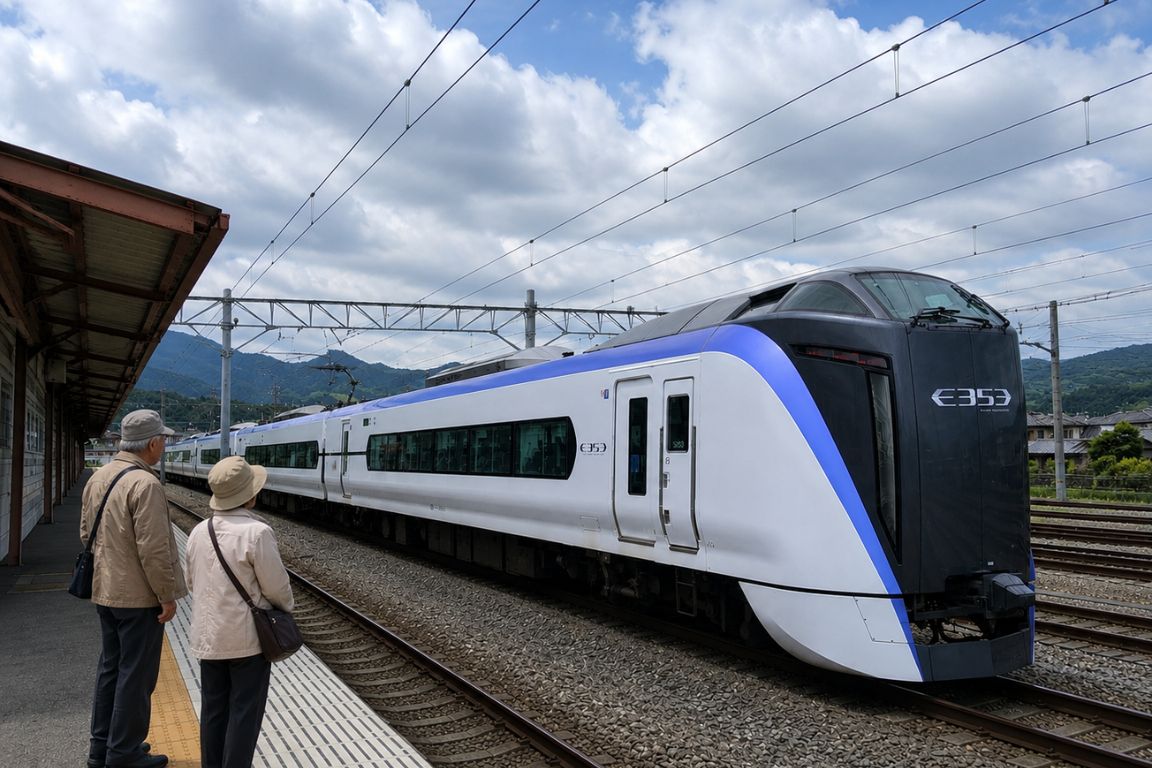 Hakone is about 30 minutes closer to Tokyo and has more frequent transport connections. The Odakyu Romancecar runs directly from Shinjuku to Hakone-Yumoto in about 85 minutes at ¥2,470 with reserved seats. Kawaguchiko is about 2 hours from Shinjuku on the Fuji Excursion Limited Express at ¥4,130, or 2 to 2.5 hours by highway bus at ¥1,750 to ¥2,600. Neither is difficult, but Hakone has more departure options and a faster journey.
Hakone’s main transport advantage is that it connects to both the Odakyu Line from Shinjuku and the Shinkansen at Odawara, which is 30 minutes by bullet train from Tokyo Station. The Hakone Free Pass, priced at ¥7,100 for a two-day pass including return from Tokyo, covers nearly all transport within the Hakone area: the Tozan Railway, Cable Car, Ropeway, Lake Ashi Cruise, and designated buses. Buying those individually would cost over ¥8,000, so the pass pays off quickly. It also gives discounts at around 70 tourist attractions.
Trying to figure out which transport option saves you the most time and money on the Tokyo to Fuji journey? Check out our train vs bus to Mount Fuji guide before you commit to either.
Getting around within Kawaguchiko is a different experience. The lake area is spread out and the sightseeing buses run every 20 to 30 minutes, which is workable but less frequent than Tokyo travelers expect. A day bus pass for the lake area runs ¥1,500. Renting a bicycle near Kawaguchiko Station is a popular option for the north shore loop, taking about 2 hours at a relaxed pace. For the best Fuji viewpoints further out, like Oshino Hakkai or Lake Motosu, a car or private tour is more practical than public transport.
Hakone’s other transport advantage is the onward connection. If your Japan itinerary goes Tokyo to Hakone to Kyoto, you take the Shinkansen from Odawara to Kyoto in roughly 2 hours. The whole move is smooth and logical. Kawaguchiko does not connect to the Shinkansen. Getting from Kawaguchiko to Kyoto means returning to Tokyo first, then connecting. That adds 4 to 5 hours of travel. For travelers on the classic Tokyo to Osaka golden route, this makes Hakone the natural fit. That convenience is also why Hakone gets judged harshly by travellers who came for the mountain, a question we answer in Hakone’s tourist-trap reputation.
Getting to Mount Fuji from Tokyo is straightforward but getting the most out of the visit takes more planning than most tourists expect – our how to visit Mount Fuji tours from Tokyo guide breaks down everything you need to know before you go.
| Shinjuku to Hakone-Yumoto (Romancecar) | ~85 minutes | ¥2,470 + ¥1,150 supplement | Reserved seating, direct, comfortable |
| Shinjuku to Hakone-Yumoto (Odakyu local) | ~2 hours | ¥1,270 | Budget option, transfer at Odawara |
| Tokyo Station to Odawara (Shinkansen) | ~30 minutes | ~¥2,530 | Good if JR Pass holder; transfer to local train |
| Shinjuku to Kawaguchiko (Fuji Excursion) | ~1h 52 min | ¥4,130 | Direct, reserved, most comfortable |
| Shinjuku to Kawaguchiko (highway bus) | ~2 to 2.5 hours | ¥1,750 to ¥2,600 | Budget option, traffic-dependent |
| Kawaguchiko to Hakone via Gotemba (bus) | ~2 to 2.5 hours | ~¥2,500 | One transfer at Gotemba; no direct train |
What Can You Actually Do in Kawaguchiko vs Hakone?
 Hakone has more activity variety. The Hakone Loop chains together a mountain railway, cable car, ropeway over active volcanic terrain, pirate ship cruise on Lake Ashi, art museums, and multiple onsen options into a single structured day. Kawaguchiko is more open-ended: lake walks, Chureito Pagoda, the Ropeway, Oshino Hakkai village, boat cruises, cycling, and seasonal flower viewing, all arranged around the central goal of seeing the mountain. On a cloudy day in Kawaguchiko, you run out of purpose fast. In Hakone, the Loop keeps delivering regardless of whether Fuji appears.
The Hakone Loop is the destination’s signature experience. Starting from Hakone-Yumoto, you ride the scenic mountain railway up to Gora (40 minutes through switchbacks and forested valleys), transfer to the cable car, then board the ropeway that crosses the Owakudani volcanic crater. The vents below the gondola breathe sulfur into the air. The landscape looks genuinely otherworldly. At Togendai you board the Lake Ashi cruise, one of the famous “pirate ships,” for a 30-minute crossing with Fuji views on clear days. The red torii gate of Hakone Shrine, rising from the water at Moto-Hakone, is one of the most photographed moments in the region. Buses return to Hakone-Yumoto. The whole circuit takes about 6 to 7 hours and keeps you genuinely engaged throughout.
Beyond the Loop, Hakone has the Open Air Museum, Japan’s first outdoor sculpture park with a remarkable permanent collection in a forested hillside setting. The Pola Museum of Art holds a serious collection of Impressionist and modern works in a building designed around forest views. These are full-hour destinations, not quick stops. Hakone is genuinely rich even without the mountain.
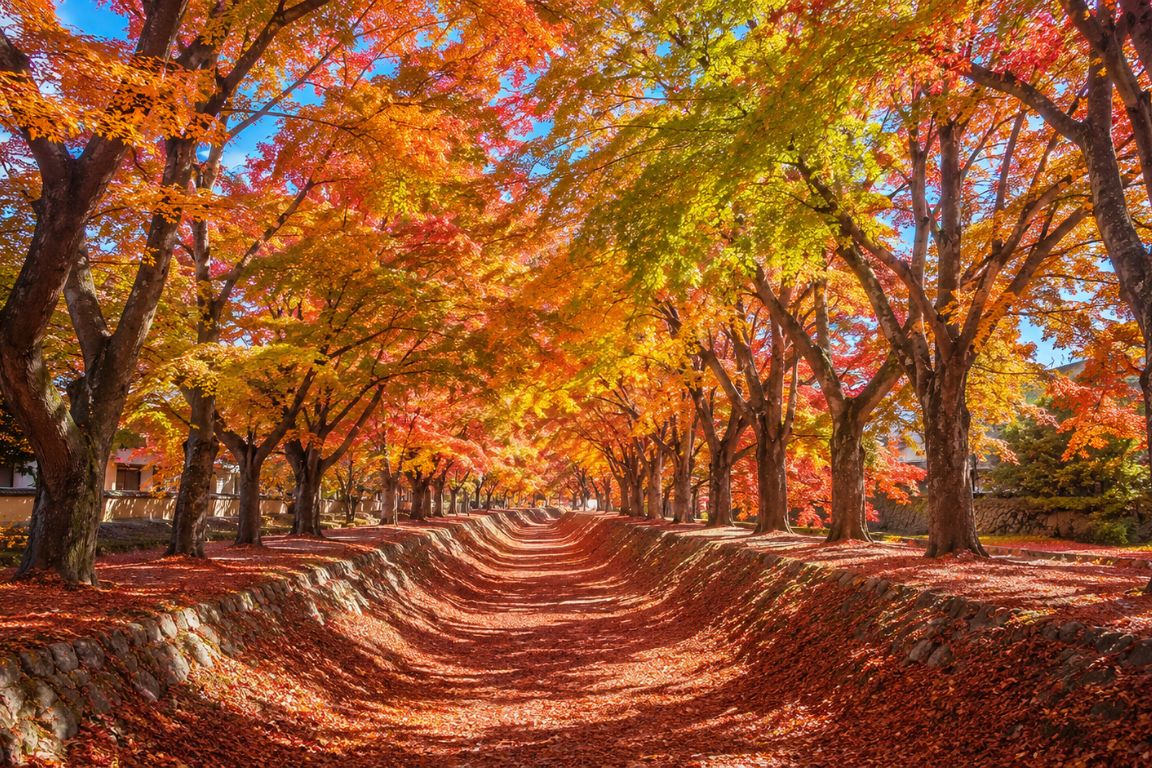
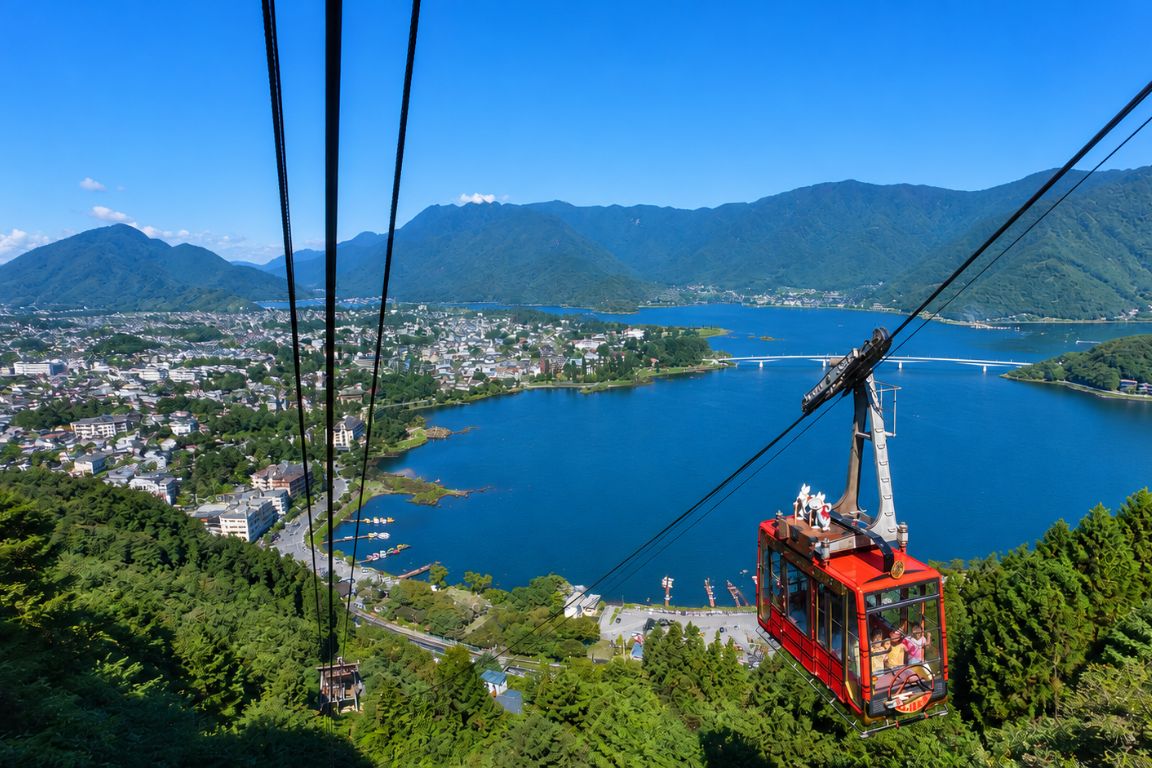
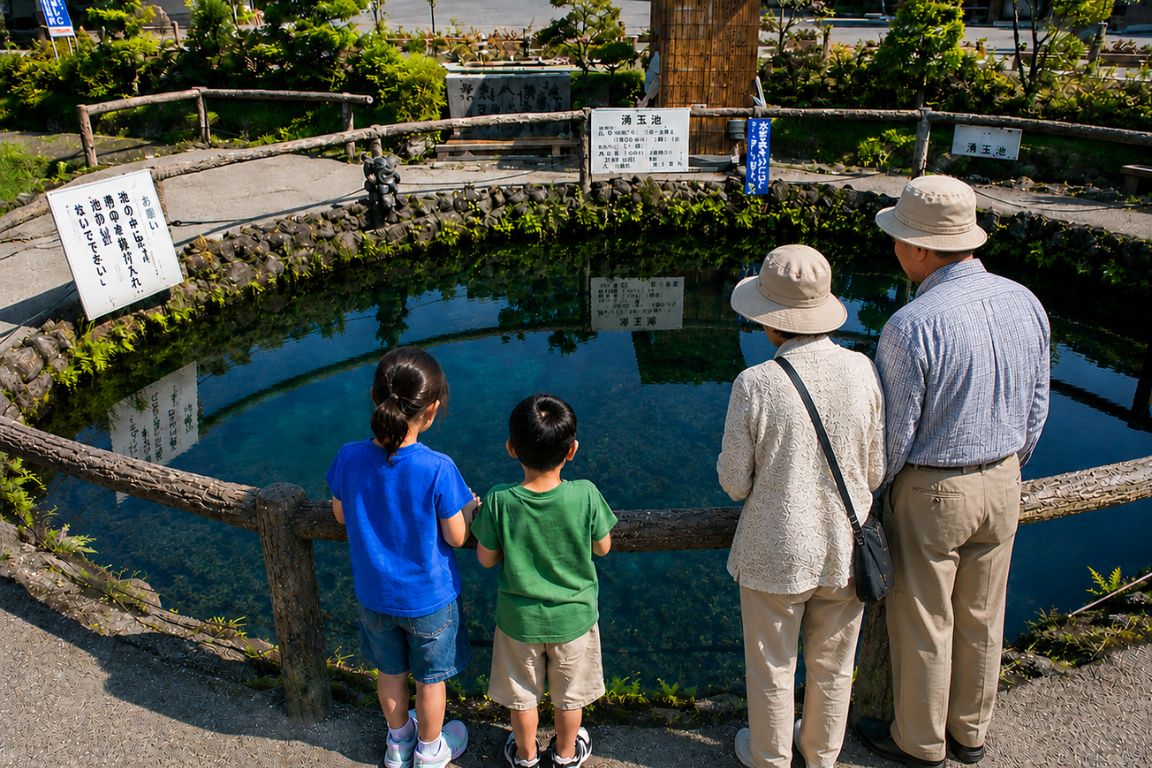
Kawaguchiko’s activity menu centers on the mountain and the lake. The north shore walk or cycle is the starting point for most visits: views of Fuji reflected in the water, Oishi Park with seasonal flower fields, the Momiji Corridor of maples in autumn, and the Kawaguchiko Ropeway up to Tenjoyama observation deck. Chureito Pagoda is a 15-minute train ride to Shimoyoshida and a 400-step climb, delivering the iconic pagoda-and-mountain image. Oshino Hakkai, a village of eight crystal-clear spring ponds fed by Mt. Fuji’s snowmelt, is 30 minutes from Kawaguchiko by bus. The 5th Station itself is accessible during climbing season by shuttle bus from Kawaguchiko Station.
The honest comparison on a bad-weather day: Hakone wins easily. The Loop is mostly enclosed or weather-resilient. The museums are excellent. The onsen are the point. A cloudy day in Kawaguchiko, with no Fuji visible and the lake grey and flat, removes the main reason most people went there. The area has some museums and the covered parts of Oshino Hakkai, but without the mountain view, the purpose of being there diminishes.
For visitors who want to make the most of Kawaguchiko’s viewpoints across multiple weather windows, a photo-spots day tour from Tokyo reaches several of them in one day without a rental car.
Want to know what actually happens from pickup to drop-off before you commit to a full day tour? Check out our what to expect on a Mount Fuji tour guide so you arrive prepared.
How Do the Two Destinations Compare for Onsen and Accommodation?
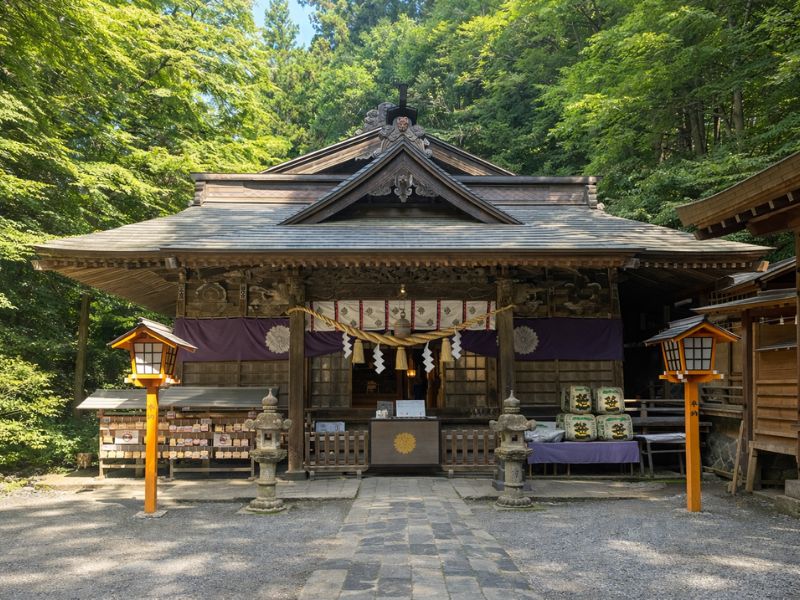
Hakone is Japan’s most developed hot spring resort outside of Beppu, with hundreds of ryokan and onsen hotels across multiple spring districts: Hakone-Yumoto, Gora, Miyanoshita, Sengokuhara, and others. The waters are varied and the accommodation range is wide, from budget guesthouses at ¥5,000 per person to luxury ryokan above ¥50,000 per person with private outdoor baths and kaiseki dinner. Kawaguchiko also has onsen and good ryokan, including some with Fuji-view baths, but the selection and depth of the onsen culture is smaller.
A Hakone overnight is one of the genuinely essential Japan experiences. The ryokan ritual, a tatami room, a yukata robe, a private or shared open-air hot spring bath, a multi-course kaiseki dinner, and a Japanese breakfast, is not something you replicate at home. The best Hakone ryokan are built into hillsides above rivers or overlooking Fuji through valley clearings. Budget ryokan with shared onsen start around ¥15,000 per person per night with meals. Mid-range options run ¥20,000 to ¥35,000. High-end properties go significantly higher, and the most sought-after rooms with private outdoor baths can book out months ahead during peak seasons.
The Kawaguchiko onsen scene is more limited but has a distinct advantage: some properties offer baths with direct Mt. Fuji views. Ryokan on the northeast shore of Lake Kawaguchiko, including properties like Kozantei Ubuya, are built specifically to frame the mountain from private balcony baths. That combination, soaking in hot water while looking directly at the snow-capped peak, does not exist in Hakone. In Hakone, you soak in excellent water in a beautiful forest or hillside setting, but the mountain is not part of the bath view. For Fuji-obsessed travelers, a Kawaguchiko ryokan with a mountain-view private bath is a compelling proposition.
Budget visitors will find more economy options in Kawaguchiko, where hotel pricing is generally lower than Hakone. Standard lakeside hotels run ¥10,000 to ¥20,000 per room, and there are guesthouses and smaller ryokan in the ¥6,000 to ¥12,000 range per person. Hakone’s reputation pushes accommodation prices higher, and the area’s tourist infrastructure means even mid-range options tend toward the ¥15,000 per person and above range for anything with proper onsen access.
Want to fit Hakone into your Tokyo itinerary without losing more of the day to travel than you need to? Here’s our Hakone day trip from Tokyo guide so you use your time wisely.
Chureito, Kawaguchiko & Oshino: Scheduled Dates
Link Chureito Pagoda, Oishi Park and Oshino Hakkai in one day by coach.
Check Dates For Chureito, Kawaguchiko & OshinoWhich Is Better for Families and Which Suits Solo Travelers or Couples?
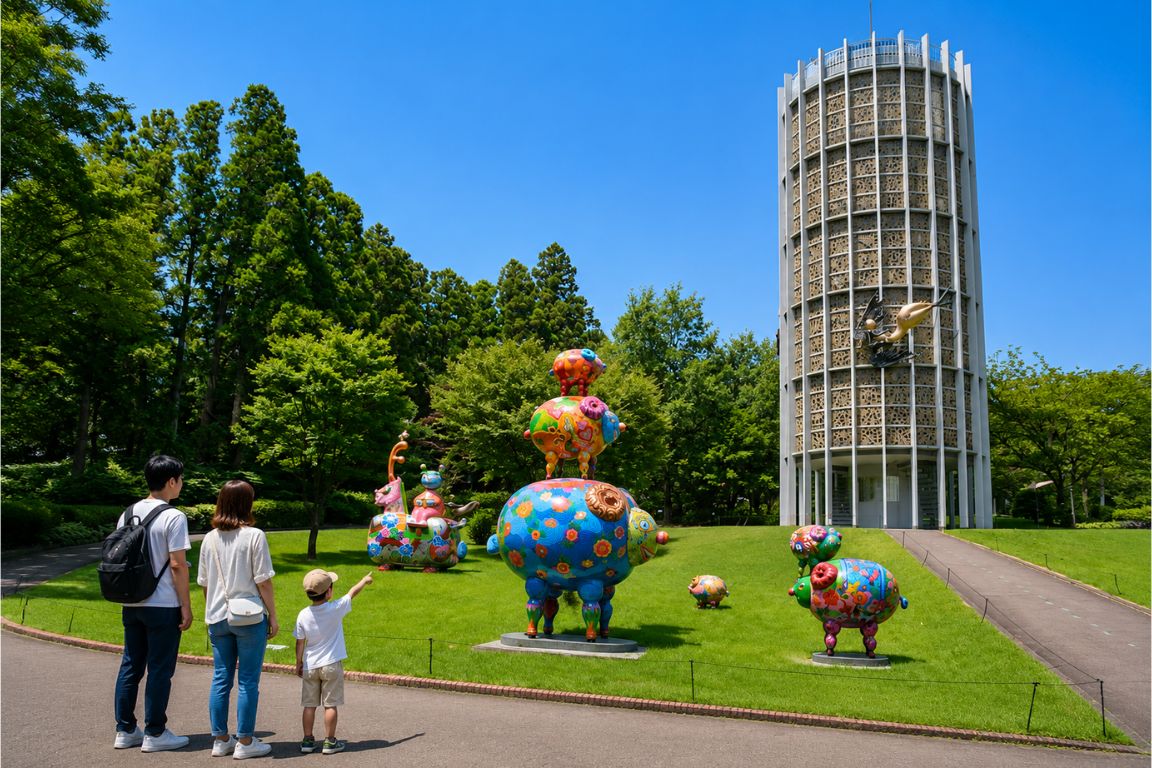 Hakone suits a wider range of traveler types. The Loop is engaging for children, the transport variety keeps energy up, and bad-weather backup options are solid. Kawaguchiko is better for couples and photography-focused visitors who have a specific visual goal. For solo travelers, Hakone’s ryokan culture and the communal aspect of the Loop tend to create a more socially connected experience. Families with young children often find Kawaguchiko less forgiving on days when the mountain doesn’t show.
The Hakone Loop genuinely works for families. Children who might not tolerate long stretches of lake-gazing will engage with a volcanic crater they can walk around, a ropeway gondola gliding over sulfur vents, and a pirate ship crossing a lake. The museum at the Hakone Open Air Museum has a children’s gallery and sculpture-filled gardens that reward wandering. The structure of the Loop means you’re always moving to the next thing, which suits mixed-energy groups. The ropeway has disabled access. The cruise is suitable for strollers.
Kawaguchiko with young children requires more planning around the mountain’s cooperation. A day that starts with Mt. Fuji hidden and stays that way is a harder sell for a five-year-old than the Hakone Loop. That said, Kawaguchiko has Fuji-Q Highland adjacent to the town, a major amusement park with rides and attractions including a dedicated children’s Thomas Land area. For families who want to combine an amusement park with mountain scenery, that combination exists only in Kawaguchiko.
For couples, the choice comes down to what kind of overnight experience you want. Kawaguchiko with a Fuji-view private onsen ryokan is a specific and deeply romantic combination that Hakone cannot match. Hakone’s luxury ryokan deliver one of Japan’s best accommodation experiences, but without that mountain in the bath frame. Both are excellent choices for a romantic overnight. Hakone tends to be chosen by couples combining it with a broader Japan itinerary. Kawaguchiko tends to be chosen by those for whom Mt. Fuji itself is the reason for the trip.
Solo travelers find Hakone slightly more navigable. The Hakone Free Pass structures the day clearly. The transport is more frequent. Hakone-Yumoto has a compact town center with good restaurants and accessible facilities. Kawaguchiko is more spread out and can feel isolated without a car or bike, especially outside the main tourist area near the station.
We’ve put together a full comparison in our Mount Fuji tour vs DIY guide so you know exactly which approach fits your confidence level, budget, and how much flexibility you actually want on the day.
How Much Does Each Destination Cost?
 For a day trip, Hakone costs slightly more because the transport within the area is comprehensive and the Hakone Free Pass at ¥7,100 (including return from Tokyo) reflects the multiple transport modes used. Kawaguchiko transport from Tokyo runs ¥3,500 to ¥8,260 return depending on mode, with a local bus day pass at ¥1,500. Accommodation in Hakone skews higher than Kawaguchiko across all tiers. Food and entry fees are comparable across both areas.
A full day trip cost comparison, all-in for a single adult:
| Return transport from Tokyo | ¥3,500 (bus) to ¥8,260 (Fuji Excursion) | Included in Hakone Free Pass (¥7,100) |
| Local transport pass | ¥1,500/day (sightseeing bus) | Included in Hakone Free Pass |
| Ropeway | ¥1,000 (Kawaguchiko Ropeway) | Included in Hakone Free Pass |
| Boat cruise | ¥700 (20 min lake cruise) | Included in Hakone Free Pass |
| Main attraction entry | Free (Chureito, north shore) to ¥500 | Open Air Museum: ¥1,600; others discounted with pass |
| Lunch | ¥1,000 to ¥2,000 | ¥1,500 to ¥3,000 |
| Approximate total (day trip) | ¥7,000 to ¥13,000 | ¥10,000 to ¥14,000 |
For an overnight stay, accommodation differences are more significant. Mid-range Kawaguchiko ryokan or hotels with lake views run ¥15,000 to ¥25,000 per person per night with meals. Equivalent Hakone ryokan run ¥20,000 to ¥40,000 per person, with the mid-point of the market sitting higher. Both areas have budget guesthouses under ¥10,000 per person, but those don’t include the full ryokan experience. Hakone’s reputation and demand push accommodation prices across the board.
Should You Visit Both, and How Do You Combine Them?
 Yes, visiting both is genuinely worthwhile over two to three days, and the itinerary flows naturally in one direction: Kawaguchiko first (Mt. Fuji up close), then Hakone (the resort loop and onsen), then onward to Kyoto via Shinkansen from Odawara. The reverse works too. The direct connection between the two is a bus through Gotemba, taking 2 to 2.5 hours with one transfer. Attempting both as a single day trip from Tokyo is not recommended. Transit time eats most of the day and you end up doing neither justice.
The most natural multi-day structure: spend one full day and one night in Kawaguchiko, targeting early morning for the best lake views and using the afternoon for Chureito Pagoda and Oshino Hakkai. The next morning, catch the bus toward Hakone via Gotemba. This departure timing lets you hit Hakone by midday and complete the full Loop before evening, with an overnight at a ryokan. The following morning, take the Romancecar or Shinkansen from Odawara toward your next destination.
The Fuji-Hakone Pass (¥11,100) covers this exact itinerary. It includes transport within both the Fuji Five Lakes area and Hakone, plus a round trip between Tokyo and both destinations. It’s the most cost-efficient option for anyone planning to do both areas in the same trip.
The logistics to know before combining: there is no direct train between Kawaguchiko and Hakone. The bus route goes Kawaguchiko Station to Gotemba Station (via Fujikyu Bus, ~1 hour, ~¥1,750), then Gotemba Station to Hakone (via Hakone Tozan Bus or Odakyu Highway Bus, ~40 to 60 minutes, ~¥790 to ¥1,080). Total transit is about 2 to 2.5 hours with a 10 to 30 minute wait at Gotemba depending on connections. Check timetables before you go. The Gotemba transfer is the one part of this combination that requires some planning, and missing a connection there adds 30 to 60 minutes.
Attempting both in a single day from Tokyo is a common mistake. You leave Shinjuku at 8:00 AM, reach Kawaguchiko by 10:30, have 2 to 3 hours at the lake, board the bus to Gotemba, arrive Hakone by 3:00 PM, and immediately face the 5:00 PM start of rush hour back to Tokyo. You do Hakone in two rushed hours instead of six satisfying ones. Don’t do this. Give each destination a day.
If you’d rather have someone else handle the day’s routing, the private Mt. Fuji and Hakone tour with a fully licensed guide is the listing that covers both areas from Tokyo.
Not sure how to get to Kawaguchiko from Tokyo or how to structure a single day around the lake? Check out our Kawaguchi day trip from Tokyo guide before you start planning.
What Our Clients Choose: Kawaguchiko vs Hakone Data from Mt. Fuji Tours
| Clients who chose Kawaguchiko over Hakone when given the choice | 68% |
| Clients who visited both on the same trip | 12% |
| Most common reason for choosing Hakone instead of Kawaguchiko | 85% said onsen/ryokan experience; 92% said Kyoto connection |
| Clients who said the mountain was not visible when they visited Kawaguchiko | 35% |
| Families with children under 12 who preferred Hakone Loop to Kawaguchiko | 74% |
| Clients who stayed overnight in Kawaguchiko for a second-chance Fuji view | 40% |
The pattern we see consistently: travelers who make Mt. Fuji the centrepiece of a dedicated trip choose Kawaguchiko and stay at least one night. Travelers doing a broader Japan itinerary stopping for one day choose Hakone because it fits the route. Both are valid approaches to the same mountain, from different distances and different angles.
Frequently Asked Questions
Is Kawaguchiko or Hakone better for seeing Mt. Fuji?
Kawaguchiko is significantly better for Mt. Fuji views. The mountain is roughly 20 to 25 km away and fills the horizon from the north shore of the lake. In Hakone, you’re viewing from about 40 km, and the surrounding hills often obstruct the lower slopes. If seeing Mt. Fuji clearly is your primary goal, choose Kawaguchiko.
Can you see Mt. Fuji from Hakone?
Yes, on clear days, from Lake Ashi and the Hakone Ropeway over Owakudani. The view is beautiful but the mountain appears smaller and more distant than from Kawaguchiko. It’s also more frequently obscured by clouds and the surrounding ridgelines. Hakone is worth visiting for many reasons, but not primarily for Mt. Fuji views.
How do you get between Kawaguchiko and Hakone?
There is no direct train. The bus route goes Kawaguchiko Station to Gotemba Station (Fujikyu Bus, ~1 hour, ~¥1,750) with a transfer to a Hakone Tozan or Odakyu bus to your Hakone destination (~40 to 60 minutes, ~¥790 to ¥1,080). Total travel is about 2 to 2.5 hours. The Fuji-Hakone Pass covers this entire route and is the recommended option for doing both areas in one trip.
Which is better for a ryokan stay?
Hakone has Japan’s most developed onsen ryokan culture outside of Kyushu, with hundreds of properties across multiple spring districts. The selection, depth of tradition, and variety of water types is unmatched in the Kawaguchiko area. However, Kawaguchiko has a small number of ryokan with direct Mt. Fuji views from private outdoor baths, which Hakone cannot offer. If the mountain view from the bath is what you want, Kawaguchiko wins that specific combination.
Is Hakone better if it rains?
Yes. Hakone has strong indoor and covered options: the Open Air Museum has covered walkways and indoor galleries, the onsen work in any weather, and the Loop itself includes covered transport modes. Kawaguchiko on a rainy day loses its main attraction entirely if the mountain is hidden, and the viewpoints and lakeside walks become far less compelling without Fuji as the backdrop.
Should I do Kawaguchiko or Hakone if I’m going to Kyoto next?
Hakone. The Shinkansen connection from Odawara to Kyoto takes about 2 hours and is seamless. Getting from Kawaguchiko to Kyoto requires returning to Tokyo first, adding 4 to 5 hours of transit. Unless Mt. Fuji is a specific priority and you have the time, Hakone fits the Tokyo to Kyoto route far more naturally.
Still working out whether Kawaguchiko, Hakone, or both fits your itinerary? Akira and the team build custom Mt. Fuji area routes based on your travel dates, group, and goals. Start here. We’ve guided 11,500 travelers across both areas since 2012 and we know the weather patterns, the viewpoint windows, and the ryokan worth booking.
Written by Akira Nakamura
Japanese tour guide since 2012 · Founder, Mt. Fuji Tours
Akira has guided over 11,500 travelers up Mt. Fuji and through the Fuji Five Lakes region since founding the agency.