What to Expect on a Mount Fuji Tour
Is a Mt. Fuji tour from Tokyo worth it? Learn real costs, what to expect, and the one factor (visibility) that can make or break your day.
Last updated: May 12, 2026
The useful comparison is the actual route, pickup and inclusions. Start with a viewpoints coach, then compare private flexibility and the Hakone-and-train format.
Booking Summary: Chureito and the lakes are for viewing Fuji’s shape. The 5th Station is on the mountain; a summit climb is a separate two-day undertaking. No tour guarantees a clear view.
Scroll to the end for the complete comparison and provider booking links. Interactive matching requires JavaScript.
Quick Facts: Mount Fuji Tours
| Typical tour duration | 10 to 12 hours door-to-door from Tokyo |
| Departure time | 7:30 to 8:30 AM from Shinjuku or Tokyo Station |
| Return time | 6:30 to 8:00 PM |
| Group day tour price | ¥10,000 to ¥18,000 per person (Prices verified May 2026) |
| Private tour price | ¥40,000 to ¥65,000 per group of up to 4 to 5 |
| Climbing tour (2 days) | ¥20,000 to ¥50,000 per person depending on group size and guide level |
| Common sightseeing stops | Lake Kawaguchiko, Chureito Pagoda, Oshino Hakkai, 5th Station (seasonal), Oishi Park |
| 5th Station access | Year-round; road sometimes closed in winter – confirm before booking |
| Climbing season | Yoshida Trail July 1 to September 10, 2026 |
| Climbing fee (all trails) | ¥4,000 per person (Prices verified May 2026) |
| Mountain visibility in summer | ~6 to 20% clear days; worst season for viewing from below |
| Mountain visibility in winter | 60 to 79%+ clear days; best season for viewing |
What Kinds of Mount Fuji Tours Are Available?
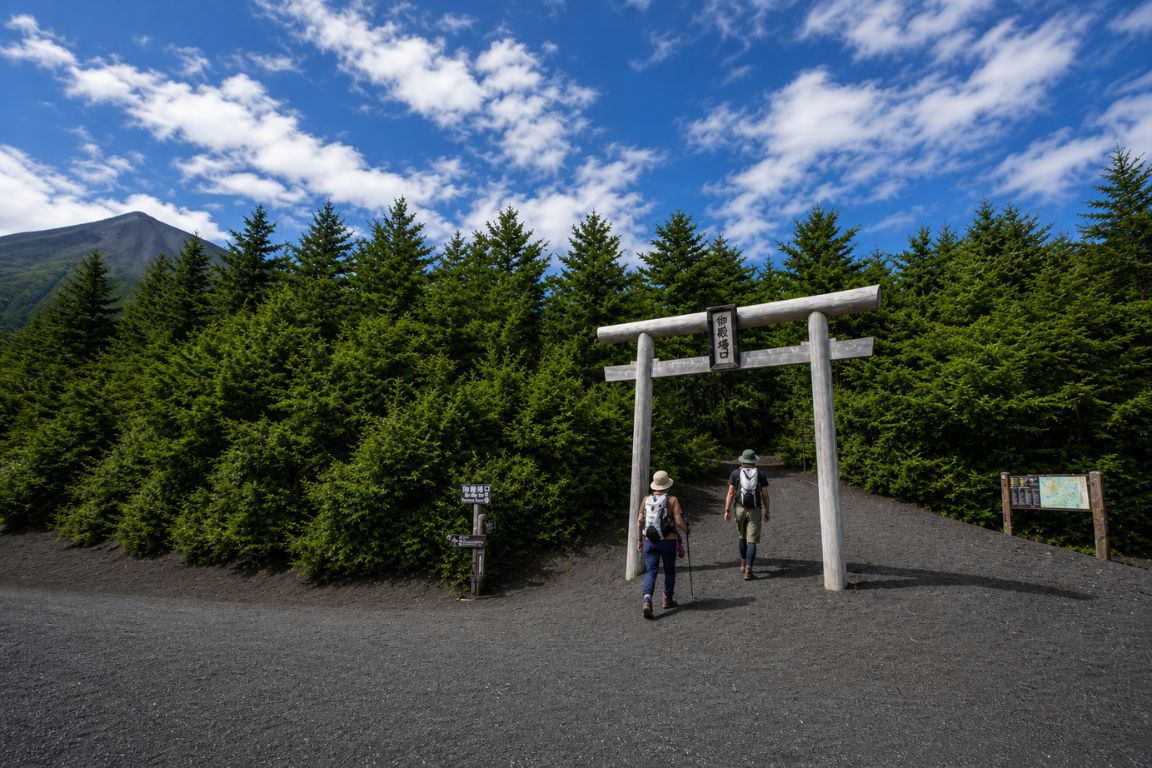 There are three main categories. Sightseeing day tours take you around the Five Lakes area and viewpoints without climbing, running 10 to 12 hours from Tokyo. Climbing tours are two-day overnight expeditions during the official July to September season, including mountain hut accommodation and guides. Specialty tours combine sightseeing with a theme: Hakone plus Fuji, cherry blossom photography routes, winter visibility tours, or onsen and Fuji combinations. Most international travelers book a sightseeing day tour for their first visit. Climbing is a separate, more demanding undertaking with its own preparation requirements. Most itineraries stop for lunch at one of two places, and we go through both in where to eat around the mountain.
Sightseeing day tours are the most popular choice by a wide margin. They start in Tokyo in the morning, take you to two to four scenic stops in the Five Lakes area, and return you to Tokyo by early evening. Most include English-speaking guides, round-trip transport by coach or private vehicle, and stops chosen to maximize mountain views and cultural content in a single day. You do not hike anything strenuous on a standard sightseeing tour. Some tours add a short visit to the 5th Station – which is accessible by road to about halfway up the mountain – for a closer look at the upper slopes without climbing to the summit. The mountain is an active volcano and visitors ask about it constantly, so we answered it properly in Fuji’s volcanic status.
Climbing tours are a different commitment entirely. They involve ascending from the 5th Station to the 3,776-meter summit over two days, sleeping in a mountain hut, and descending the following morning. The official climbing season runs from July 1 to September 10 on the Yoshida Trail and July 10 to September 10 on the Fujinomiya, Subashiri, and Gotemba trails. A ¥4,000 climbing fee applies to all trails. Guided climbing tours include transport, mountain hut accommodation with dinner and breakfast, guide services, and sometimes gear rental. They range from budget group tours at ¥20,000 to ¥25,000 per person to premium private tours at ¥40,000 to ¥50,000 per person.
The Fuji-Hakone combination is worth noting as its own category. Hakone sits between Tokyo and the southern side of Mt. Fuji, so pairing both in a single day is logistically efficient. These tours typically visit the 5th Station or a Five Lakes viewpoint in the morning and Hakone’s Owakudani volcanic valley and Lake Ashi pirate ship cruise in the afternoon. The tradeoff is time at each destination. A full day at Kawaguchiko is richer than a half day, and a proper Hakone experience needs more time than most combination tours allow. For first-time visitors, a focused Five Lakes day such as the Mt. Fuji 6 Attractions Tour from Tokyo is a clearer first visit than combining Fuji and Hakone in one run.
Wondering whether the Hakone Free Pass is worth buying and which attractions are actually worth prioritizing on a single day visit? This Hakone day trip from Tokyo guide covers the logistics most first-timers only figure out once they’re already there.
What Does a Typical Mount Fuji Day Tour from Tokyo Include?
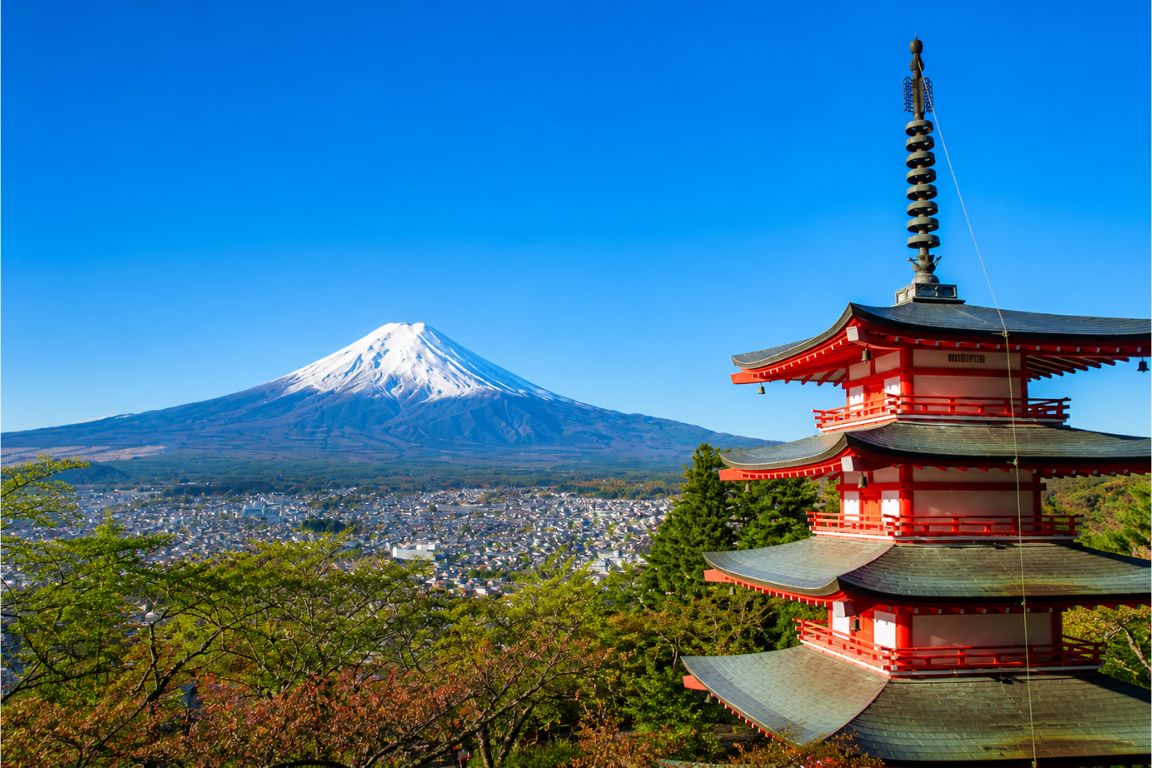 A standard group sightseeing day tour from Tokyo includes: round-trip coach transport from a Shinjuku or Tokyo Station meeting point, an English-speaking guide, and stops at two to four sites chosen from the following: Lake Kawaguchiko north shore or Oishi Park, Chureito Pagoda at Arakurayama Sengen Park, Oshino Hakkai spring village, and the 5th Station on the Yoshida Trail (seasonal). Some tours include lunch; many offer it as an add-on. Entry fees for paid attractions vary by tour. Transport to and from your hotel in the Tokyo 23 wards is included on many private tours but usually not on group bus tours.
Here is what a typical full-day sightseeing itinerary looks like in practice:
7:30 to 8:30 AM: Meet at Shinjuku Station or Tokyo Station. The guide does a head count and runs through the day’s plan. The coach departs. On the road, the guide introduces the day’s stops and gives background on Mt. Fuji’s history, geological formation, and cultural significance.
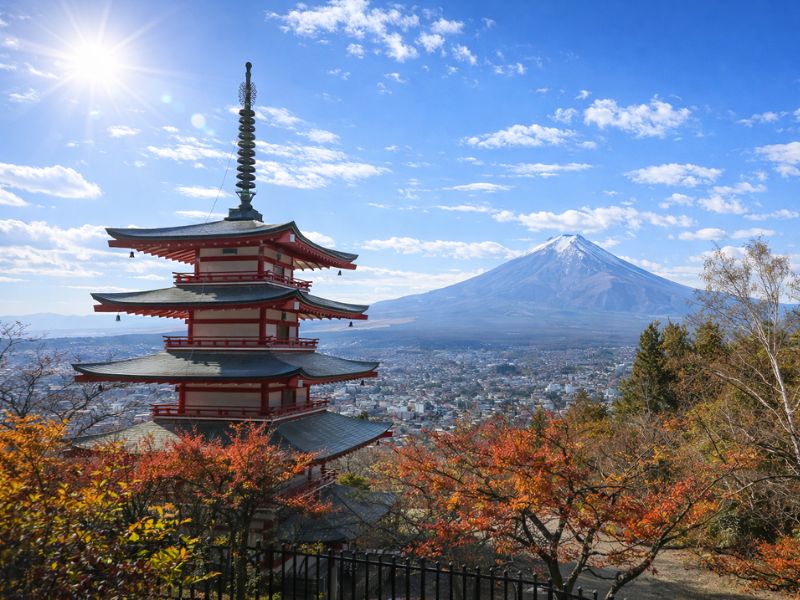
~9:30 AM to 11:30 AM: Chureito Pagoda (Arakurayama Sengen Park) – the 398-step climb to the viewing platform and the pagoda-with-mountain shot. Allow 60 to 90 minutes. If this is the first stop, Mt. Fuji is most likely to be clear at this hour, which is why good guides prioritize the morning window at viewpoints.
~11:30 AM to 1:00 PM: Lake Kawaguchiko north shore or Oishi Park – lake views, the Fuji reflection spot at Ubuyagasaki, seasonal flower foregrounds at Oishi Park. Some tours include the Kawaguchiko Ropeway here.
1:00 to 2:00 PM: Lunch – either at a pre-arranged restaurant (usually hoto noodles, tempura set, or a buffet lunch near the lake) or a free period to choose your own.
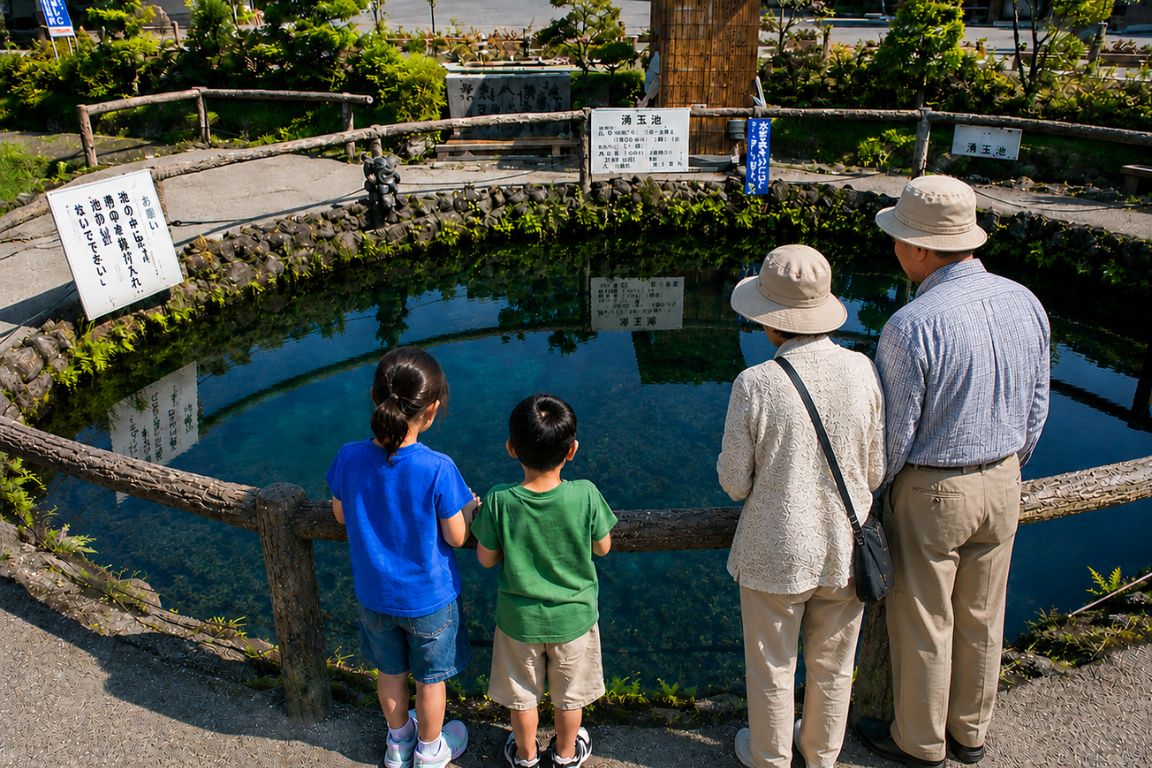
2:00 to 3:30 PM: Oshino Hakkai – the eight spring-fed ponds and thatched-roof village, 30 minutes from Kawaguchiko by road. Free admission to most ponds; ¥300 for Sokonuki. Allow 45 to 60 minutes here.
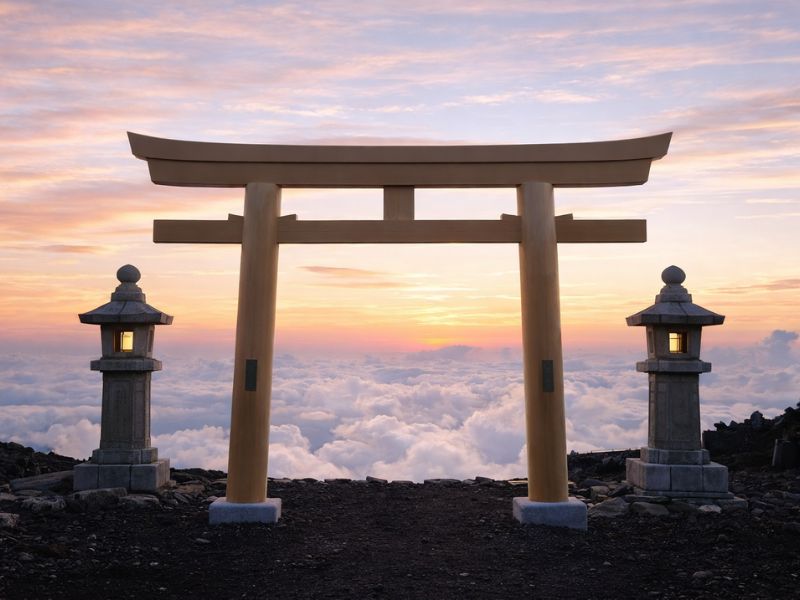
3:30 to 5:00 PM (seasonal): 5th Station on the Yoshida Trail – accessible by road year-round though the summit road sometimes closes in winter. Standing at 2,300 meters, roughly halfway up the mountain. Views of the upper slopes and the volcanic terrain. On clear days, you can look down over the Five Lakes and the surrounding plains. On cloudy days, the 5th Station is often in cloud itself. Allow 45 to 60 minutes.
5:00 to 7:30 PM: Return drive to Tokyo. Arrives at the departure point by around 7:00 to 7:30 PM.
Want to make the Mount Fuji trip from Tokyo actually worth the effort? Here’s our how to visit Mount Fuji tours from Tokyo guide so you don’t waste the journey.
| Round-trip transport | Yes (shared coach) | Yes (private vehicle) |
| English-speaking guide | Usually yes | Yes |
| Hotel pickup | No (fixed meeting point) | Yes (Tokyo 23 wards usually) |
| Lunch | Often optional add-on | Sometimes included; sometimes extra |
| Entry fees | Some included; confirm per tour | Often included; confirm per tour |
| Itinerary flexibility | None; fixed schedule | High; adjustable based on weather and group |
| Group size | 15 to 50 passengers | 1 to 5 passengers |
| Photo stop time | Scheduled; often limited | Flexible; guide adjusts for conditions |
How Long Do Mount Fuji Tours Take and How Is the Day Structured?
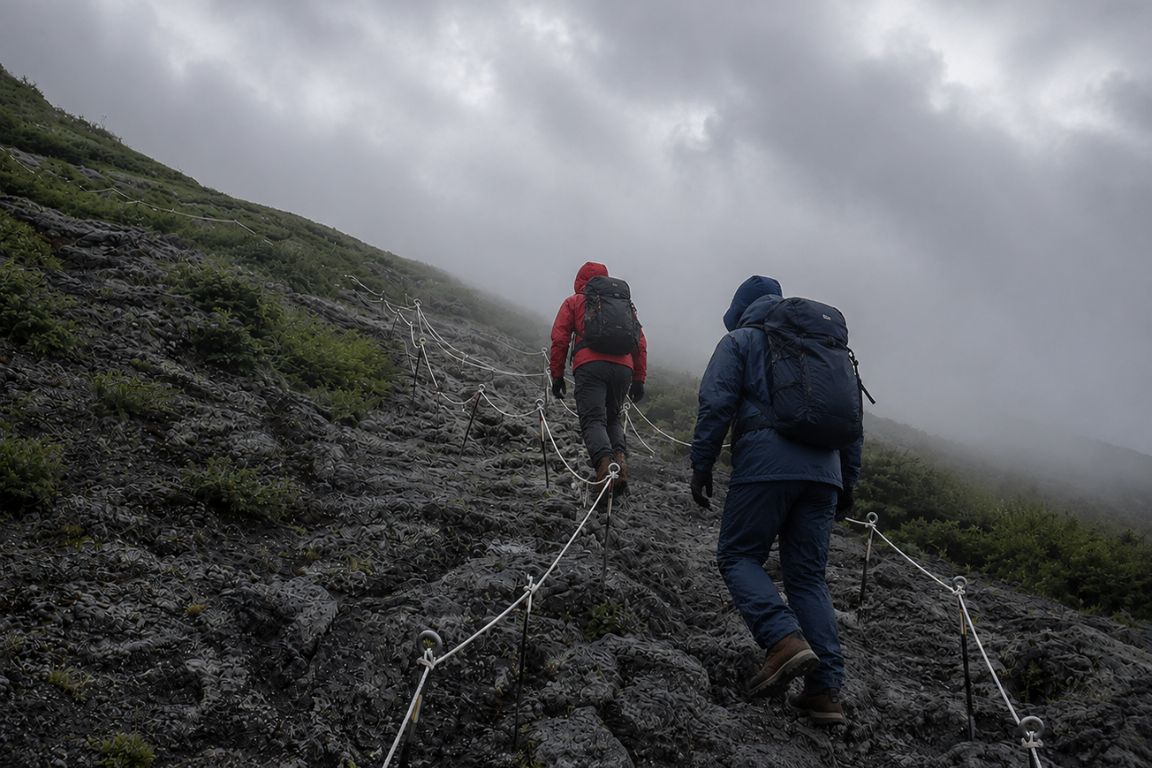 Most day tours run 10 to 12 hours door-to-door. Roughly 4 hours of that is travel time: 2 hours each way between Tokyo and the Fuji Five Lakes area. The remaining 6 to 8 hours are split across two to four stops. The day starts early – meeting at 7:30 to 8:30 AM – because the morning window before 10:00 AM is when Mt. Fuji is most likely to be clearly visible. The afternoon is used for stops that don’t depend on the mountain being visible, or for optional extras like the 5th Station. You return to Tokyo by 7:00 to 8:00 PM.
The time allocation matters more than most travelers realize before they go. Two hours of travel each way is a lot of a 12-hour day, and when you subtract lunch (45 to 60 minutes), the actual time at viewpoints is roughly 4 to 5 hours split across multiple stops. On a group bus tour with 30 passengers, that can mean 30 to 45 minutes at each stop, which feels rushed at Chureito Pagoda (where you climb 398 steps) and genuinely inadequate at Oishi Park if you want a proper sit-down lake view.
Private tours handle time differently. With a driver and guide dedicated to your group, time at each stop is negotiable. If the mountain is magnificently clear at the north shore at 9:30 AM and everyone wants to stay, you stay. If the 5th Station is socked in with cloud on arrival, the guide can call an audible and swap it for Oshino Hakkai instead. This is the practical argument for private tours beyond just comfort: weather at Mt. Fuji is dynamic and fixed itineraries cannot adapt to it.
A note on the 5th Station specifically: the road to the Fuji Subaru Line 5th Station on the Yoshida Trail is accessible by vehicle year-round in theory, but periodically closes in winter due to snow and road conditions (typically December through early April). Tours that include the 5th Station in winter should have a contingency stop confirmed in the booking. If seeing the upper mountain is the priority on your tour, verify road conditions before you finalize. In summer, the 5th Station is accessible but heavily trafficked, and the experience on a crowded August weekend is very different from a quiet October morning.
What Are the Differences Between Group Tours and Private Tours?
Group tours are cheaper (¥10,000 to ¥18,000 per person) and run on fixed schedules with 15 to 50 other passengers. Private tours cost more (¥40,000 to ¥65,000 per group of up to four or five people) but offer hotel pickup, flexible itineraries, and a guide who can pivot the day based on real-time weather. For a solo traveler or couple, a group tour makes financial sense. For a family of four or a group of three to five, a private tour is often comparable per-person cost and significantly better experience. Weather adaptability is the most important reason to choose private over group for Mt. Fuji specifically.
The group tour experience is straightforward. You board the coach with 20 to 40 other tourists, an English-speaking guide runs commentary, and you visit the predetermined stops for the predetermined amounts of time. The guide cannot change the order of stops for your group, cannot extend time at a viewpoint because it is particularly beautiful, and cannot skip the 5th Station even if it is entirely in cloud. You follow the schedule.
This works perfectly when the weather cooperates and the mountain is clear. A well-reviewed group tour with a good guide on a clear winter morning to Chureito and Oishi Park is one of the most enjoyable day trips in Japan, and it costs about ¥12,000 to ¥15,000 per person. No logistics to manage, no decisions to make, scenic commentary on the way out and back.
The group tour struggles when the weather is uncertain. On a day when clouds are building at 10:00 AM, the guide on a group tour cannot pivot to spend an extra hour at the north shore before the mountain disappears. The schedule moves the group to the next stop on time regardless. The private tour guide can read the sky, check the forecast, and keep you at the lake for another 45 minutes if it is worth it. We have done this many times. It makes a genuine difference to the photographs and the experience.
For families: the private tour’s hotel pickup is a significant practical advantage. Assembling children, luggage, and strollers and getting to a Shinjuku meeting point by 8:00 AM is stressful. Having a driver meet you at your hotel removes that friction entirely. Private tours also generally have more tolerance for the pace children set, including extended photo stops, bathroom stops, and time to let children interact with what they are seeing rather than marching through it.
Day tours work best when they follow the morning visibility window and can change stops if the weather shifts. See the Mt. Fuji Full-Day Private Customizable Tour from Tokyo for that format, or compare it with the group options on this page.
Want an honest comparison between going with a guide and doing the Fuji trip on your own terms? Here’s our Mount Fuji tour vs DIY guide so you pick the option that fits your travel style.
What Should You Bring and Wear on a Mount Fuji Tour?
 For a sightseeing day tour: comfortable walking shoes, a windproof outer layer (the lake area and 5th Station are consistently 5 to 15°C cooler than Tokyo), sunscreen, a daypack, and cash for small purchases. The key item most people underestimate is the warm layer – arriving at the lake in a summer T-shirt is a common and correctable mistake. For a climbing tour: proper waterproof hiking gear from base layer to outer shell, hiking boots with ankle support, trekking poles, headlamp with spare batteries, and cold-weather layers even in August. The summit reaches 0 to 5°C in summer with wind chill. Gear rental is available near the 5th Station but booking in advance is recommended.
Sightseeing tours are not physically demanding. You walk between viewpoints, climb 398 steps at Chureito Pagoda (which is optional if mobility is limited), and possibly take a short walk at Oshino Hakkai. Comfortable walking shoes or trainers are appropriate. The challenge is temperature management, not terrain.
The temperature gradient at Mt. Fuji surprises most visitors. Tokyo in July averages 28°C. The Kawaguchiko area at 830 meters elevation is roughly 5 to 6°C cooler. The 5th Station at 2,300 meters is another 10 to 12°C cooler – so potentially 15°C below Tokyo even in peak summer. Wind at the 5th Station can make it feel colder still. People who arrive in shorts and sandals from a Tokyo summer are usually cold at the 5th Station in August. Bring a proper mid-layer and a windproof outer jacket. This applies in every season except on very warm spring and autumn days at lake level only.
Trying to figure out what layering actually means in practice when you’re heading up Fuji on a tour? Check out our what to wear for Mount Fuji tours guide before you start packing.
| Footwear | Comfortable walking shoes or trainers | Waterproof hiking boots with ankle support (non-negotiable) |
| Outer layer | Windproof jacket; essential at 5th Station | Waterproof, windproof shell; Gore-Tex recommended |
| Mid layer | Light fleece or sweater | Insulating fleece; cold down to 0°C at summit in summer |
| Trousers | Comfortable walking trousers or jeans | Waterproof hiking trousers |
| Bag | Small daypack or tote | 25 to 35L backpack with hip belt |
| Sun protection | Sunscreen; hat optional | Sunscreen, hat, sunglasses; UV stronger at altitude |
| Water | 500ml to 1L; buy en route | 2L minimum; water sold on mountain but expensive |
| Cash | ¥3,000 to ¥5,000 for meals, souvenirs | ¥10,000+; mountain huts are cash only; toilet fees ¥200 to ¥300 |
| Headlamp | Not needed | Essential; 200+ lumens; spare batteries required |
| Trekking poles | Not needed | Strongly recommended; available for purchase at 5th Station |
| Rain gear | Compact rain jacket; optional but useful | Full waterproof jacket and trousers; non-negotiable |
For climbing tours specifically: gear rental is widely available near the 5th Station and from tour operators. A full rental set typically costs ¥10,000 to ¥16,000 and covers rain jacket and trousers, gaiters, hiking boots, backpack, poles, and headlamp. If you already own appropriate outdoor gear, bring it. If you don’t, renting is entirely reasonable for a one-time climb. The critical items that people most commonly underestimate are warm layers (the summit is 0 to 5°C even in August with significant wind chill) and rain gear (Mt. Fuji creates its own weather; sunshine can become sideways sleet in under 20 minutes).
Want to know if climbing Mount Fuji on a guided tour is realistic for someone without serious hiking experience? Here’s our can you climb Mount Fuji on a tour guide so you set the right expectations.
Chureito, Kawaguchiko & Oshino: Scheduled Dates
Link Chureito Pagoda, Oishi Park and Oshino Hakkai in one day by coach.
Check Dates For Chureito, Kawaguchiko & OshinoWhat Will You Actually See, and What Are Realistic Expectations?
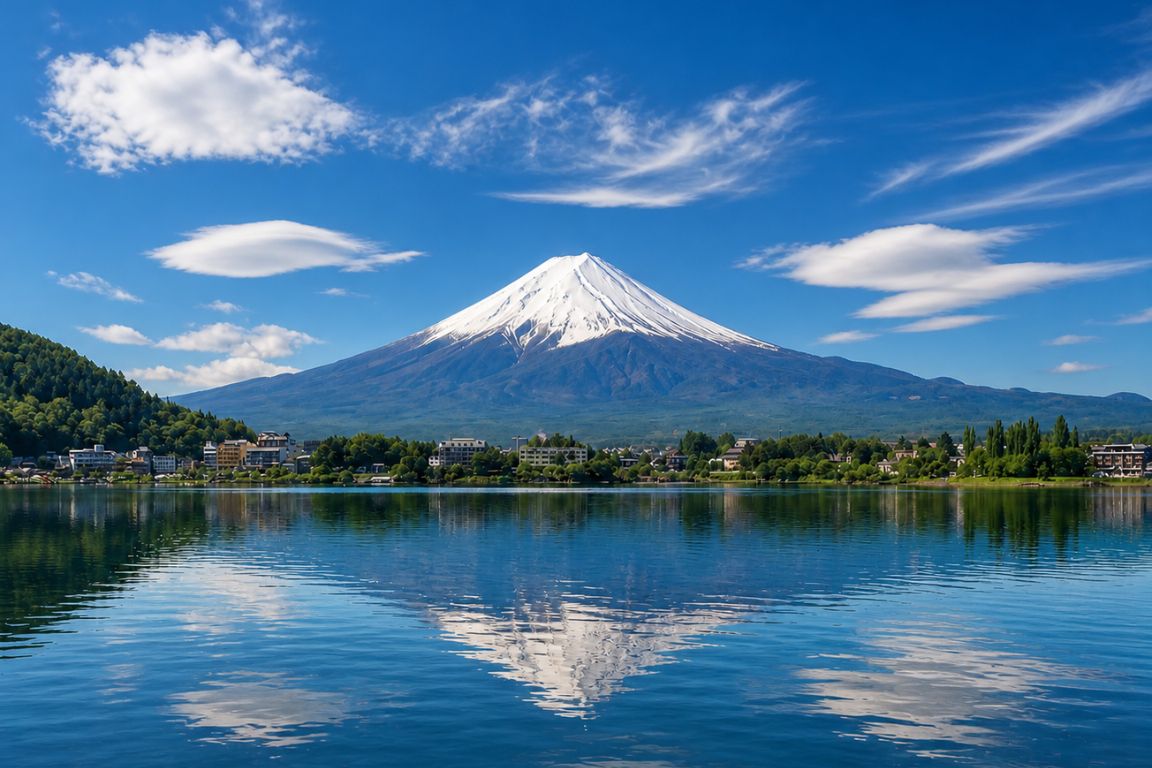 On a clear day: the most dramatic natural landmark in Japan, visible and immense from the north shore of Lake Kawaguchiko, with a reflection on still water that is genuinely one of the great natural sights in Asia. On a cloudy day: beautiful lakes, interesting cultural stops, a traditional village with spring ponds, and a landscape that is worth experiencing independently of the mountain. The mountain is not visible on most days in summer (roughly 80% of summer days it is hidden). In winter it is visible on 60 to 79% of days. Managing expectations around visibility is not pessimism, it is the advice that actually helps people have a good trip.
We have been running tours in this area since 2012 and the single most consistent pattern across 11,500 travelers is this: people who arrive with a plan based on the day being clear, the itinerary being flexible, and the stops being worth visiting in any weather come away satisfied. People who arrive expecting the postcard image they saw online and planned their whole Japan trip around go home either thrilled or deeply disappointed, with no middle ground.
The postcard image is real. When the mountain is clear on a November morning at the north shore of Lake Kawaguchiko, with the snow cap bright white against a cloudless blue sky and the lake completely still, it is one of those travel moments that stays with people for the rest of their lives. Guests who have been traveling for thirty years tell us this view was the one that stopped them. We believe them. We have seen it ourselves hundreds of times and it still has that effect.
But the same lake on an August midday with the mountain completely obscured is still a pleasant lakeside afternoon with good food, interesting history, and accessible activities. The spring ponds at Oshino Hakkai are beautiful regardless of the mountain. The cedar avenue at Arakurayama Sengen Park is beautiful in any weather. The cultural content of a good guide’s commentary on these places adds depth to the visit independent of the mountain’s cooperation.
First time planning a Mount Fuji area stay and genuinely unsure which town to base yourself in? Here’s our Kawaguchi vs Hakone guide so you don’t default to the obvious choice without considering the alternative.
Specific things that are often misunderstood:
The 5th Station is not a viewpoint looking at Mt. Fuji. It is on Mt. Fuji, so there is no way to see the mountain’s cone from there – you are inside it. What you see from the 5th Station is the view from halfway up the mountain: the Five Lakes below, the surrounding Yamanashi landscape, and (on clear days) the distant plains as far as Tokyo. The upper slopes of the mountain above you are steep volcanic rock. It is impressive and worth visiting, but if the goal is seeing the mountain’s iconic shape, the lake shore is the place to be, not the 5th Station.
Chureito Pagoda’s famous photograph requires specific conditions: a clear view of the mountain above the pagoda, good light, and ideally cherry blossoms or autumn foliage in the frame. Arriving on a cloudy day produces a pleasant view of a red pagoda and a grey backdrop. It is still a beautiful shrine. It is not the photograph. Arriving before 8:00 AM on a clear morning in cherry blossom season produces the photograph, along with a queue of other people who had the same plan.
There are more scenic spots around Fuji than most one-day tours can cover – our Mt. Fuji tours scenic spots explained guide breaks down which ones deserve priority based on what you actually came to see.
How Much Do Mount Fuji Tours Cost?
Group sightseeing day tours from Tokyo run ¥10,000 to ¥18,000 per person including transport and guide. Private sightseeing day tours run ¥40,000 to ¥65,000 per group of up to four or five people, making them cost-comparable to group tours for families and small groups. Climbing tours cost ¥20,000 to ¥50,000 per person for a guided two-day ascent. The climbing fee of ¥4,000 per person is a separate mandatory payment on top of any tour cost. Prices verified May 2026.
Breaking down what the price categories get you:
Budget group tour (¥10,000 to ¥13,000 per person): Shared coach, English-speaking guide, two to three stops, fixed schedule, usually no lunch included. You share the day with 20 to 40 other people. Photo time at each stop is scheduled and limited. Good value for solo travelers and couples on a limited budget.
Mid-range group tour (¥13,000 to ¥18,000 per person): Same format but smaller group (10 to 20 people), often with lunch included, sometimes with an additional stop or a more experienced guide. The smaller group size makes a noticeable difference to the photo experience at busy viewpoints.
Private day tour (¥40,000 to ¥65,000 per group): Private vehicle, dedicated guide/driver, hotel pickup in Tokyo 23 wards, flexible itinerary, adaptable to weather conditions. For a group of four, this works out to ¥10,000 to ¥16,250 per person – similar to a mid-range group tour but with significantly more flexibility and control over the day.
Climbing tour (¥20,000 to ¥50,000 per person): Two-day guided ascent. Lower end covers budget group tours with Japanese guide and basic mountain hut. Higher end covers smaller English-guided groups with premium mountain hut, comprehensive gear rental, and travel insurance. The ¥4,000 climbing fee is on top of this in all cases.
A practical note on total daily spending: tour costs cover transport and guide but usually not meals beyond what is specified. Budget ¥1,500 to ¥3,000 for lunch (hoto noodles or similar at the lake area) and ¥1,000 to ¥2,000 for incidentals, souvenirs, and any optional activities the tour doesn’t cover (ropeway, lake cruise, etc.). Total spend for a sightseeing day tour including everything typically runs ¥13,000 to ¥22,000 per person depending on tour format and choices made on the day.
We’ve put together a full side-by-side in our Mount Fuji tour comparison guide so you know exactly which operator fits your budget, group size, and what you actually want to get out of the day.
How Do You Choose the Right Mount Fuji Tour for Your Trip?
Start with four questions: Are you sightseeing or climbing? How many people are in your group? Is your travel date fixed or flexible? How important is it to see the mountain clearly? If sightseeing and flexible on dates, book a private tour and align your visit with a forecast showing good visibility. If fixed dates and budget-conscious, book a well-reviewed group tour and accept that the mountain may or may not cooperate. If climbing, book a two-day tour in early September – after the summer crowds, before the season closes – with an English-speaking guide who knows the mountain well.
The weather question is the one that changes the answer most dramatically. If seeing Mt. Fuji clearly is the primary goal, the right tour is the one that gives you the most flexibility to change the timing within a visit window. A private tour booked with weather monitoring lets you call for a different date within a week-long Tokyo stay when the forecast shows clear conditions. A group tour booked six weeks out locks you into a specific date regardless of what the forecast says that week.
For the question of solo versus group versus private:
Solo travelers and budget-conscious couples: the group tour is fine and often the better value. You will share the day with strangers who are broadly in the same situation, the guide experience is usually good, and the cost savings versus a private tour are substantial.
Families and groups of three or more: run the numbers on a private tour. For four people, a private tour at ¥50,000 total is ¥12,500 per person, which is comparable to a mid-range group tour but offers hotel pickup, a flexible itinerary, no waiting for 35 other people to re-board the coach, and a guide who is focused entirely on your group’s experience.
For photographers specifically: if the photograph is the goal, the stop timing on a group tour is often insufficient. Chureito Pagoda on a group tour typically allows 45 to 60 minutes including the climb. For serious photography at the main platform and the lesser-known viewpoint above it, 90 to 120 minutes is the right allocation. Only a private tour gives you that control.
Booking platforms: Viator and GetYourGuide have the widest selection of group tours with verified reviews. Platforms like Klook offer similar options. For private tours, booking directly through specialist operators like Mt. Fuji Tours is preferable to aggregator platforms, as specialist operators have local knowledge that affects real-time itinerary decisions.
Questions about which tour format fits your specific dates and travel style? Start with the private customizable day tour from Tokyo if you need flexibility, or the Mt. Fuji 6 Attractions Tour if a set group itinerary is enough.
Bringing the family to Fuji and not sure which experiences are actually suitable for children beyond just the view from the base? Here’s our visiting Mount Fuji tours with kids guide so you plan a day everyone can handle.
What Our Clients Experience: Data from Mt. Fuji Tours
| Clients who chose private tour vs. group tour | Private: 45% / Group: 55% |
| Clients who saw Mt. Fuji clearly on their tour day | 48% |
| Most cited highlight of the day | Chureito Pagoda: 82% |
| Most cited disappointment | Mountain not visible due to clouds (85% of post-tour feedback) |
| Clients who said they wished they had more time at a specific stop | Oishi Park (68%) |
| Clients who booked a climbing tour vs. sightseeing tour | Climbing: 15% / Sightseeing: 85% |
| Clients who returned for a second visit | 22% |
The insight we give every client before the day: the mountain is part of the experience, not all of it. The area around Mt. Fuji has cultural depth, natural variety, and accessible beauty that holds up on any weather day. But if the mountain is clear, it will be the most memorable part of Japan you see. Plan for both outcomes and you will be satisfied either way.
Frequently Asked Questions
What is the best Mount Fuji tour for first-time visitors?
For most first-timers: a private or small-group sightseeing day tour focused on the Five Lakes area. Prioritize a tour that visits the north shore of Lake Kawaguchiko or Oishi Park for the mountain reflection shot, Chureito Pagoda for the pagoda view, and Oshino Hakkai for cultural depth. Book with a flexible cancellation policy so you can align with a good forecast. Group bus tours are fine for budget-conscious solo travelers and couples but don’t allow weather-based pivoting.
What happens if Mt. Fuji is cloudy on my tour day?
The tour proceeds. Transport, guide, and stops are provided regardless of visibility. Most stops are interesting independently of the mountain – Oshino Hakkai’s spring ponds, Chureito Pagoda’s shrine and forest setting, the lake scenery at Kawaguchiko all hold up on overcast days. What you miss is the dramatic mountain view. This is the honest reality of Mt. Fuji tourism, and it is why we recommend booking with weather flexibility wherever your itinerary allows.
Is a Mount Fuji climbing tour worth it?
For travelers who are reasonably fit and have genuine interest in the achievement, yes. The summit sunrise experience, watching hundreds of headlamps ascending in the dark and then the moment the sun breaks the horizon at 3,776 meters, is one of the most distinctive things you can do in Japan. It requires physical preparation, appropriate gear, and a realistic acknowledgment that summit weather is not guaranteed. For travelers whose main interest is seeing the mountain’s iconic shape and landscape, a sightseeing day tour delivers more visual impact per effort and cost.
How far in advance should I book a Mount Fuji tour?
For group tours during peak seasons (cherry blossom in late March to mid-April, Golden Week, Obon week in August, autumn foliage in October to November): book at least two to four weeks ahead, ideally more. For private tours, six to eight weeks ahead gives you the best choice of dates. For climbing tours in August specifically: book three to four months in advance as mountain hut reservations fill quickly. For off-season sightseeing tours in winter or early spring, one to two weeks ahead is usually sufficient.
Can children join Mount Fuji tours?
Yes for sightseeing tours. The stops are accessible and children engage well with the lake, the pagoda, and the spring ponds. The 5th Station is accessible by vehicle so no hiking is required. Most tour operators have age policies; confirm before booking if you’re traveling with children under 5. For climbing tours, most operators set a minimum age of 6 and a maximum of around 70. The climb is physically demanding and not suitable for young children or those with significant health limitations.
Wondering which tour type fits your specific group and dates? Check the 6 Attractions day tour from Tokyo for a set Five Lakes circuit, or the private customizable tour if you want the day to follow the forecast.
Written by Akira Nakamura
Japanese tour guide since 2012 · Founder, Mt. Fuji Tours
Akira has guided over 11,500 travelers up Mt. Fuji and through the Fuji Five Lakes region since founding the agency.