Visiting Mount Fuji with Kids
Is Mt. Fuji good for families? Yes, no hiking needed. Discover the best kid-friendly experiences and how to plan an easy, fun Fuji day.
Last updated: May 20, 2026
Choose the departure area and your family’s actual needs before comparing tours. A private vehicle, a local lakes day and a fixed coach circuit offer different amounts of flexibility.
Booking Summary: Ask for the child-seat and stroller arrangements before booking. A sightseeing tour does not include Fuji-Q rides or establish a child’s fitness for a summit climb.
Scroll to the end for the complete comparison and provider booking links. Interactive matching requires JavaScript.
Quick Reference: Mt. Fuji with Kids by Age Group
| 0 to 3 years | Lake walk, ropeway, Oshino Hakkai ponds, 5th Station views | Private tour only; bus tours too inflexible | No |
| 4 to 7 years | Appare boat cruise, ropeway, Fuji-Q Highland (Thomas Land), Oshino Hakkai, 5th Station | Private tour preferred; small-group bus tour possible | Not recommended |
| 8 to 11 years | All sightseeing stops; Fuji-Q full park; Ochudo Trail walk at 5th Station | Any format; children engaged on bus tours this age | Possible if fit and experienced; realistic assessment required |
| 12 and above | All sightseeing; Fuji-Q major coasters (120cm+ height); full climbing season options | Any format | Yes, with proper preparation and guide |
Is Mount Fuji Suitable for Families with Children?
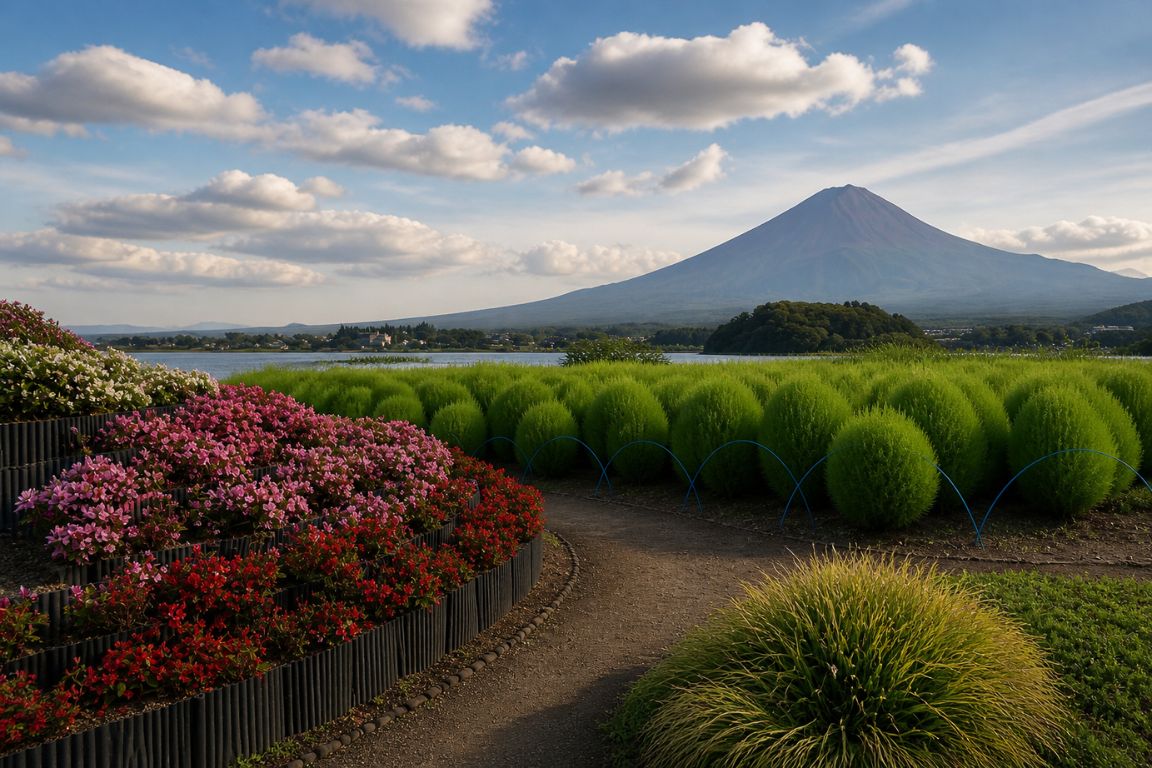 Yes, and you don’t need to climb anything to have a memorable day. The Mt. Fuji region is well-suited to families across all ages. Young children, babies, and toddlers can enjoy the lake reflection view, a short cable car ride, a 20-minute boat cruise, and traditional spring ponds that they can actually interact with. Older children can add the 5th Station by road for a close encounter with the mountain itself. The climbing option for children requires careful assessment, it is a serious physical undertaking at altitude, not appropriate for children under 6, and only suitable for physically capable, experienced older children with realistic preparation.
The framing matters here because some families arrive at Mt. Fuji expecting a theme park experience, and others arrive thinking the only worthwhile activity is the summit climb. Neither is accurate. The Five Lakes area is a genuinely diverse leisure destination with activities that suit toddlers through teenagers, with the mountain as a backdrop for everything.
What makes the area work for families is the concentration of activities around Kawaguchiko. The town has direct train and bus connections from Tokyo (~2 hours), a flat lakeside path suitable for strollers, multiple short-duration attractions that don’t demand long attention spans, food options at every stop, and lodging across all price ranges. A family with children of different ages can realistically do Oishi Park, the Appare boat cruise, the ropeway, and a lakeside lunch in a single day without anyone feeling rushed or left behind.
The single most important practical decision for families with children under 5 is tour format. Group bus tours from Tokyo run on fixed schedules that don’t accommodate nap emergencies, diaper changes, or a toddler who needs to walk instead of sitting in a bus seat. A private tour from Tokyo is significantly more expensive but provides the flexibility that families with young children actually need: hotel pickup, ability to extend or shorten stops, child seats in the vehicle, and a guide who can adjust the day around what the children engage with rather than what the itinerary specifies. For a family of four, the per-person cost difference between a private tour and a group bus tour narrows considerably.
Wondering which viewpoints offer the classic Fuji reflection shot and which ones require specific weather or seasonal timing to deliver? This Mt. Fuji tours scenic spots explained guide covers the details most Japan photography guides treat as obvious.
Best Kid-Friendly Activities Around Mount Fuji
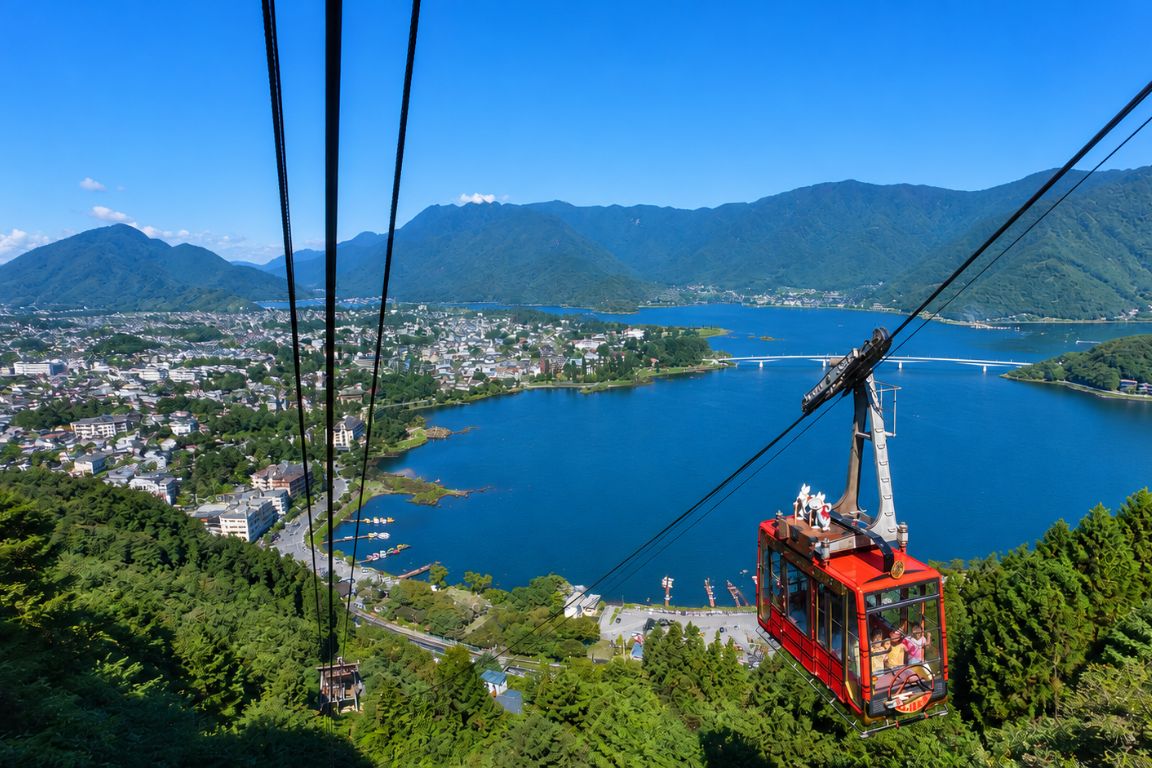 The best activities for families at Mt. Fuji, in roughly ascending age-appropriateness: the Appare sightseeing boat on Lake Kawaguchiko (20 minutes, all ages, preschoolers free), the Kachi Kachi Ropeway up Mt. Tenjo (3 minutes, views and rabbit sculptures, stroller-friendly at the top), Oishi Park’s lakeside flower fields and playground (free, stroller-friendly), Oshino Hakkai’s spring ponds and koi fish (free, gentle walk, deeply engaging for children), the 5th Station by bus or car for a dramatic proximity to the mountain (all ages, no hiking needed), and Fuji-Q Highland for families wanting structured rides (Thomas Land for young children, full coasters for teens and adults).
Appare Sightseeing Boat on Lake Kawaguchiko: A 20-minute cruise on a decorated Sengoku-era warship replica. The boat departs from Funatsuhama pier, 10 minutes on foot from Kawaguchiko Station, approximately every 30 minutes. Views of Mt. Fuji from the open upper deck are excellent on clear mornings, with the mountain’s full reflection visible when the lake is calm. Preschoolers board free; elementary-school-age children pay half price. The covered first-floor cabin with tatami-style seating keeps everyone comfortable in rain or cold. Staff are noted for being patient and interactive with children. Allow 1.5 hours total including boarding, the cruise, and walking from the station.
Kachi Kachi Ropeway (Mt. Fuji Panoramic Ropeway): A 3-minute cable car ride up Mt. Tenjo from a base station near the lake to a 1,075-meter observation platform. The platform has a 360-degree viewing deck with the mountain and lake panorama, rabbit sculptures (linked to a local folktale), a bell for wishing, and a small food stand. The summit station has a universal-access slope allowing strollers to access the deck easily. The base station has 64 steps, which means stroller folding at the bottom. One-way ticket is ¥600 (adults), ¥300 (children); round-trip ¥1,000/¥500. Babies ride free with a paying adult. The entire visit takes 2 to 3 hours at a relaxed family pace. Hours 8:30 to 17:00. Prices verified May 2026.
Oishi Park: Free access, stroller-friendly paved lakeside path, seasonal flower foregrounds with the mountain behind, and a small playground near the Kawaguchiko Natural Living Center. In lavender season (late June to July) or kochia season (October to November), the combination of colorful flowers, still lake water, and the mountain makes for the most photogenic family photos in the area. There is a small cafe and ice cream at the natural living center. The park is the westernmost stop on the Red Line sightseeing bus (20 minutes from Kawaguchiko Station, ¥1,500 day pass). Children engage well with the open grass areas and the flowers, and there is enough space to let them run without concern. All prices verified May 2026.
Oshino Hakkai Spring Village: Eight spring-fed ponds in a traditional village, 30 minutes by bus from Kawaguchiko. The ponds are crystal-clear enough to watch large koi fish swimming several meters below the surface, which children consistently find captivating. The thatched-roof farmhouses, water wheels, and local food stalls give the place the quality of a living village exhibit. The paths around the ponds are mostly gravel and slightly uneven – not ideal for very large strollers, but manageable. Entry to the ponds is free; the Hannoki Bayashi museum is ¥300. Allow 45 to 60 minutes. The local kusamochi (mugwort rice cakes) are a worthwhile snack stop. Prices verified May 2026.
Want to know what actually happens from pickup to drop-off before you commit to a full day tour? Check out our what to expect on a Mount Fuji tour guide so you arrive prepared.
The 5th Station: The Easiest Way to Experience the Mountain
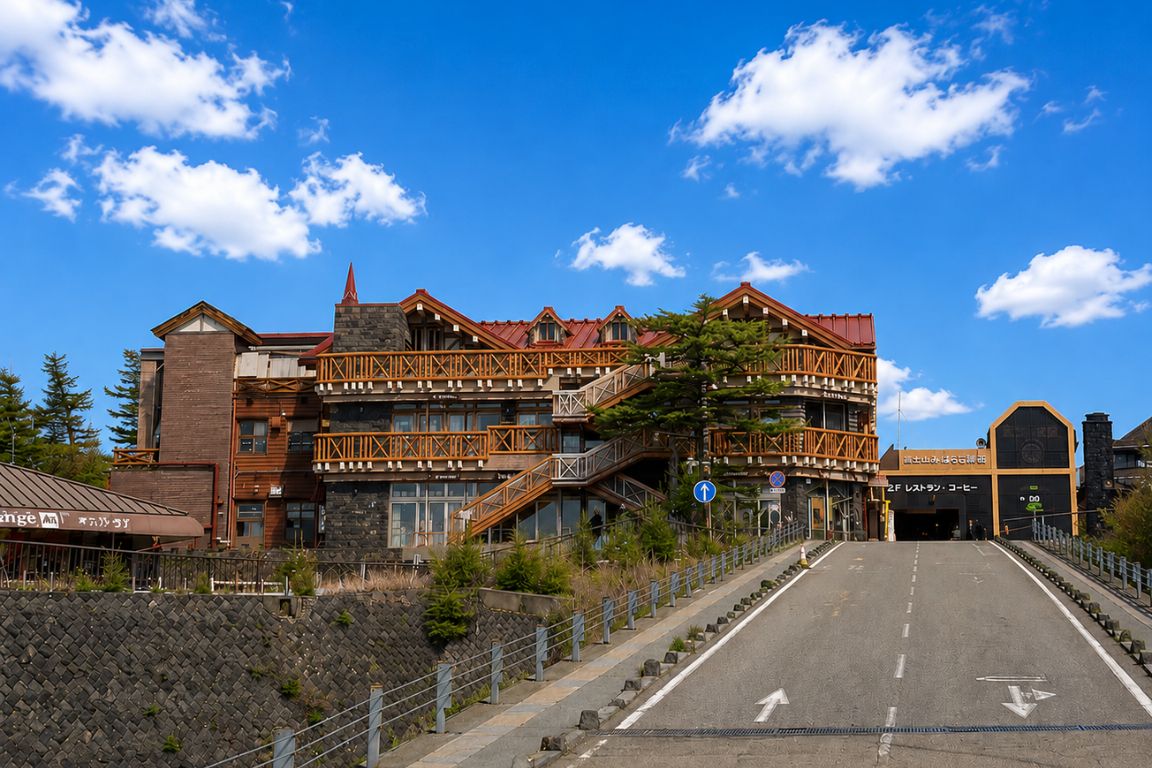 The Yoshida Trail 5th Station at 2,305 meters is accessible by bus or car – no hiking required. Getting there by shuttle bus from Kawaguchiko Station takes about 50 minutes. From the 5th Station plaza you can see the volcanic slopes above you and the Five Lakes region below. There are shops, restaurants, a shrine, a small volcano museum (free, 3rd floor of Rest House), and coin lockers. It is 10 to 15°C cooler than Kawaguchiko town, which is itself 5 to 6°C cooler than Tokyo. Pack a layer for every family member regardless of the summer temperature when you leave home. Most children find the altitude and atmosphere genuinely exciting, it feels like being inside a mountain.
The practical value of the 5th Station for families is different from what most travel guides describe. Adults come for the views and the climbing atmosphere. Children come for the sheer strangeness of the place. The black volcanic rock, the thin air that makes breathing slightly different, the mist that rolls through without warning, the fact that you can look down and see lakes in the distance – these things engage children who would struggle to care about a lakeside viewpoint. The mountain hut-style shops with their Mt. Fuji-shaped foods and climbing gear are also inherently interesting to children in a way that regular tourist shops are not.
For children who want to walk on the mountain without climbing to the summit: the Ochudo Trail is a gentle 70-minute circular walk at constant elevation that starts from the 5th Station. It passes through alpine terrain and gives a sense of being on the mountain without altitude gain. No special gear is needed for this trail, though sturdy shoes and a wind layer are sensible. This is appropriate for children aged 5 and above who are comfortable with uneven natural paths.
The main logistical point: during the July 1 to September 10 climbing season, private vehicles are banned from the Fuji Subaru Line toll road. All visitors must take shuttle buses from the Fuji Hokuroku Parking Area near Fujiyoshida. Outside the climbing season, private cars can drive up. The road sometimes closes in winter for snow. Check current status before planning if visiting October to April. Shuttle bus from Kawaguchiko Station: ~¥1,950 one-way, ~¥3,000 return. Prices verified May 2026.
Altitude and young children: the 5th Station is at 2,305 meters. Children can develop altitude illness, and individual response varies. Seek medical advice before travel for relevant health conditions. Small oxygen cans do not provide sustained treatment or replace descent and medical help. See CDC altitude guidance.
Lake Kawaguchiko with Kids: Boats, Parks, and Lake Views
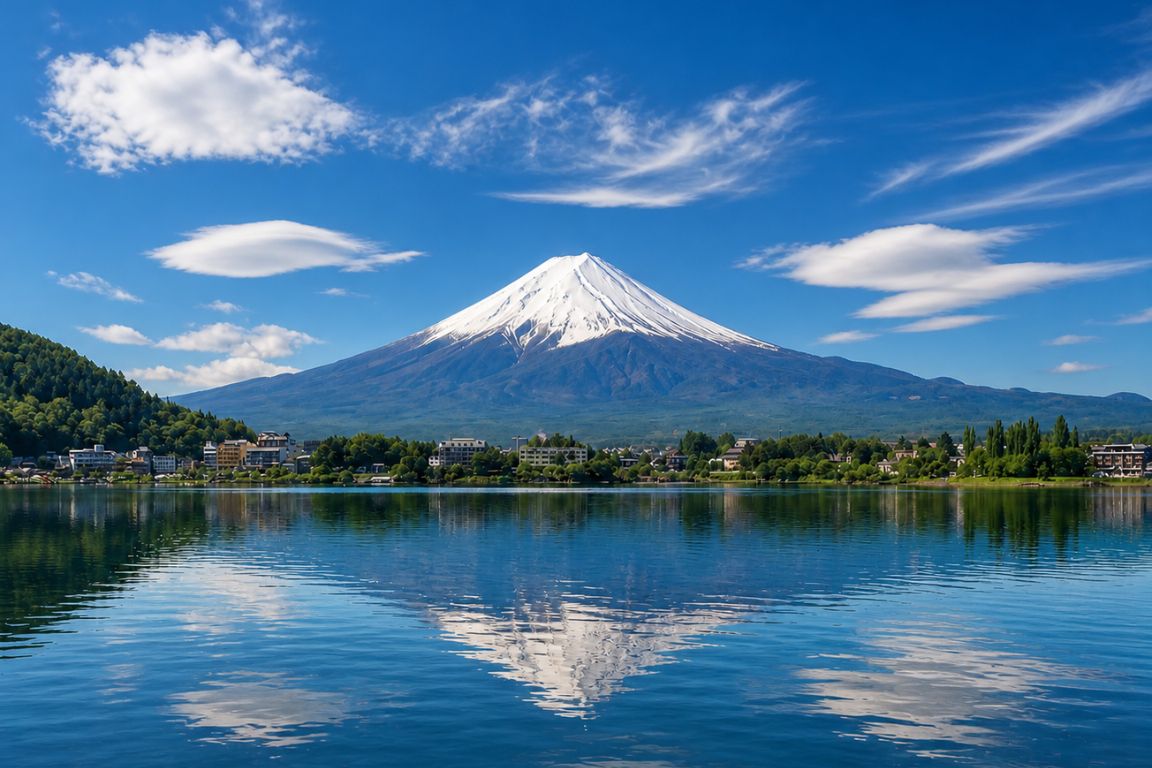
Lake Kawaguchiko is the best base for families visiting the Mt. Fuji area. The north shore lakeside path is paved, flat, and stroller-friendly for the full walking distance from the Ohashi Bridge to Oishi Park. The lake itself provides the most iconic reflection view of the mountain, best on calm mornings before 9:00 AM when clouds start building. Specific child-focused activities: the Appare boat cruise (20 min, all ages), swan pedal boats for lake paddling (life jackets provided), the Kachi Kachi Ropeway up Mt. Tenjo, Oishi Park’s playground and flowers, and the Kawaguchiko General Park lawn area for running and picnics.
The north shore walk structure works well with children of different ages. From Kawaguchiko Station, cross the Ohashi Bridge and walk west along the north shore. The path is approximately 4 kilometers to Oishi Park and fully paved with no significant hills. Along the way: the small Ubuyagasaki Shrine (historic, interesting to children for its lakeside setting), the Kawaguchiko Music Forest Museum gardens (pleasant for strolling), and various lakeside benches and viewpoints. Bicycle rental is available near Kawaguchiko Station for ¥1,000 to ¥2,000 half-day – the flat lakeside terrain is good for families with children old enough to cycle safely.
The pedal boat rental near the Kachi Kachi Ropeway base station offers swan-shaped boats (life jackets provided) for families who want to get out on the water on their own terms rather than on the Appare cruise schedule. A 30-minute rental for a boat holding up to three people costs approximately ¥2,000. Children love the perspective of seeing the mountain from the water and the novelty of steering the boat themselves. The boats operate in calm conditions; wind on the lake can make them impractical.
What the lake walk does not deliver: the mountain visibility at the lake is weather-dependent, and on cloudy days – which is most summer days – the mountain is invisible. The lake is beautiful in its own right regardless of weather, but families who have built their entire day around seeing the famous reflection need to understand that the probability is significantly lower than 50% on most summer dates. Winter (November to February) gives the highest reflection probability but requires appropriate cold-weather clothing for everyone including children.
Food at the lake: the Kawaguchiko area has a good range of family-friendly restaurants concentrated near the station area and along the south shore. Hoto noodles (a local specialty, wide flat noodles in thick miso broth, served in an iron pot – hearty and popular with children who like soupy dishes) are available at multiple restaurants. Convenience stores for quick family snacks are near the station. The Kawaguchiko Natural Living Center at Oishi Park has a small cafe and soft-serve ice cream.
We’ve put together a full day planning breakdown in our Kawaguchi day trip from Tokyo guide so you know exactly what to prioritize, how to get there, and how to sequence the day around the best Fuji viewpoints.
Oshino Hakkai and Fuji-Q Highland: Two Very Different Options
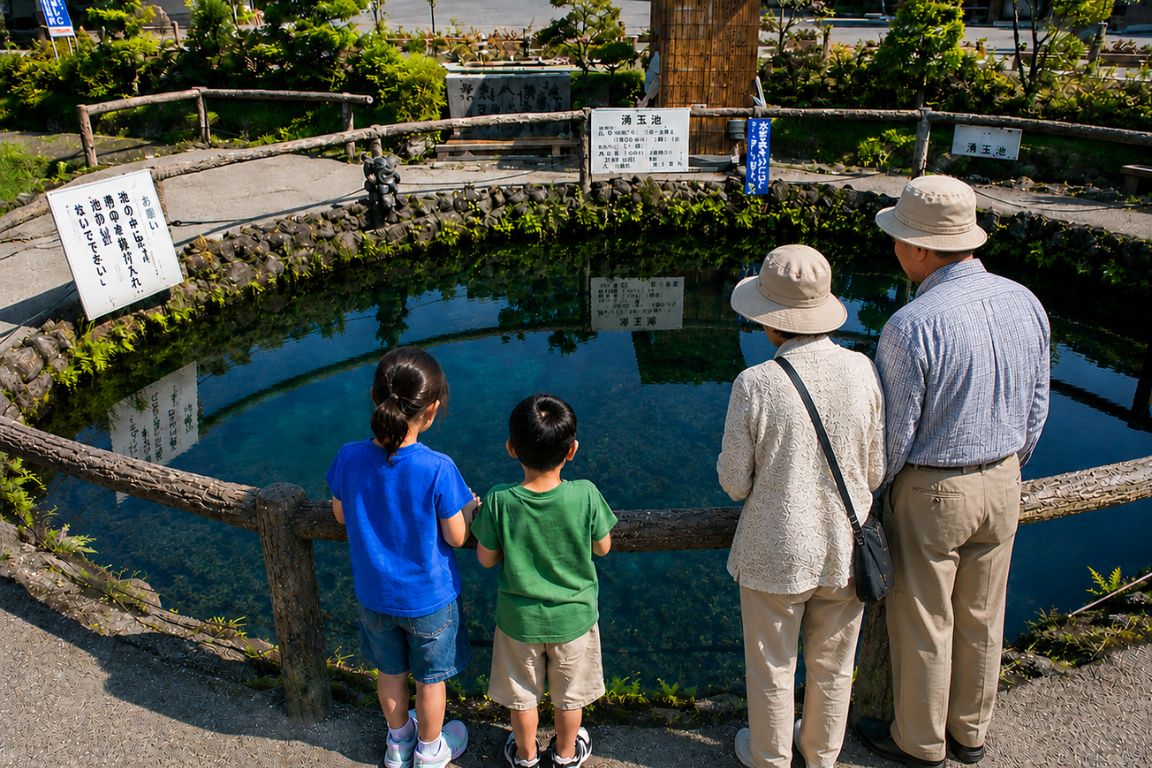 Oshino Hakkai is the cultural and natural stop – spring ponds, traditional village, koi feeding, peaceful atmosphere. It works well as an afternoon activity when the morning has been spent at the lake. Fuji-Q Highland is the thrill-ride option – Japan’s most famous extreme roller coasters plus an entire Thomas Land zone for young children. They serve different families at different stages of a visit. Combining both in the same day is possible but leaves little time for either. Choose based on your children’s ages and what they’ve been asking to do since you mentioned visiting Mt. Fuji.
Oshino Hakkai with children: The spring ponds at Oshino Hakkai engage children in a way that surprises many parents. The water is so clear that koi fish swimming 2 to 3 meters below the surface appear to float in mid-air, and children spend significant time watching and trying to photograph them. The thatched-roof farmhouses and wooden bridges create a landscape that feels genuinely different from anything most children from urban environments have seen. The local food stalls sell fresh kusamochi (mugwort rice cakes with sweet red bean filling) and grilled mochi skewers that children enjoy. The village is not large – most families spend 45 to 60 minutes, and the combination of sensory experiences (crystal water, koi fish, mountain views when clear, local snacks) at a relaxed pace makes it one of the most consistently successful stops for children aged 4 and above.
One practical note: the main pond area around Waku-ike and the artificial Naka-ike is crowded with vendors and tour groups at midday. Arriving before 10:00 AM or after 3:00 PM produces a significantly more relaxed experience for families who want children to engage with the ponds rather than navigate crowds.
Fuji-Q Highland with children: Japan’s most famous extreme roller coaster park sits at the base of Mt. Fuji in Fujiyoshida City, about 15 minutes by bus from Kawaguchiko Station. The park has two audiences: thrill-seekers who come for record-breaking coasters (Fujiyama, Takabisha with its 121-degree drop, the 4D-rotation Eejanaika), and families who come for Thomas Land, a dedicated zone with Thomas the Tank Engine themed rides, an indoor play area, and character events suitable for children from 2 years old upward. The Thomas Land rides have no significant height restrictions – the youngest coaster (Nia and Animal Coaster) is open from age 3.
For families with mixed ages, the park structure works well: children under 7 go to Thomas Land and the Gaspard and Lisa area (French children’s book characters), while older children and adults ride the major coasters. The park has nursing rooms, stroller rental (¥500 with ¥1,000 deposit at both entrances), and baby-changing facilities in every restroom. Major coasters require minimum heights of 120 to 130 cm. Park entry is technically free, with individual ride charges or a day pass (¥6,000 to ¥7,800 depending on date; discounted afternoon passes available after 2:00 PM). One full day is sufficient to cover the park at a family pace. Book tickets in advance through Klook or directly to avoid queues. Prices verified May 2026.
Fuji-Q is not the right choice for families whose primary goal is seeing Mt. Fuji or experiencing Japanese culture. It is a commercial theme park that happens to have a mountain view. For families with ride-obsessed children of 4 and above, it is genuinely excellent. For families focused on the mountain experience, skip it and spend the equivalent time at the lake and 5th Station instead.
Private Fuji Or Hakone Day: Scheduled Dates
Choose one Fuji-lakes or Fuji-Hakone route with private transport and an English-speaking driver-guide.
Check Dates For Private Fuji Or Hakone DayCan Kids Climb Mount Fuji?
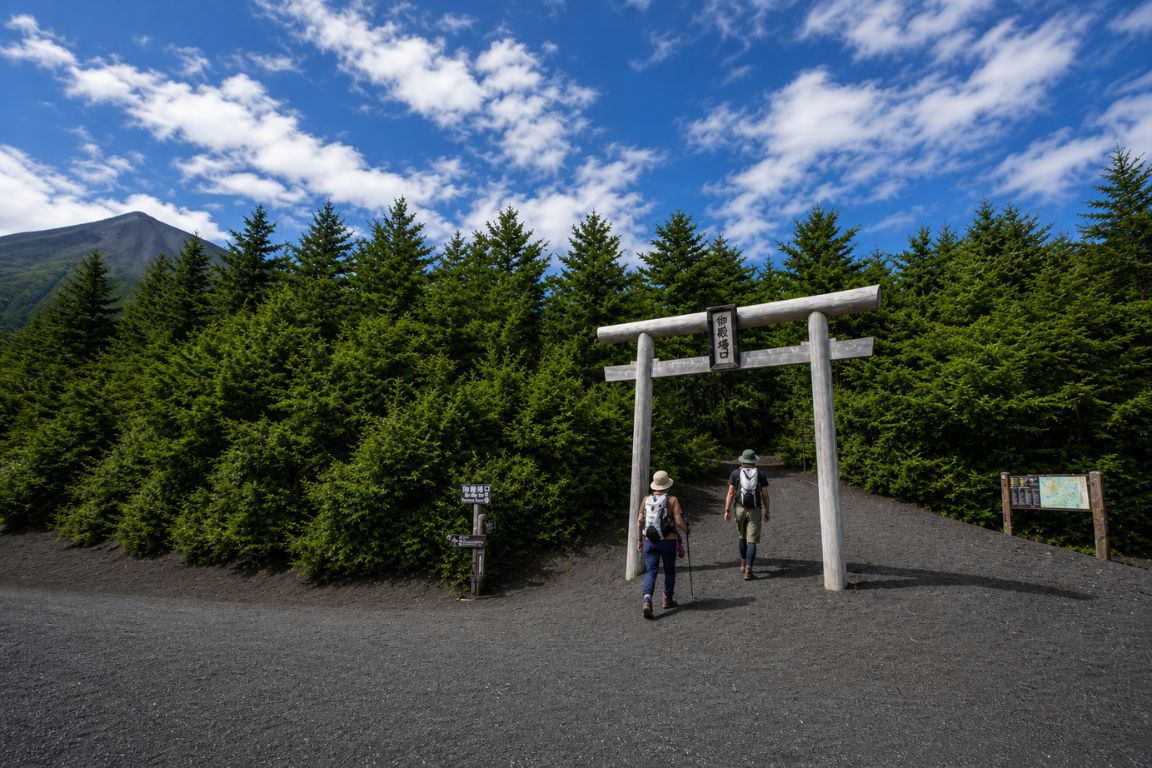 Children can climb Mt. Fuji, but it is a serious undertaking that requires honest assessment of your child’s capabilities rather than optimism. There is no official minimum age restriction, but most experienced guides and the official Fuji climbing website agree that under 6 is not recommended. The practical minimum for a successful, safe experience is 10 according to Fuji Mountain Guides, who have guided children as young as 6 but describe it as the exception not the norm. The main challenge is not physical – it is mental. Children who lack experience working hard outdoors for 8 to 10 hours, sweating heavily in uncomfortable conditions with disrupted sleep, are more likely to struggle than physically strong children who have simply never done anything like this before.
The official fujisan-climb.jp website specifically notes that children have weaker cardiopulmonary function and are at greater risk of altitude sickness than adults, particularly if it is their first climb. At 3,776 meters, oxygen concentration is approximately 65% of sea level – meaningfully thinner air that affects children’s bodies in ways that are hard to predict from sea-level performance. A child who is a strong athlete at home may develop altitude sickness above 3,000 meters and need to descend. This is not a failure but it does mean planning for flexibility and not treating the summit as the goal that defines whether the experience was worthwhile.
If you are planning to climb Mt. Fuji with a child, the preparation and planning considerations are:
Prior mountain experience: Children should have successfully completed hikes of at least 1,000 meters elevation gain before attempting Fuji. If that benchmark has not been met at home, the child is not ready. “They’re energetic and love the outdoors” is not the same as demonstrated multi-hour physical endurance on mountain terrain.
Age and planning timeline: Build at least 1.5 to 2 times the adult time estimate into your schedule. A 10-hour adult ascent and descent may take 15 hours with a child. Start from the 5th Station in the late morning rather than the late afternoon to maximize daylight time. The two-day overnight hut format is not negotiable – attempting to do it in a single push with a child significantly increases altitude sickness risk.
Altitude sickness monitoring: watch for headache, nausea, unusual fatigue, dizziness or vomiting after ascent. A pulse oximeter cannot diagnose acute mountain sickness by a single cutoff. Do not ascend further with symptoms; worsening symptoms at the same altitude require descent and help. See CDC altitude guidance.
Trail choice: The Yoshida Trail is the right trail for children due to hut density, first-aid stations, and English-language support. Do not attempt Gotemba with children. The Yoshida Trail accommodates the pace variability inherent in climbing with children better than any other route.
Wondering whether the Yoshida Trail is worth the extra distance over the more popular Subashiri or Fujinomiya routes? This Mount Fuji tours hiking trails guide covers the honest differences most hiking guides summarize too broadly.
Guided vs. independent: A guided two-day climb with a professional guide is the format that allows child-specific pacing; a single-day push is a poor fit for most children. The guide can monitor the child’s condition, enforce rest stops that children will try to skip when they feel good, and make the descent decision if altitude sickness develops. The minimum age for guided English climbing tours is typically 6 years (Willer Travel’s policy, for example) with the caveat that children should be able to communicate in English with the guide.
Thinking about actually climbing Mount Fuji rather than just viewing it from below? Here’s our can you climb Mount Fuji on a tour guide so you know what’s genuinely involved before you commit.
What to Pack When Visiting Mount Fuji with Children
 For a sightseeing day with children (no climbing): snacks and water (the most important things), a warm windproof layer for every family member including babies (the 5th Station is 15°C colder than Tokyo), sunscreen and hats, stroller or carrier depending on toddler’s walking tolerance, motion sickness remedy for the winding road to the 5th Station, and cash for vending machines, toilets, and small purchases. For climbing with children: everything adults need plus child-specific items – a pulse oximeter, altitude sickness oxygen canisters, child-sized hiking boots broken in before the climb, and a realistic early-abort plan that removes all pressure to summit at the cost of the child’s wellbeing.
The single most underestimated item on a family day trip to the Mt. Fuji area is the warm layer. Families leaving Tokyo on a 28°C summer morning frequently arrive at the 5th Station in T-shirts and shorts and are cold within minutes. Children get cold faster than adults and lose the ability to enjoy the experience when they are physically uncomfortable. Every family member – from the baby in the carrier to the oldest child – needs a wind-resistant jacket that can go on at the 5th Station. This is non-negotiable even in August.
The motion sickness point is practical and often overlooked in family planning. The Fuji Subaru Line road to the 5th Station winds up the mountain in long switchbacks. For children who are prone to car sickness, this is a significant issue. The road takes about 40 minutes from the parking area and the curves are constant. Bring appropriate child-safe motion sickness medication and administer it before departure, not when symptoms have already started. Ginger candies or pressure point wristbands work for mild cases.
First time heading up Mount Fuji and not sure how seriously to take the cold weather warnings even in summer? Here’s our what to wear for Mount Fuji tours guide so you don’t spend the day freezing at the fifth station wishing you’d packed a proper jacket.
| Windproof jacket (each family member) | 5th Station is 15°C cooler than Tokyo | All ages |
| Snacks (familiar, non-perishable) | Bus tours have limited stops; bus/train trips are 2+ hours | All ages especially toddlers |
| Water bottles (1 per person) | Hydration prevents altitude discomfort; vending available but expensive at 5th Station | All ages |
| Sunscreen and hats | UV stronger at altitude; exposed lake areas | All ages |
| Baby carrier or compact stroller | Gravel paths at Oshino Hakkai; bus/train stowage; 5th Station partial stroller access | 0 to 3 years |
| Diapers + changing supplies | Fuji-Q Highland has changing rooms at every restroom; 5th Station has facilities; Oshino Hakkai limited | Babies and toddlers |
| Motion sickness remedy | Winding Subaru Line road to 5th Station | Children prone to car sickness |
| Cash (¥5,000 per adult minimum) | Mountain hut toilets, ride tokens, food vendors; many small stops cash-only | Parents |
| Entertainment for bus ride (tablet, books) | 2 to 2.5-hour bus journey each way | Ages 3 to 8 especially |
| Pulse oximeter (if climbing) | Monitor child’s altitude sickness risk; recommended by official climbing website | Children climbing only |
Practical Tips: Getting Around, Timing, and Managing Expectations
 The most important practical decisions for families: tour format (private vs. group bus), departure timing (early morning, the single biggest factor for both mountain visibility and crowd management), and having a weather-independent fallback plan. Private tours cost more but are the right choice for children under 7. Group bus tours work well for children 8 and above. Departing Tokyo before 8:00 AM gives you the morning visibility window when the mountain is most likely to be clear. A fallback plan – knowing that Oshino Hakkai, Fuji-Q Highland, and the ropeway are all excellent regardless of whether the mountain is visible – prevents the disappointment trap that clouds can otherwise create.
Getting around with children: The most flexible and comfortable option for families is a private tour from Tokyo or a private vehicle. The alternatives – the Fuji Excursion Limited Express train plus local Red Line sightseeing bus — work well for families with children 6 and above who can walk and follow transit directions, but require luggage management, stroller folding on buses, and fixed schedules that don’t accommodate child-pace deviations. The Red Line bus day pass (¥1,500) covers all major north shore stops from Kawaguchiko Station and is an efficient, affordable option for families confident in managing public transport with children.
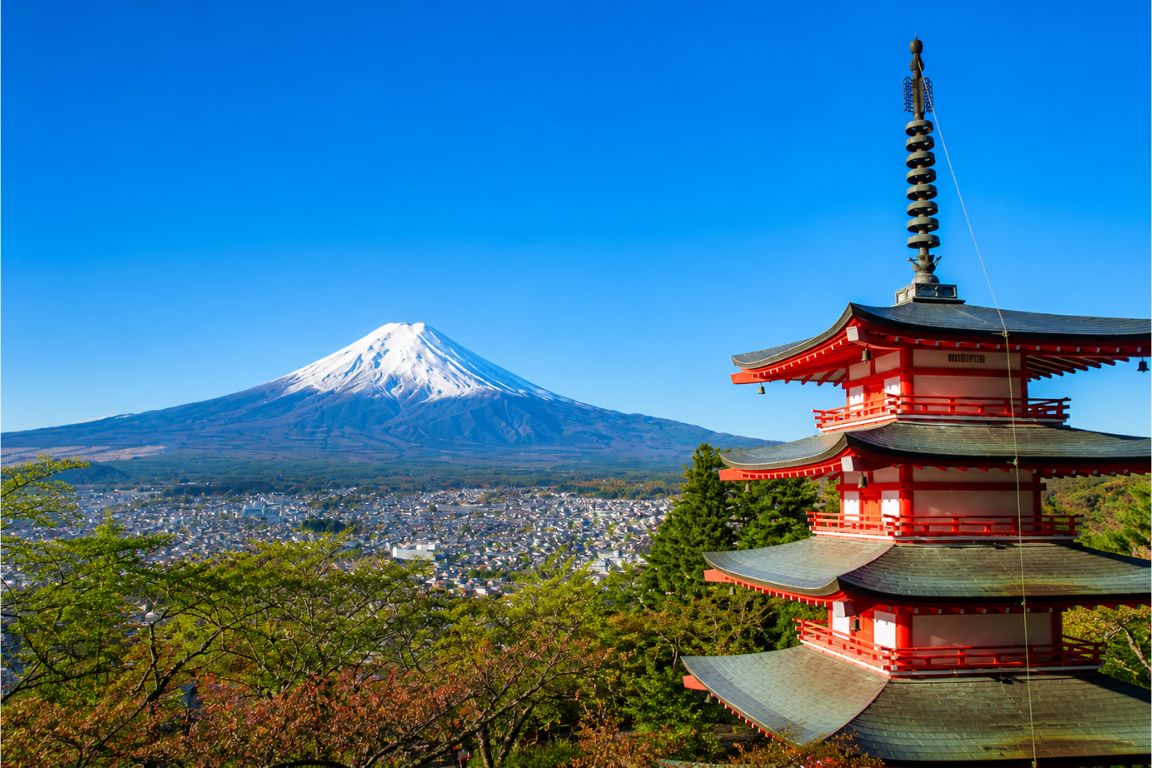
Timing the visit: Two rules apply with children even more strictly than with adults. First, arrive at viewpoints before 9:00 AM – the mountain’s clear visibility window is almost exclusively in the morning hours, and clouds build predictably from the late morning. Starting this early with children requires either an overnight stay in the Kawaguchiko area the night before (strongly recommended for families), or a very early departure from Tokyo (6:00 to 7:00 AM). Second, structure the weather-dependent stops in the morning and the weather-independent stops in the afternoon. Lakeside reflection view and Chureito Pagoda in the morning when clear is possible; Oshino Hakkai, Fuji-Q Highland, or the ropeway in the afternoon regardless of cloud cover.
Managing the mountain visibility expectation with children: This is worth talking about before the trip rather than on the day. Mt. Fuji is visible on roughly 60 to 80 days per year depending on the season, and on most summer days it is at least partially hidden by afternoon clouds. Children who have been told “we are going to see Mt. Fuji!” as the framing for the trip will experience the day as a failure if the mountain is behind clouds. Children who have been told “we are going to an amazing lake, a boat, a cable car, a spring village, and a magic mountain, and if we’re lucky we’ll see the mountain clearly” experience the same cloudy day as a success. The framing is everything.
Accommodation for families: Staying overnight in Kawaguchiko dramatically improves the family experience. An overnight stay means you can reach the north shore viewpoints at the 6:00 to 8:00 AM window when the reflection is most likely, before any day-trip crowds arrive. It also removes the time pressure of a single-day return to Tokyo, allowing the day to move at a child’s pace rather than a transport schedule’s pace. Family-friendly accommodation options in the Kawaguchiko area range from business hotels to traditional ryokan with family rooms. Ryokan with child-friendly onsen are a particularly rewarding experience for children who have never experienced a Japanese hot spring.
For families thinking about the right tour to book, the full-day private customizable tour from Tokyo lets you change stop length and order during the day, which is what younger children usually need.
We’ve put together a full transport comparison in our train vs bus to Mount Fuji guide so you know exactly which option fits your starting point, budget, and how much of the day you want to spend travelling.
Family Groups We’ve Guided: Data from Mt. Fuji Tours
| Family groups with children as % of all clients | 28% |
| Most popular family stop (named as highlight) | Oishi Park – 85% of families |
| % of family clients who chose private tour over group | 65% |
| Most common age group in family tours | 6-12 years |
| % of families who said overnight stay improved the experience | 94% |
| Most frequently cited family packing mistake | Layers – 72% of feedback |
The pattern we see most clearly in family groups: families who stayed overnight in Kawaguchiko rather than day-tripping from Tokyo almost universally rated their experience higher than those who did not. The morning visibility window and the relaxed pace it allows are worth the additional accommodation cost for most families.
Frequently Asked Questions
What age can children visit Mt. Fuji?
For sightseeing (no climbing): all ages including babies and toddlers. The lake, ropeway, boat cruise, Oshino Hakkai, and 5th Station are suitable for babies in carriers or strollers, with some adaptations at specific stops. For climbing to the summit: there is no official minimum age but most guides recommend 10 as a practical minimum. Children as young as 6 have summited with experienced guides, but this is the exception. The key factors are previous mountain experience, ability to sustain physical effort for 8 to 10 hours, and capacity to handle altitude effects.
Is Mt. Fuji suitable for strollers?
Partially. The Lake Kawaguchiko north shore path is paved, flat, and excellent for strollers. Oishi Park is stroller-friendly. The Kachi Kachi Ropeway’s summit platform has a universal-access slope for strollers, but the base station has 64 steps. Oshino Hakkai’s gravel paths are manageable but not smooth. The 5th Station main plaza area is accessible but the surrounding terrain is not stroller-friendly. A compact fold-flat stroller or a baby carrier is the most versatile option for the full range of Mt. Fuji stops.
Is it worth visiting Mt. Fuji with a baby or toddler?
Yes, with realistic expectations. Babies and toddlers don’t appreciate the mountain’s cultural significance, but they respond to the scale of the landscape, the lake, the fish in the ponds at Oshino Hakkai, and the novelty of the 5th Station environment. The boat cruise, the ropeway, and the lake walk all work well with very young children. Plan around nap schedules, book a private tour for flexibility, and accept that the mountain may not be visible. The experience of being in Japan’s most iconic natural landscape with your family is worthwhile at any age.
Should we use a private tour or a group bus tour for Mt. Fuji with kids?
Private tour for children under 7; either format works for children 8 and above. The key difference is flexibility: private tours adjust to nap timing, unexpected bathroom stops, longer pauses when children engage with something, and early returns if the day isn’t working. Group bus tours run on fixed schedules that cannot accommodate these needs. For families of four or more, the per-person cost of a private tour often approaches that of a group tour, so the comparison is less financially dramatic than it appears.
Is Fuji-Q Highland good for young children?
Yes, specifically Thomas Land. The Thomas Land zone at Fuji-Q Highland is designed for children aged 2 to 8 with gentle rides, an indoor play area, and character events. Children under 5 must be accompanied by someone aged 12 or above. For families with children who love Thomas the Tank Engine, this can be the highlight of the Japan trip. The major roller coasters (Fujiyama, Takabisha, Eejanaika) require minimum heights of 120 to 130 cm and are not appropriate for young children. Park entry is free; ride day pass is ¥6,000 to ¥7,800 depending on the day. Prices verified May 2026.
Planning a family visit to Mt. Fuji? Use the private customizable day from Tokyo if you need child-appropriate stops and room to change the plan around your children’s ages and energy.
Written by Akira Nakamura
Japanese tour guide since 2012 · Founder, Mt. Fuji Tours
Akira has guided over 11,500 travelers up Mt. Fuji and through the Fuji Five Lakes region, including hundreds of family groups with children of all ages.