Mount Fuji for Seniors
Is Mt. Fuji good for senior travelers? Yes, focus on sightseeing, not climbing. Discover the best accessible experiences and when to visit for the best views.
Last updated: May 20, 2026
Choose the pickup and walking demands before the itinerary. Private transport can make stops easier to arrange, but access at individual attractions still needs confirmation.
Booking Summary: Compare Tokyo hotel pickup, local lakes pickup and a Shin-Fuji nature day. These are sightseeing suggestions, not medical clearance or a guarantee of step-free access.
Scroll to the end for the complete comparison and provider booking links. Interactive matching requires JavaScript.
Quick Reference: Mt. Fuji for Seniors
| Lake Kawaguchiko north shore walk | Low – flat paved path | Wheelchair and stroller-friendly |
| Kachi Kachi Ropeway | Very low – 3-min cable car | Summit platform accessible; 64 steps at base |
| Appare sightseeing boat | Very low – seated 20-min cruise | Covered lower cabin; crew assist boarding |
| Oishi Park | Low – flat open park | Fully accessible, paved, free entry |
| Oshino Hakkai village | Low – gentle gravel paths | Manageable on foot; uneven for wheelchairs |
| 5th Station visit (no hiking) | Low – main plaza only | Plaza accessible; surrounding trail is not |
| Onsen ryokan stay | Minimal | Private onsen rooms available at premium properties |
| Summit climb | High – 8-12 hrs, 1,500m gain | No accessibility; demands serious fitness |
Is Mount Fuji Suitable for Older Travelers?
 Yes, as long as you’re not expecting to climb it. The Mt. Fuji area is genuinely well-suited to seniors. The famous lake reflection view, the cable car, the spring village at Oshino Hakkai, the 5th Station by road – none of these require significant effort. A well-planned two-day visit can be physically light, culturally rich, and visually extraordinary.
The mistake many older visitors make is assuming that because they can’t climb, there’s nothing worthwhile to do. That’s simply not true. The lake and mountain combination at Kawaguchiko is one of Japan’s most celebrated landscapes. The 5th Station at 2,305 meters is accessible by bus – no hiking involved – and puts you on the mountain itself. A lakeside onsen ryokan with an open-air bath facing Mt. Fuji at dusk is an experience that stays with people for years.
What does matter is the practical setup. Standard group bus tours from Tokyo explicitly state they are not suitable for wheelchair users or those with limited mobility. The schedule is fixed, stops include uneven surfaces, and the bus can’t slow down for anyone. A private tour with a flexible itinerary and an accessible vehicle is the right format. For a couple traveling together, the cost difference versus two group tour tickets is often smaller than expected.
Curious what a full Mount Fuji tour day actually looks like beyond the highlight reel? Here’s our what to expect on a Mount Fuji tour guide so you know exactly what you’re getting into.
Best Scenic Spots for Seniors: No Climbing Required
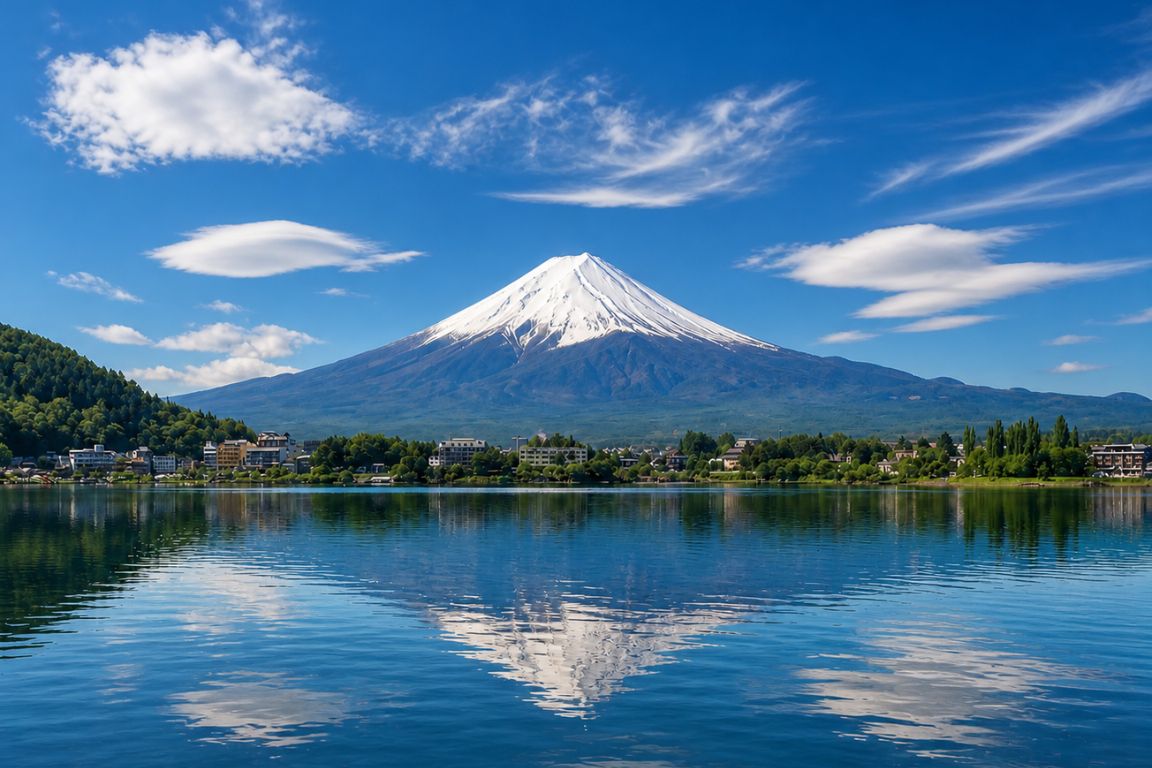 The five stops that consistently work best for older visitors are the Lake Kawaguchiko north shore, Oishi Park, the Kachi Kachi Ropeway, Oshino Hakkai, and the Chureito Pagoda if mobility allows. Each can be done at a relaxed pace with no time pressure.
The north shore lakeside path from the Ohashi Bridge to Oishi Park is paved, flat, and fully accessible. This is where the famous mountain reflection appears in the still lake water, best before 9:00 AM on a clear morning. Benches appear throughout the path. Oishi Park at the western end is free, with seasonal flowers – lavender in June and July, bright red kochia in October – framing the mountain behind. There’s a small cafe and restrooms at the Natural Living Center.
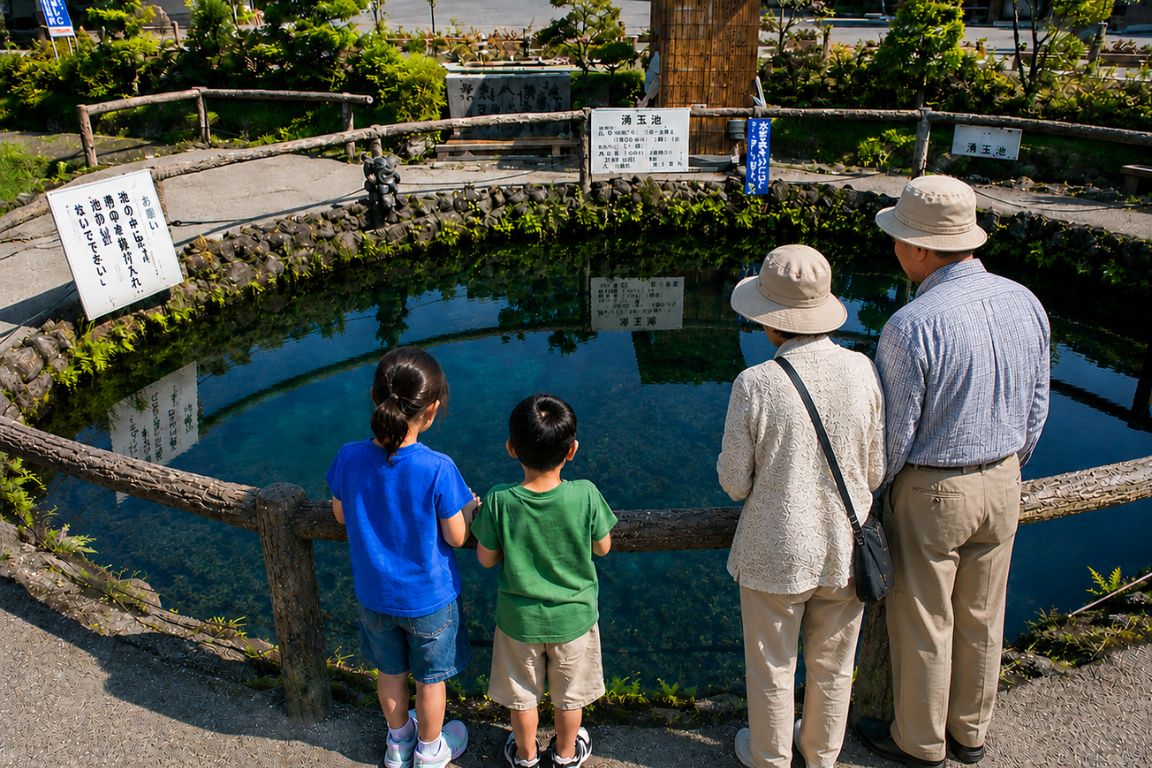
Oshino Hakkai is a traditional village of eight spring-fed ponds about 30 minutes from Kawaguchiko by bus. The water is so clear that koi fish 2 to 3 meters down appear to float in mid-air. The paths between ponds are gentle gravel, manageable for most seniors on foot though not smooth for wheelchairs without assistance. Allow 45 to 60 minutes. The local kusamochi rice cakes at the food stalls are worth trying.
The Chureito Pagoda at Arakurayama Sengen Park requires climbing 398 stone steps from the shrine gate to the viewing platform. For mobile seniors, the view at the top – a five-story red pagoda with Mt. Fuji above and cherry blossoms or autumn foliage around it – is among the most beautiful in Japan. For seniors with knee problems or limited stamina, the view from the base of the stairs is still worthwhile, and the lake viewpoints deliver the mountain without any steps.
Want to know which spots around Mount Fuji are genuinely unmissable and which ones you can skip without regret? Here’s our Mt. Fuji tours scenic spots explained guide so you use your time wisely.
The 5th Station: Getting Close Without the Climb
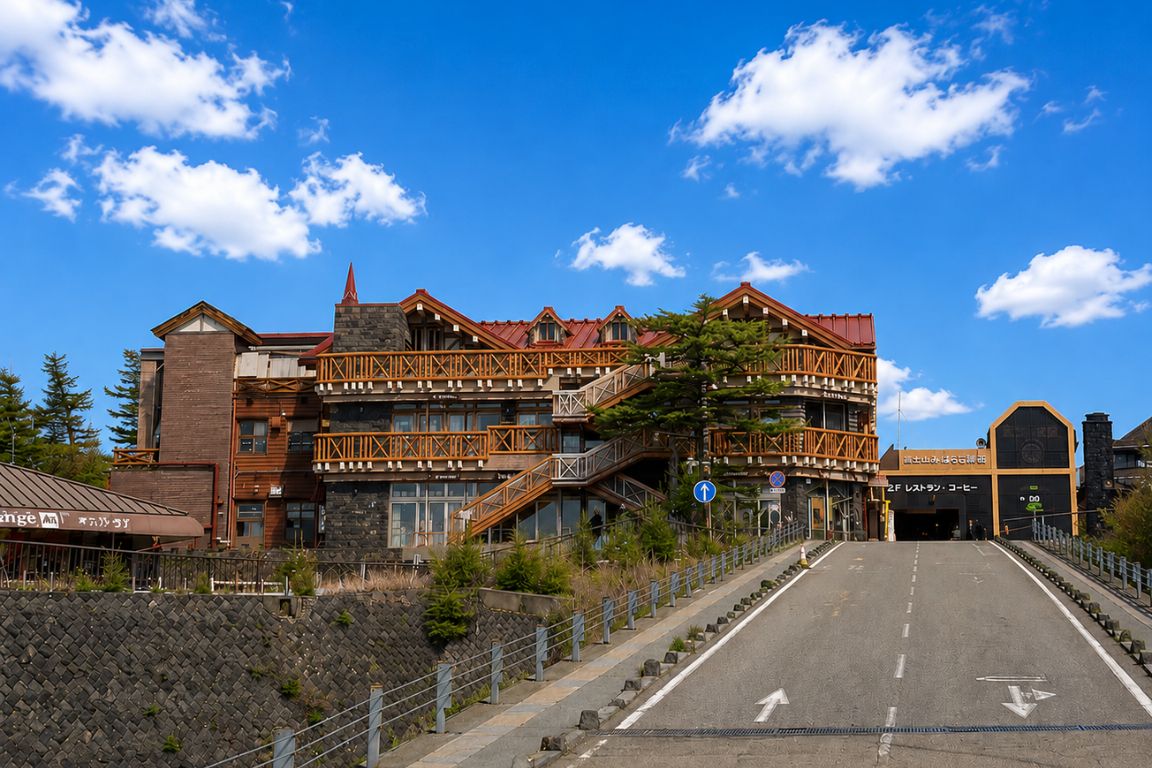 The Yoshida Trail 5th Station at 2,305 meters is accessible by shuttle bus or private car – no hiking involved. The bus from Kawaguchiko Station takes about 50 minutes. From the main plaza you see the volcanic slopes above and the Five Lakes below. It is the experience of being on Mt. Fuji itself without setting foot on a trail.
This is worth understanding clearly. The 5th Station is not a viewpoint looking at the mountain from a distance – you are halfway up it. The volcanic black rock terrain, the noticeable thinness of the air, the clouds sometimes sitting below you, the sheer scale of the cone above – these affect visitors in a way no lakeside viewpoint can replicate. Seniors who see the reflection from the lake and then visit the 5th Station consistently describe them as completely different experiences.
Practical notes: the 5th Station is about 14°C cooler than Kawaguchiko, which is itself cooler than Tokyo. Pack a windproof layer for every person regardless of what Tokyo’s temperature is when you leave. On a 30°C Tokyo summer morning the 5th Station plaza will be around 15°C. This is the most consistent oversight on senior day trips – arriving underdressed and being cold within minutes of stepping off the bus.
The main plaza and rest house area is accessible for mobile seniors with walking aids; the surface is paved. Small oxygen cans do not provide sustained treatment for altitude illness; breathlessness or other concerning symptoms need assessment and appropriate help. The shuttle bus from Kawaguchiko Station costs approximately ¥3,000 return. During the July 1 to September 10 climbing season, private cars are banned from the Fuji Subaru Line road and everyone uses the shuttle from the Fuji Hokuroku Parking Area. Outside climbing season, private cars can drive up directly. All prices verified May 2026.
Trying to figure out which Fuji hiking trail gives you the best experience without biting off more than you can chew? Check out our Mount Fuji tours hiking trails guide before you commit to anything.
Accessible Activities Around Lake Kawaguchiko
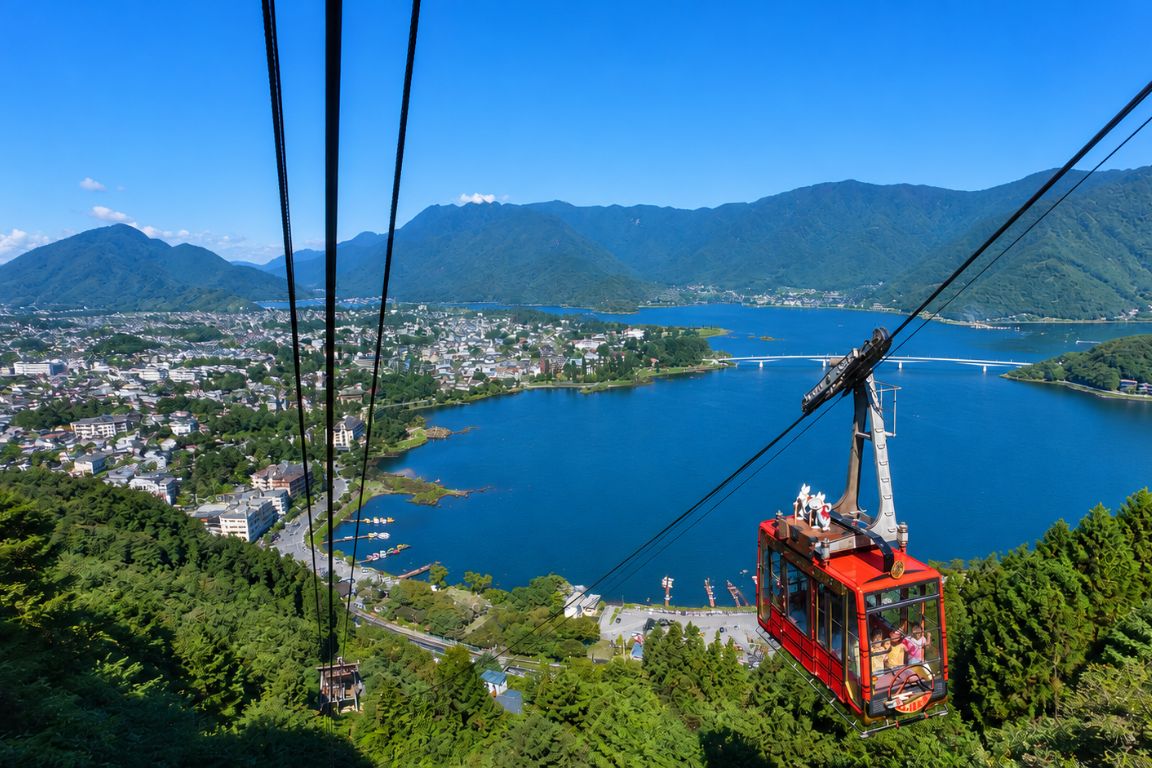 The lake area has a concentrated set of low-exertion activities: the Appare sightseeing boat, the Kachi Kachi Ropeway, day-use onsen, and the lakeside walk. These can fill a comfortable full day. An overnight stay at a lakeside onsen ryokan adds a dimension that no day trip can match.
The Appare sightseeing boat offers a 20-minute cruise on a decorated warship replica departing from Funatsuhama pier, about 10 minutes on foot from Kawaguchiko Station. The covered lower cabin has tatami-style bench seating for anyone who doesn’t want to stand on the open upper deck. On clear mornings the mountain reflection is visible from the water. Adults pay approximately ¥1,600 for the cruise. Preschoolers board free. All prices verified May 2026.
The Kachi Kachi Ropeway is a 3-minute enclosed cable car from the lakeside up to a 1,075-meter observation platform on Mt. Tenjo. The summit deck has benches, panoramic mountain and lake views, and a small snack stand. The platform is accessible via a universal slope. The base station has 64 steps – the main challenge for seniors with knee or hip problems. Round trip is ¥1,000 for adults. Hours 8:30 to 17:00. All prices verified May 2026.
For onsen, Yurari near Narusawa is a well-regarded public facility with multiple bath types including outdoor rotenburo with mountain views. Admission is ¥1,400 on weekdays and ¥1,700 on weekends, hours 10:00 to 21:00. Seniors who prefer a private bath over communal facilities should look at lakeside ryokan that offer chartered private baths by the hour without requiring an overnight stay – several properties in Kawaguchiko offer this. The Konansou ryokan has a rooftop footbath in everyday clothes with mountain views, which suits seniors who want the warmth and atmosphere of an onsen without undressing. All prices verified May 2026.
One practical note about luggage: Japan’s takkyubin delivery service sends suitcases between hotels with next-day delivery for roughly ¥1,000 to ¥2,000 per piece. Hotel staff can help fill out the forms. For seniors navigating stairs at train stations, removing the luggage burden changes the physical experience of the trip significantly.
Want an honest comparison between the two most popular ways to get to Mount Fuji independently? Here’s our train vs bus to Mount Fuji guide so you travel smarter.
Should Seniors Consider Climbing Mount Fuji?
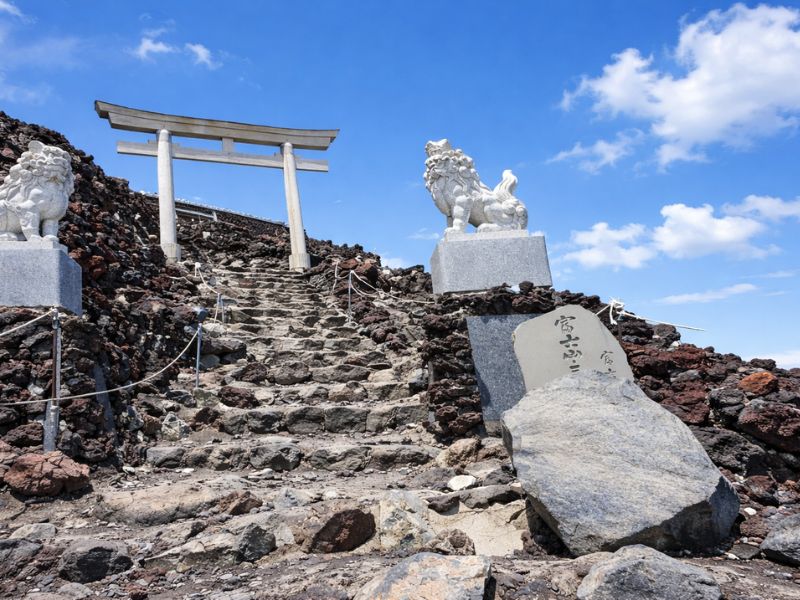
Age is not the deciding factor – fitness is. Guides who have led thousands of climbers up Mt. Fuji say the same thing consistently: fit 65-year-olds summit without difficulty while exhausted 25-year-olds turn back at the 8th station. The physical benchmarks are specific: walk 15 km comfortably, climb stairs for 30 continuous minutes without stopping, carry an 8 to 10 kg pack for several hours, and have no serious cardiovascular conditions. If you genuinely meet those benchmarks, age is not the barrier.
There is no official upper age limit. Fuji Mountain Guides applies a general practical guideline of around age 70 as a starting point for candid conversation – not a hard rule, but a basis for realistic assessment. Some operators require a health questionnaire for climbers 70 and above before accepting the booking.
The specific challenges that increase with age: knee stress on the descent is the most consistent issue. Three to five hours of downhill on loose volcanic gravel puts repetitive load on the knee joints, and this is where older climbers most often struggle. Trekking poles reduce that load by roughly 25 to 30% and are non-negotiable. High-cut waterproof boots with ankle support reduce the instability that compounds the knee stress on every step.
The two-day overnight hut format is also non-negotiable for any senior attempting the summit. A hut stay at the 7th or 8th station (around 3,000 to 3,200 meters) gives meaningful acclimatization time before the pre-dawn summit push. Attempting the climb in a single day significantly increases altitude sickness risk for anyone, and more so for older climbers.
Any senior considering the summit should use a private guide on a two-day hut itinerary rather than joining a group tour. A private guide sets pace entirely for the individual, monitors altitude symptoms continuously, and makes the descent call before conditions become dangerous. The cost is higher but the safety margin is substantially better.
First time considering a Fuji summit attempt and not sure if your fitness level is up to it? Here’s our can you climb Mount Fuji on a tour guide so you make an honest assessment before you book.
Private Fuji Or Hakone Day: Scheduled Dates
Choose one Fuji-lakes or Fuji-Hakone route with private transport and an English-speaking driver-guide.
Check Dates For Private Fuji Or Hakone DayHealth Considerations: Altitude, Heart Conditions, and Pacing
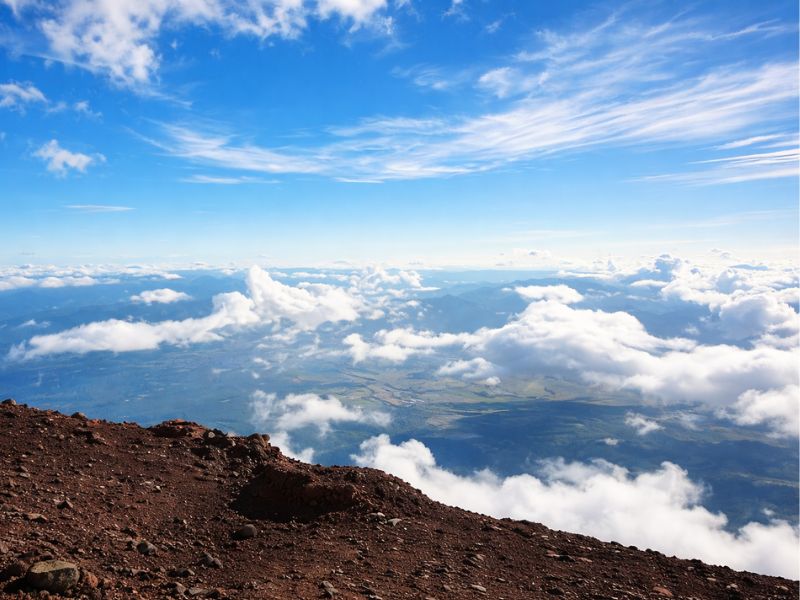
At altitude, reduced oxygen levels trigger the body’s stress response – heart rate rises, breathing increases, blood pressure fluctuates. For healthy older adults with no cardiovascular history, a short visit to the 5th Station at 2,305 meters is generally well-tolerated. For seniors with existing heart conditions, altitude carries real medical risks that require a specific conversation with your cardiologist before booking.
The relevant medical evidence is clear. A 2021 American Heart Association scientific statement confirmed that low oxygen at altitude can trigger chest pain in people with coronary artery disease and worsen symptoms in those with heart failure. A peer-reviewed cardiology review found that patients with stable coronary artery disease on optimal treatment and in good physical condition can generally tolerate altitude up to 3,500 meters, but patients with unstable angina or a heart attack within the past 6 months should avoid high altitude travel entirely. A Circulation journal study of elderly participants at simulated 2,500-meter altitude found that 45% had mild altitude sickness symptoms in the first few days, though all resolved after acclimatization.
For the 5th Station visit by bus without physical exertion, the altitude exposure is moderate and similar to many ski resort bases. A short sightseeing visit at 2,305 meters is very different medically from a sustained overnight climb to 3,776 meters. Still, seniors with managed cardiovascular conditions should confirm specifically with their doctor before planning the 5th Station stop.
Lake-level activities involve less altitude exposure than a summit climb. Walking demands, medical conditions and individual needs still matter; discuss suitability with your clinician where appropriate.
On pacing: a private guide can adapt the schedule, but cannot prevent altitude illness. Gradual ascent, acclimatization and responding to symptoms matter regardless of fitness or age. See CDC altitude guidance.
Practical Tips: Getting Around, Tours, and Accessibility
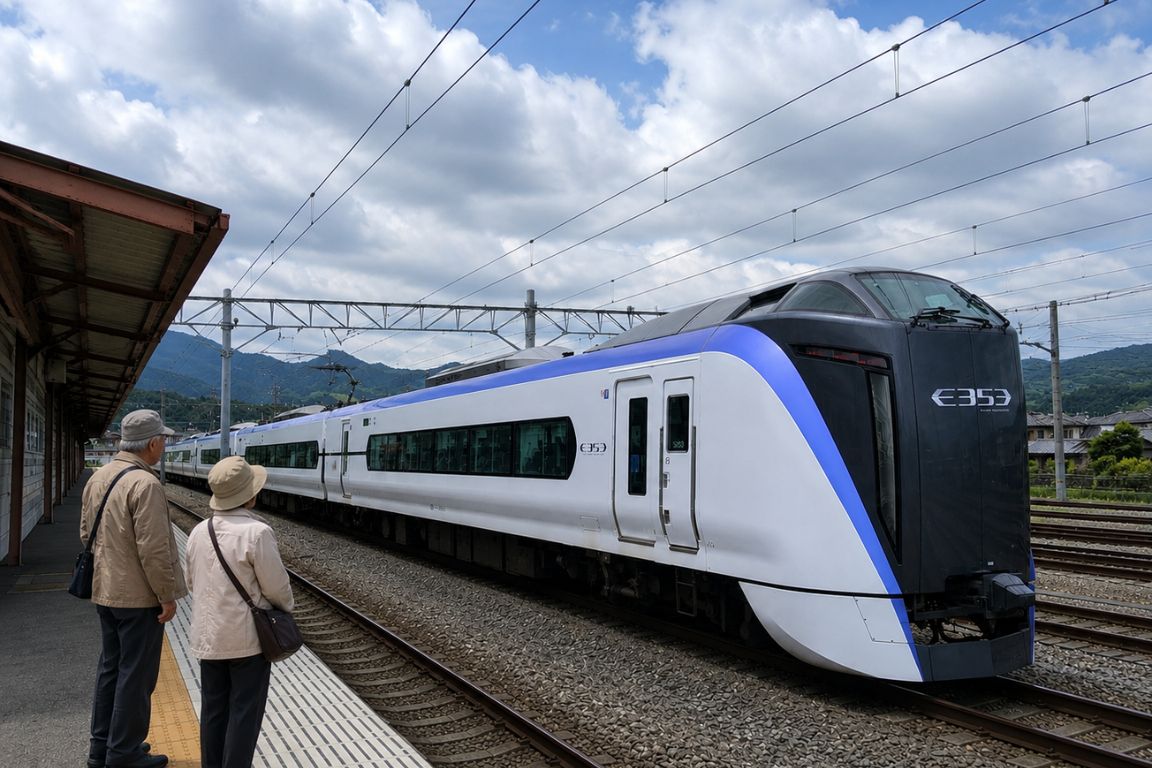 The format that works best for most seniors is a private tour from Tokyo with an English-speaking guide and a flexible vehicle. Group bus tours run on fixed schedules and explicitly advise against use by those with limited mobility. Private tours adjust to your pace, allow hotel pickup, and can use accessible vehicles for wheelchair users. For a couple traveling together, the cost difference is often smaller than it looks.
Wheelchair-specific accessible tours of the Mt. Fuji area are available from specialist operators including Omakase Tours and Accessible Japan. These use purpose-fitted vehicles, provide guide assistance at any uneven surfaces, and route the day around fully accessible stops. The standard sightseeing bus tours are not a realistic option for wheelchair users – the operators say this themselves in the booking terms.
Getting to Kawaguchiko from Tokyo: the Fuji Excursion Limited Express from Shinjuku is the most comfortable option – a direct reserved-seat train with about 2 hours of smooth travel and baggage space onboard. Highway buses are cheaper (around ¥1,750 from Busta Shinjuku) but offer less comfort on longer journeys and can be delayed in traffic. Private door-to-door transfer from a central Tokyo hotel directly to Kawaguchiko removes all station navigation entirely.
Getting around the lake: the Red and Green Line sightseeing buses cover all major stops on a ¥1,500 day pass. For mobile seniors comfortable on public buses, this is a perfectly good option. For those who prefer not to manage bus schedules, taxis from Kawaguchiko Station to any lake stop typically cost ¥800 to ¥1,500.
Accommodation: staying overnight in Kawaguchiko rather than day-tripping from Tokyo significantly improves the experience. The morning visibility window – before 9:00 AM – is when the mountain is most reliably clear and the lake reflection most likely. Day-trippers from Tokyo almost always arrive after that window has closed. Book a lakeside ryokan and wake up at the water. Several properties offer Japanese-Western hybrid rooms with Western beds for guests who find futon sleeping uncomfortable – worth confirming when booking for anyone with joint or back issues.
Kawaguchiko looks straightforward on a map but getting the most out of a single day there takes more planning than most visitors expect – our Kawaguchi day trip from Tokyo guide breaks down exactly how to approach it.
Best Time of Year for Seniors to Visit Mount Fuji
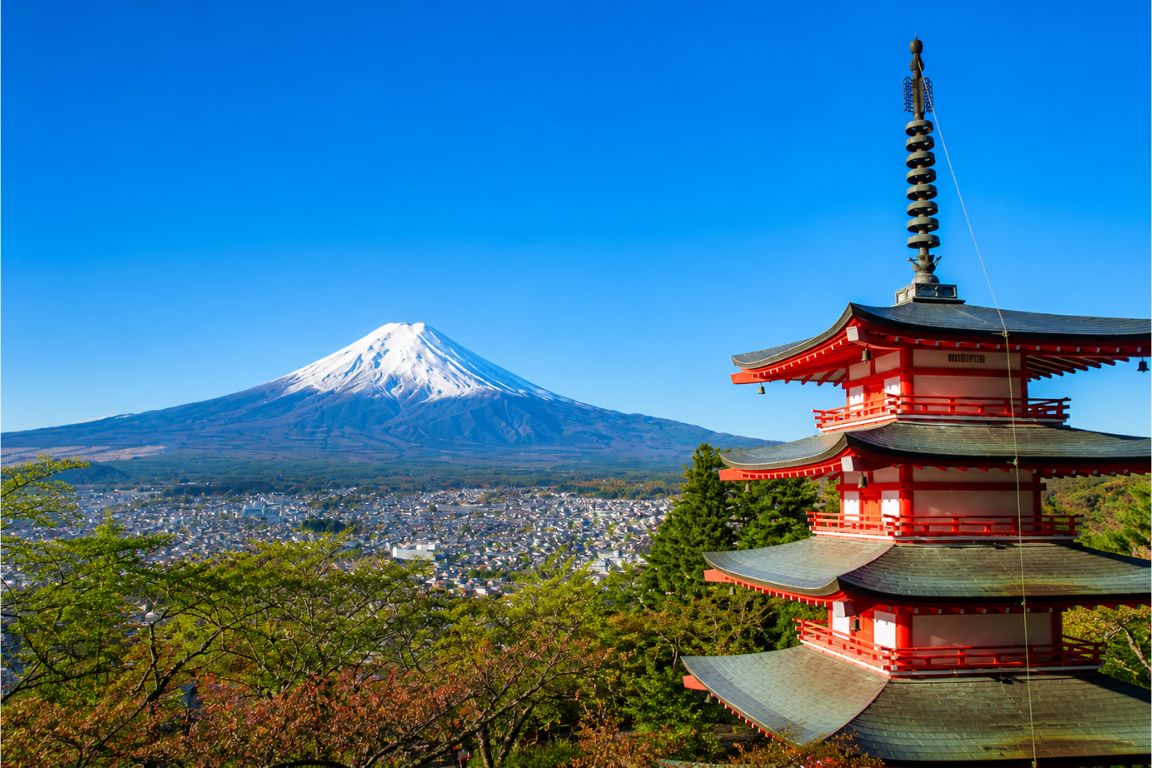 October to November is the best overall season for seniors: comfortable temperatures, very good mountain visibility, autumn foliage around the lake, and significantly lower crowds than summer. Late March to mid-April is the second best choice, with cherry blossoms and warming spring temperatures. Both are substantially better than July and August, which combine oppressive humidity, peak crowds, and the highest probability of clouds hiding the mountain.
October and November specifically offer conditions that suit older travelers well. Daytime temperatures at the lake run 8 to 18°C – cool enough to walk comfortably without the heat draining energy. Mountain visibility is significantly higher than in summer. The kochia turn bright red at Oishi Park in October and autumn maple foliage appears around the lake from mid-October onward. The mountain often carries fresh snow on the upper cone from late October, making it more visually dramatic. Crowds drop sharply after the September holiday rush.
Late March to mid-April brings cherry blossoms. The Kawaguchiko area has its own cherry variety, Fujizakura, which typically blooms in late April – slightly later than Tokyo. The Chureito Pagoda steps lined with cherry trees alongside the mountain view above is one of Japan’s most celebrated images. This window attracts significant crowds and accommodation books out fast; plan several months in advance.
Not sure when your chances of actually seeing Mount Fuji clearly are highest? Here’s our best time to see Mount Fuji tours guide so you don’t spend your visit staring at clouds.
Winter (December to February) delivers the clearest mountain views of the year. Cold dry air strips the haze that softens the mountain’s silhouette in warmer months and the snow-capped peak is at its most dramatic. Onsen ryokan stays are especially rewarding in winter – soaking in an outdoor hot bath with a snow-covered mountain in front of you is one of Japan’s distinctive experiences. Temperatures are cold (lake area averages -2 to 10°C) and require proper layering, but for seniors who tolerate cold and prioritize clarity, winter mornings at the lake are extraordinary.
Avoid July and August. The combination of 28 to 33°C heat, Japan’s highest humidity, peak tourist crowds on all transport, and frequent afternoon cloud cover that hides the mountain makes this the worst season for seniors by a significant margin. Golden Week (late April to May 5) and Obon (mid-August) should also be avoided – these are the two most crowded national holiday periods of the year.
We’ve put together a full seasonal breakdown in our best time to visit Mount Fuji tours guide so you know exactly when to go based on what you want to see and how much company you’re willing to have.
Senior Visitors We’ve Guided: Data from Mt. Fuji Tours
| Senior visitors (60+) as % of all clients | 32% |
| % of senior clients who chose private over group tour | 78% |
| Most cited highlight for senior visitors | Kubota Itchiku Museum – 85% of feedback |
| % who stayed overnight vs. day-tripped from Tokyo | 65% overnight / 35% day trip |
| Most popular season for senior visitors | Autumn – 48% |
| Most common practical issue cited by senior groups | Station Walking – 92% |
Frequently Asked Questions
Is Mt. Fuji accessible for elderly visitors?
Yes, for sightseeing. The lake, ropeway, boat cruise, Oshino Hakkai, and 5th Station visit by bus all require minimal physical effort. Standard group bus tours from Tokyo are not suitable for limited mobility travelers – private tours with accessible vehicles are the right format. Fully wheelchair-accessible private tours of the area are available from specialist operators.
What is the maximum age to climb Mt. Fuji?
There is no official maximum age. Fitness level determines whether a climb is appropriate, not age. The practical benchmarks: walk 15 km comfortably, climb stairs for 30 continuous minutes, carry 8 to 10 kg, and have no serious cardiovascular conditions. Fuji Mountain Guides uses around age 70 as a starting point for a realistic fitness conversation, not a hard cutoff.
Can seniors with heart conditions visit the 5th Station?
Possibly with medical clearance. The 5th Station sits at 2,305 meters – comparable to a mid-range ski resort. Seniors with well-controlled stable cardiovascular conditions may be cleared by their cardiologist for a short visit without physical exertion. Those with unstable angina, recent heart attack, or serious arrhythmias should avoid altitude above lake level without explicit medical clearance.
What is the best season for seniors to visit Mt. Fuji?
October to November is the best overall: comfortable temperatures, good visibility, autumn foliage, and lower crowds. Late March to mid-April (cherry blossom season) is the second best. Both are much better than July and August – the most crowded, most humid, and least reliable for mountain visibility of the entire year.
Planning a senior visit to Mt. Fuji? Mt. Fuji Tours runs private, pace-flexible day tours designed around your mobility and interests. We’ve guided visitors in their 70s and 80s through this area since 2012. Start with a private, pace-flexible day tour from Tokyo and match the stop list to your group.
Written by Akira Nakamura
Japanese tour guide since 2012 · Founder, Mt. Fuji Tours
Akira has guided over 11,500 travelers through the Mt. Fuji region including many senior visitors and multi-generational groups.