Where to Stay Near Mount Fuji
The area you sleep in decides whether you see the mountain at all, because the only reliable viewing window is the hour after sunrise and nobody makes that window from Tokyo. Here is how the bases compare, what each price band actually buys, and the one booking mistake that costs people the view.
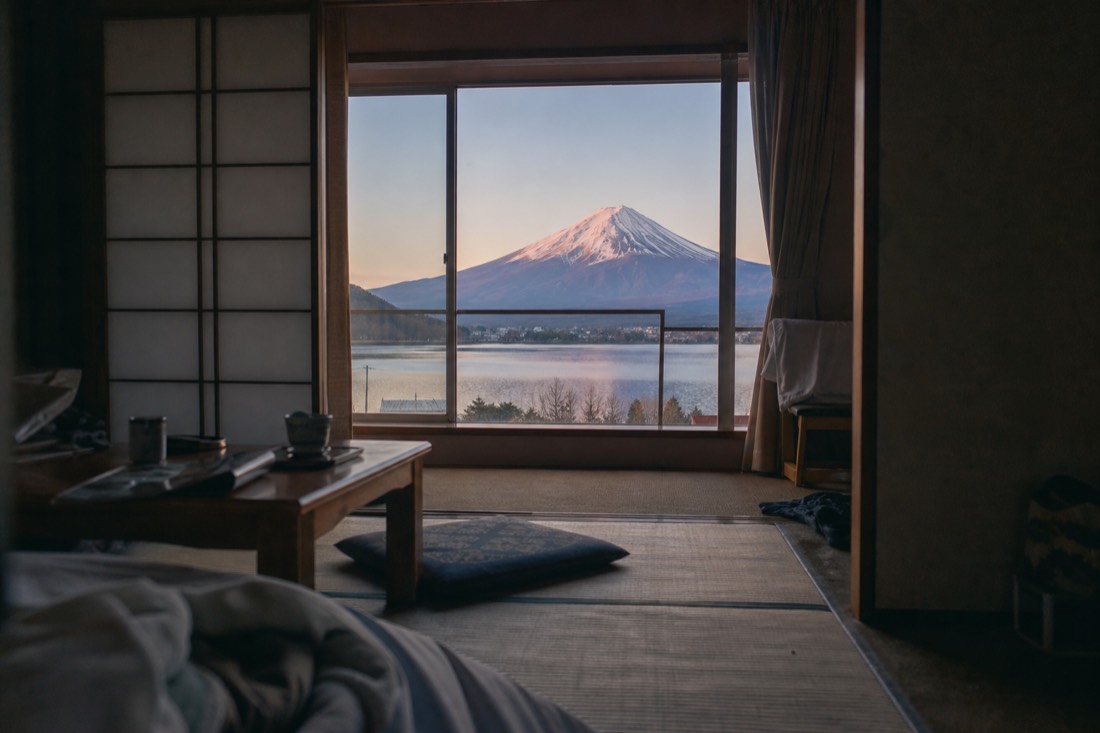
Ask ten travellers where they stayed for Mount Fuji and you will get four answers: Kawaguchiko, Hakone, Tokyo, and a slightly embarrassed shrug. The gap between those choices is not comfort or price. It is whether the mountain was visible when they woke up.
Your overnight base should determine the tour pickup. Compare a local Kawaguchiko day, a Shin-Fuji station day and a Tokyo hotel departure after choosing where to sleep.
Booking Summary: Keep the dawn shoreline walk free and independent. Book a local tour for the later sightseeing day; none of these day trips includes your hotel room or guarantees a view.
Scroll to the end for the complete comparison and provider booking links. Interactive matching requires JavaScript.
That is the whole argument of this page. Mount Fuji is reliably visible in the early morning and unreliably visible afterwards, so accommodation is not a comfort decision on this trip. It is the mechanism that puts you in front of the mountain at seven in the morning instead of eleven.
What a night near the mountain costs
Bands compiled from published 2026 rates across the Fuji Five Lakes area and the Yoshida Trail huts. They are planning allowances for budgeting, not quotes: the only real price is the one on the property's own booking page for your dates.
Which area should you stay in near Mount Fuji?
Lake Kawaguchiko for a first visit, Fujiyoshida for better value, Lake Yamanaka for quiet, the Shizuoka side for the southern trails, and Tokyo only if you have one day and no flexibility. Hakone is a fine place to sleep and a poor place to see Mount Fuji from, which is the distinction most itineraries get wrong.
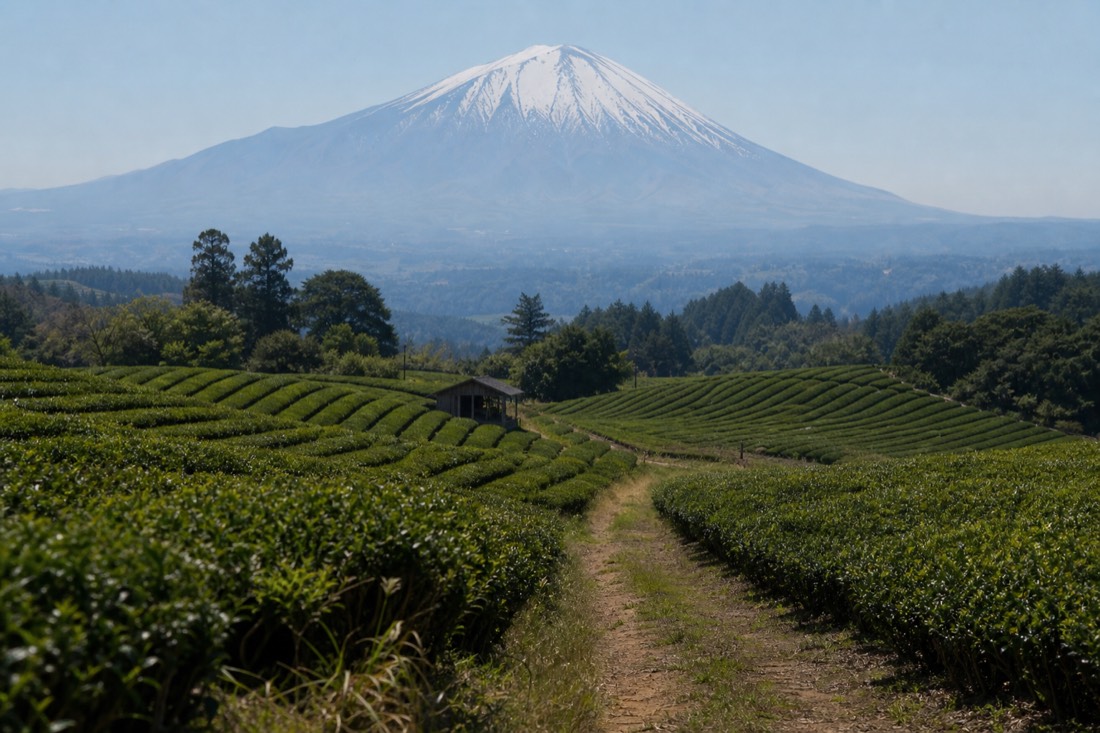
The Five Lakes sit on the northern side of the mountain, and the northern side has consistently better visibility than the south because drier air flows down off the mountains of central Japan while the southern flank faces the Pacific and its moisture. That single piece of meteorology decides most of this table, and it is why the standard catalogue of Fuji viewpoints leans so heavily toward the northern shoreline.
| Area | Distance to the mountain | Best for | Trade-off |
|---|---|---|---|
| Fujikawaguchiko, Lake Kawaguchiko | Closest full-profile view | First visits, photography, transport connections, choice of restaurants | Busiest and priciest of the lake towns |
| Fujiyoshida | Very close, town view | Value, the Yoshida trailhead bus, the Chureito Pagoda, a working-town atmosphere | No lake reflection, fewer view rooms |
| Lake Yamanaka | Slightly further east | Quiet, Diamond Fuji in winter, lakeside walking | Thinner bus service, fewer places to eat |
| Lake Saiko and Lake Motosu | West of Kawaguchiko | Camping, glamping, forest and lava-cave country | You need a car or a lot of patience |
| Fujinomiya and Gotemba | South and southeast | The Fujinomiya trailhead, outlet shopping, Shinkansen access | Southern-side visibility is lower |
| Mishima | Southeast, on the Shinkansen | Arriving from western Japan, or moving on quickly | A transit town, not a view town |
| Hakone | About 40 km, across a ridge | Onsen ryokan, art museums, the lake loop | Mount Fuji is distant and often hidden |
| Tokyo | About 100 km | One-day visits with no gear and no flexibility | You arrive after the clear window has closed |
Why does almost everyone end up at Lake Kawaguchiko?
Because it is the only base that combines the closest unobstructed view of the mountain with a station that Tokyo buses and trains actually serve. Everywhere else in the Five Lakes trades one of those two things away.
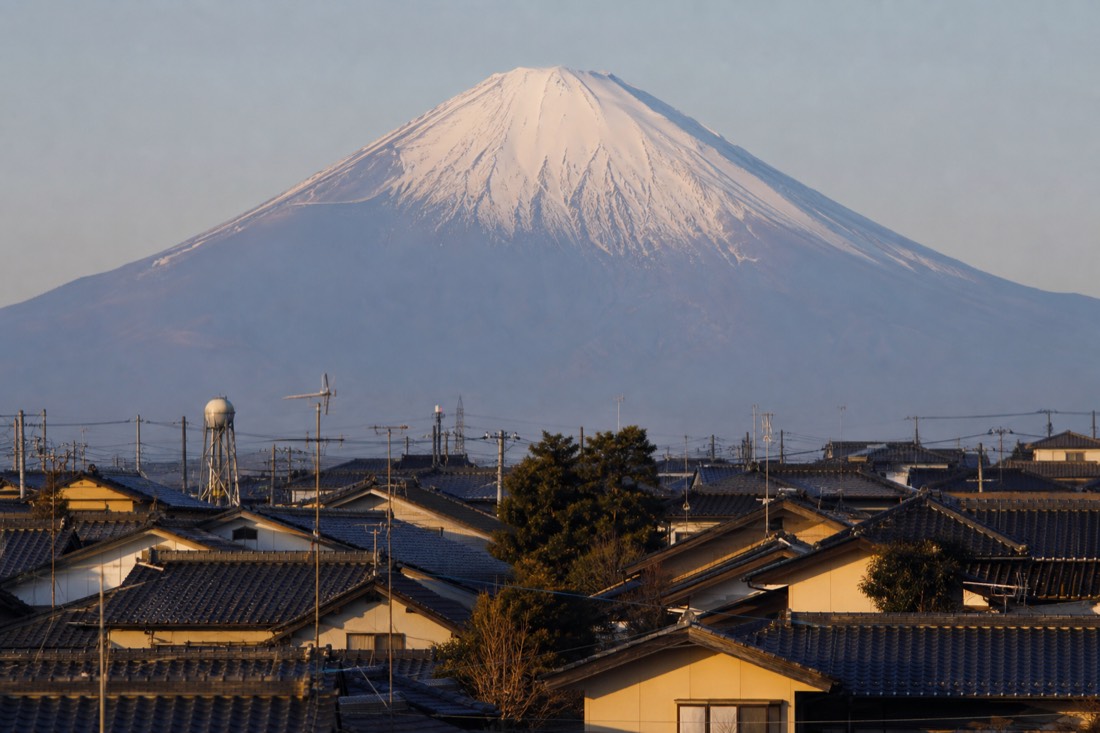
Kawaguchiko Station is the terminus for the Fuji Excursion limited express from Shinjuku and for the frequent highway buses from Shinjuku, Tokyo Station and Shibuya. It is the transport hub of the Fuji Five Lakes region and nothing else in the area comes close. The town's sightseeing bus loops the lake shore, the ropeway climbs the hill behind the station, and Oshino Hakkai and the Chureito Pagoda are both short rides away. If you were designing a base for a two-night Fuji trip you would design this one.
The other reason is the reflection. On a still morning the mountain doubles in the water, and the lake is wide enough and calm enough for that to happen regularly. It is the shot that made this town famous and it is available from public shoreline, free, at dawn, if you happen to be standing there. Our Kawaguchiko day trip guide covers what the town looks like in daylight hours; this page is about the hours the day-trippers miss.
Which side of Lake Kawaguchiko faces Mount Fuji?
The north and northeastern shores. Mount Fuji sits to the south of Lake Kawaguchiko, so a room on the northern shore looks across open water at the mountain, while the southern shore, where the station is, looks at the mountain over the town's own rooftops or not at all.
This is the detail that costs people the view, because the station side is the convenient side. Hotels near Kawaguchiko Station are easy to reach with luggage, close to restaurants, and mostly facing the wrong way. Properties strung along the north shore toward Oishi Park have the sightline but need a bus or a taxi.
The practical compromise most travellers land on: sleep near the station on a short trip where luggage matters, and walk or ride the loop bus to the north shore before breakfast. Twenty minutes on the sightseeing bus is a much cheaper way to buy the view than a north-shore room, and the public shoreline at Oishi Park is the best vantage point in the town regardless of where you slept.
One caution about the station side. The roadside spot that went viral there, and briefly ended up behind a screen, is a novelty rather than a viewpoint: we set out what actually happened in the convenience-store view. The shoreline is the reason to be up early, not the car park.
What does a Mount Fuji view room actually get you?
A window that faces the right way. It does not get you a visible mountain, because that depends on the weather, and no property can sell you weather. In August the peak is hidden from the lake most days; in February it is clear on a large majority of them.
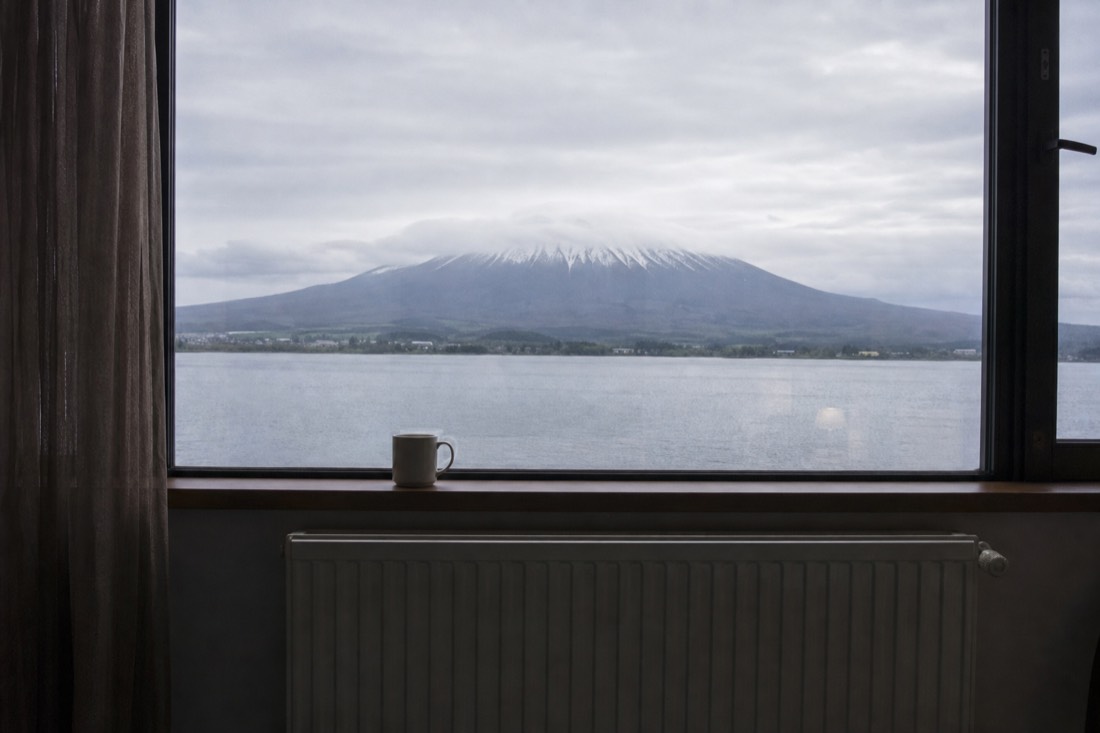
We say this plainly because the disappointment is predictable. A room sold as a Fuji-view room is a room whose window points at where the mountain is. That premium is worth paying in November through February, when the odds of actually seeing something are high and the view is available from bed at sunrise. It is much harder to justify in July and August, when a lake-view room at a lower rate delivers almost the same experience because the mountain is behind cloud either way.
If you are travelling in the low-visibility months and the budget is tight, put the money into location instead of aspect. Being able to walk to the shoreline at 6:30 AM on the one clear morning of your stay is worth more than a window you paid extra for on four cloudy ones. The seasonal detail behind that calculation is in our best time of year to visit guide.
How much should you budget per night near Mount Fuji?
Roughly ¥8,000 to ¥15,000 per person for a plain hotel room, ¥15,000 to ¥30,000 for a mid-range lakeside hotel or a ryokan with dinner and breakfast, and ¥30,000 upward for a mountain-facing room with a private open-air bath. Hostel beds start around ¥3,000. Those bands widen sharply in peak weeks.
Japanese ryokan pricing usually quotes per person and usually includes two meals, which trips up travellers reading it as a room rate. A ¥25,000 ryokan listing for two people is a ¥50,000 night, and it includes a multi-course dinner and breakfast that would cost a fair amount separately. Hotels quote per room and exclude meals. Compare like with like before deciding one is expensive.
| Tier | Per person, per night | What is normally included | Worth it when |
|---|---|---|---|
| Hostel dorm or guesthouse | ¥3,000 to ¥8,000 | Bed, shared bath, kitchen | You are climbing and only need somewhere to sleep before the bus |
| Business hotel or simple inn | ¥8,000 to ¥15,000 | Private room, sometimes breakfast | Low-visibility months, or you plan to be out at dawn anyway |
| Mid-range lakeside hotel or ryokan | ¥15,000 to ¥30,000 | Onsen bath, dinner and breakfast at a ryokan | The normal choice for a two-night stay in shoulder season |
| Mountain-view room with private bath | ¥30,000 and up | Aspect, private rotenburo, kaiseki dinner | November to February, when the view is likely to appear |
| Mountain hut, Yoshida Trail | ¥7,000 to ¥17,000 | Shared bunk space, dinner and breakfast | Any summit attempt: it is a requirement, not a luxury |
Local Kawaguchiko Icons & Hidden Gems: Scheduled Dates
Explore a tailored selection of lakeside viewpoints, shrines and quieter stops with a local English-speaking guide and private vehicle.
Check Dates For Local Kawaguchiko Icons & Hidden GemsWhich hotel has the best view of Mount Fuji?
The names that come up again and again are Hoshinoya Fuji, Kozantei Ubuya, Fufu Kawaguchiko, Konansou, La Vista Fujikawaguchiko and Fuji View Hotel. All sit on or near the northern shoreline, all sell rooms specifically as mountain-facing, and all price that aspect accordingly.
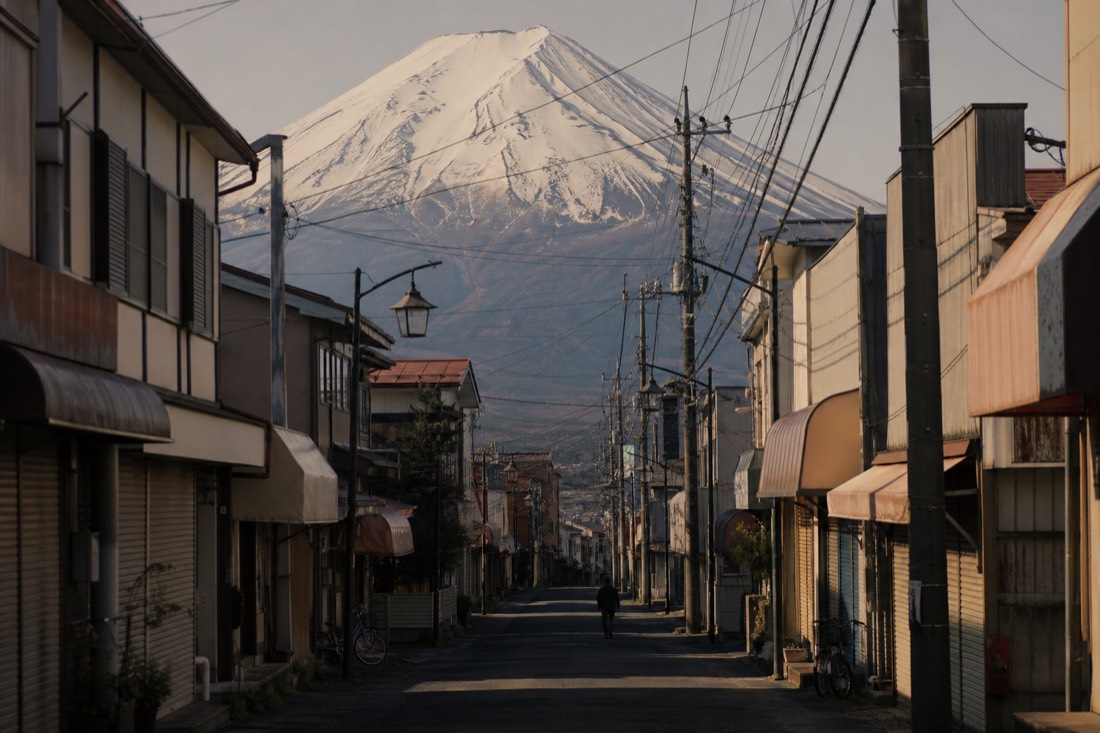
We list these because they are real, verifiable properties with documented mountain views, not because the site has any relationship with them. Check current rates and availability on each property's own booking page: the bands below move with the season and with how far ahead you look.
| Property | Where | Known for | Rough band per night |
|---|---|---|---|
| Hoshinoya Fuji | Above Lake Kawaguchiko | Cabin-style glamping resort, terraces facing the peak | Top tier, generally ¥100,000 and up for two |
| Kozantei Ubuya | North shore | Every room facing the mountain, private open-air baths | High tier |
| Fufu Kawaguchiko | Near the north shore | Adults-only suites, private rotenburo | Roughly ¥90,000 to ¥150,000 for two |
| Konansou | South shore, near the station | Rooftop bath and view rooms, easy walk from transport | Upper mid tier |
| La Vista Fujikawaguchiko | North shore | Balconies on most rooms facing the lake and peak | Upper mid tier |
| Fuji View Hotel | Northwest shore | Long-established resort, gardens and observation terrace | Mid tier |
| Lakeland Hotel Mizunosato | Lakeside | Onsen and lake-facing rooms at a lower price point | Mid tier |
| K's House Mt. Fuji, Hostel Fujisan YOU | Near Kawaguchiko Station | Dorms and simple private rooms, kitchens | Budget tier |
Is Fujiyoshida a better-value base than Kawaguchiko?
Often yes, if you can live without the lake. Fujiyoshida is a working town rather than a resort, rooms cost noticeably less, and it sits closer to both the Chureito Pagoda and the bus to the Yoshida trailhead. What it does not have is water in front of the mountain.
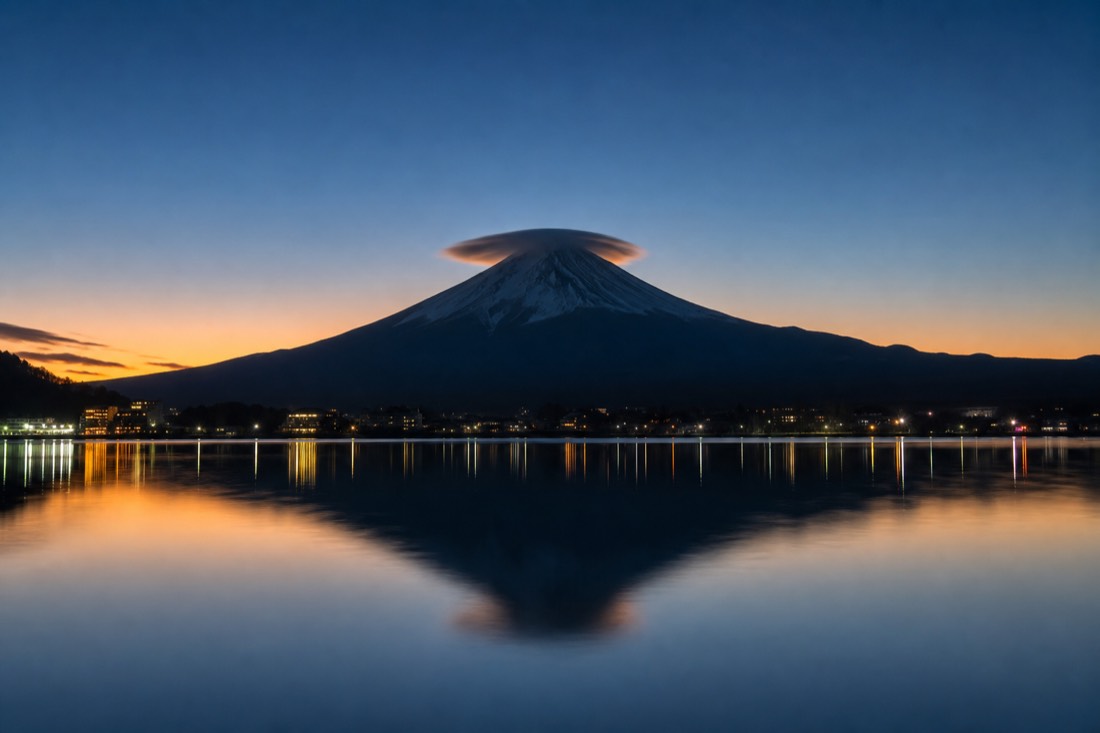
It does have one of the most photographed streets in Japan. Honcho Street runs straight at the mountain, so the peak closes the end of the view above the shopfronts and the overhead cables. It is a completely different image from the lake reflection and, for a certain kind of traveller, a better one.
| Fujikawaguchiko | Fujiyoshida | |
|---|---|---|
| Typical room price | Higher, resort pricing | Noticeably lower |
| The signature view | Mountain reflected in the lake | Mountain above a shopping street |
| Access to the Yoshida trailhead | Bus from Kawaguchiko Station | Closer, more frequent |
| Chureito Pagoda | Short train ride away | Walking distance from Shimoyoshida |
| Restaurants | More choice, tourist-facing | Local, cheaper, closes earlier |
| Onsen ryokan choice | Wide | Limited |
What about glamping and campsites?
The Five Lakes shoreline has a genuine cluster of glamping sites with direct mountain views, most of them west and north of Kawaguchiko. They are a real alternative to a hotel between roughly April and November, and they are cold and exposed outside that window.
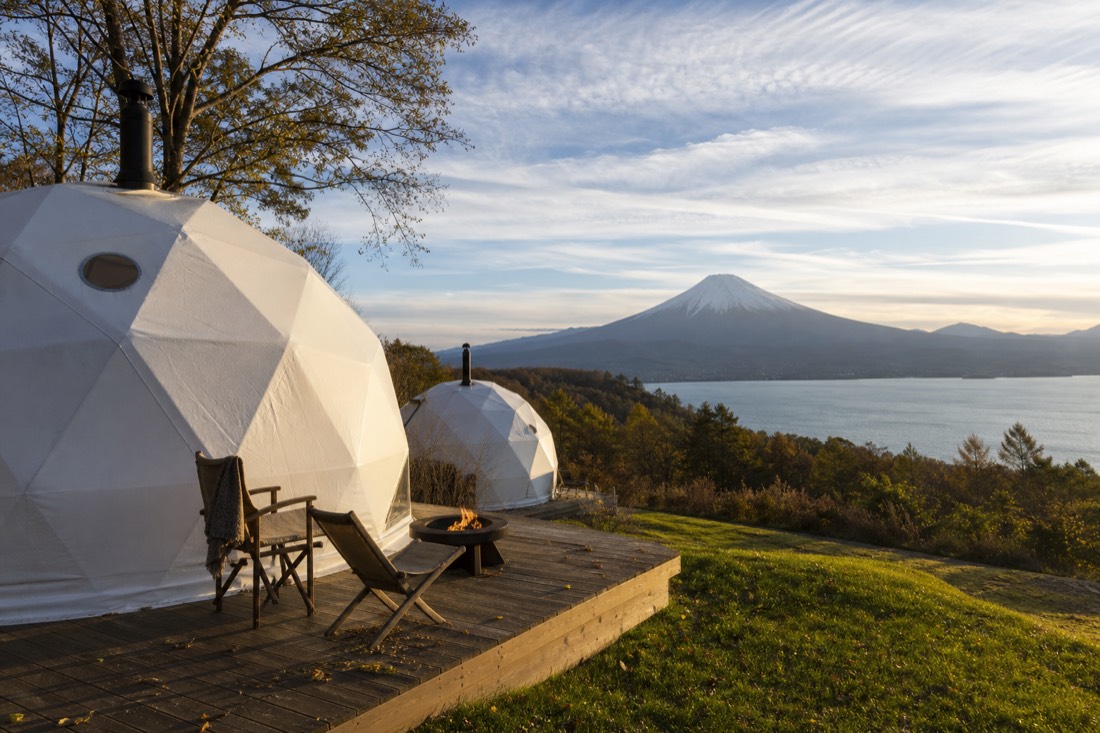
Dome tents and cabin sites have multiplied around Lake Kawaguchiko and Lake Saiko over the last few years, and several are built specifically so the mountain sits in front of the deck. Names that come up include Glamping Village Fuji Kawaguchiko, Suite Glamping Kawaguchiko, Hoshifull Dome Fuji and Mt. Shakushi Gateway Camp. Rates sit broadly in the mid-range hotel band once meals are included.
Traditional campsites are cheaper still and cluster around Lake Motosu and Lake Saiko. This is also lava-cave and forest country, which is a different sort of day out from the lake shore. The cycling tour around the Five Lakes covers much of the same ground under someone else's route planning if you would rather not organise the logistics yourself.
What you cannot do is camp on the mountain itself. Sleeping out on the trails above the fifth stations is prohibited during the climbing season, and the reason is straightforward: overnight temperatures at 3,000 m are dangerous and the mountain huts exist to solve exactly that problem.
Where should you stay if you want to hike Mount Fuji?
In a mountain hut at the 7th or 8th station, booked in advance, at roughly ¥7,000 to ¥17,000 per person with dinner and breakfast. Since the current Yoshida Trail rules came in, this is not optional for most itineraries: the trail gate closes at 2:00 PM to anyone without a hut reservation, and the daily climber cap is 4,000 people.
A hut is not a hotel and it is important to arrive knowing that. You get a numbered space on a shared sleeping platform, a thin futon, a blanket, and a curry dinner. Lights go out early because everyone is getting up between midnight and 2:00 AM for the summit push. There are no showers. The toilets cost a couple of hundred yen a use.
What the hut buys is acclimatisation and timing. Sleeping at 3,000 m for a few hours makes the final ascent meaningfully less unpleasant, and starting from the 8th station puts you at the crater rim for sunrise rather than three hours after it. Climbers who skip the hut and push through the night from the 5th Station, the practice locals call bullet climbing, are the group that altitude sickness and hypothermia find first.
| Detail | Yoshida Trail | Fujinomiya Trail |
|---|---|---|
| Season | 1 July to 10 September | 10 July to 10 September |
| Hut density | The most of any route | Fewer |
| Typical hut price with two meals | ¥7,000 to ¥17,000 per person | Similar band |
| Daily climber cap | 4,000 | No cap, but registration required |
| Gate rule | Closed 2:00 PM to 3:00 AM without a hut booking | Online pre-registration required |
| Climbing fee | ¥4,000 per person | ¥4,000 per person |
Booking is done through the individual huts, most of which take reservations by phone or through a Japanese-language form. The official mountain-hut listings are the only complete record of which huts are open in a given season, and even then the reservation itself happens off that page. That friction is one of the reasons a two-day guided climb is the format most first-time international climbers end up using. Our guide to climbing Mount Fuji on a guided tour goes through what those packages include and what they leave out.
Is Hakone a sensible base for seeing Mount Fuji?
Not if the mountain is the point. Hakone is roughly 40 km away across a ridge, the peak is smaller and lower in the frame when it does appear, and cloud comes in off the Pacific far more often than it does on the northern side. Hakone is an excellent onsen destination that happens to have a Fuji view on good days.
That distinction matters because Hakone is easier to reach from Tokyo and much easier to fold into a Tokyo to Kyoto itinerary, so it gets chosen for logistics and then judged on scenery. Travellers who wanted the mountain and booked Hakone are a recognisable and slightly disappointed group.
If Hakone is already in the plan for the onsen and the art museums, keep it, and treat any Fuji sighting as a bonus. If Hakone is in the plan because someone said it was the place to see Mount Fuji, move that night to Kawaguchiko. We compare the two in detail in Kawaguchiko versus Hakone.
Should you just stay in Tokyo and day-trip instead?
Only if you have exactly one day and no room to move it. A Tokyo day trip works logistically and fails meteorologically: the earliest realistic arrival at the lake is around 10:30 or 11:00 AM, which is usually after the cloud skirt has begun forming on the mid-slopes.
There is one honest exception. In January and February, when clear conditions can hold for most of the day, a day trip from Tokyo has a genuinely decent chance of delivering the mountain. Winter is also when accommodation near the lake is cheapest and easiest to book, so the case for staying over is strongest at exactly the time the day trip works best. Make of that what you will.
If a day trip is the only option, take one that is built around the timing rather than one that stops for shopping. The 5th Station and hot spring day tour is the shape that works in the closed-trail months, and our getting to Mount Fuji from Tokyo guide covers the transport side properly.
How far ahead should you book accommodation near Mount Fuji?
Two to three months for cherry blossom, Golden Week, the November foliage weeks and the climbing season. Two to three weeks in shoulder season. Mountain huts as soon as the season opens. And from April 2027, Fujikawaguchiko and Fujiyoshida add a lodging tax of ¥200 per person per night.
The lead times are not evenly distributed across the year, which is the useful part. Late April and early May are close to impossible at short notice. Mid-June is wide open and wet. February has excellent visibility and comparatively soft demand, which is the single best value window in the calendar if you can take the cold.
| Period | Book by | Why |
|---|---|---|
| Late March to mid April | 2 to 3 months ahead | Cherry blossom at Chureito and the north shore |
| Late April to early May | 3 months ahead | Golden Week, the tightest week of the year |
| July to early September | 2 to 3 months ahead | Climbing season, huts fill first |
| November | 2 months ahead | Foliage plus high visibility, a popular combination |
| Mid-January to February | 2 to 4 weeks ahead | Best visibility of the year, softest demand, Diamond Fuji weeks at Lake Yamanaka |
| June and early July | 1 to 2 weeks ahead | Rainy season, low visibility, low prices |
One last piece of advice that is worth more than any property recommendation on this page. Whatever you book, set an alarm for sunrise on your first morning and go outside. The mountain is not a scheduled attraction and it does not care about your itinerary. It shows up early, or it does not show up, and the people who see it are the ones who were standing there. Everything else on this page, including the guided Mt. Fuji tours we list, is in service of that one hour.